

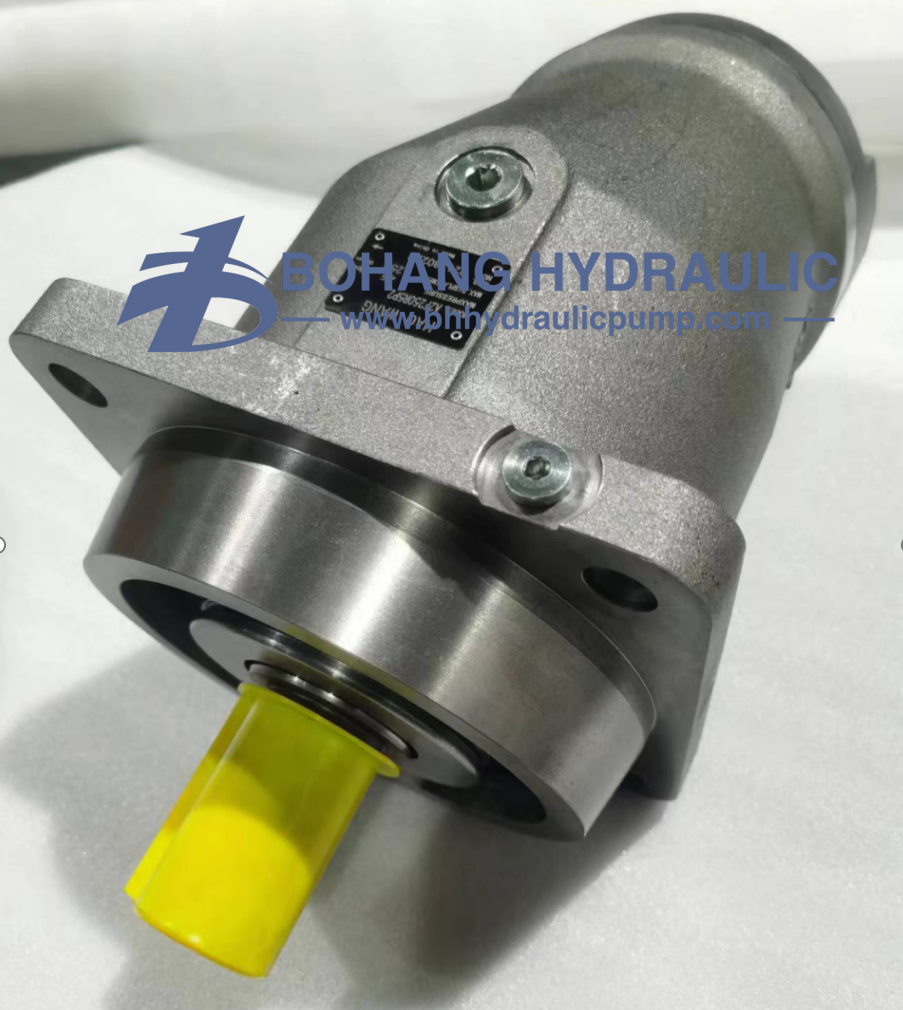
The useful question is not "Which circuit is better?" but "Which circuit creates fewer energy and service problems over this machine's real duty cycle?" A travel drive, cooling fan and cylinder bank impose different reversal, braking and heat-rejection demands. The hydraulic pump and motor system guide covers the shared pressure, flow and displacement relationships; here the focus is how the oil path changes pump and motor selection. Choose an open circuit when one pump must serve several valve-controlled functions and returning oil can go back to a reservoir for cooling, filtration and air release. Choose a closed circuit for a dedicated bidirectional hydrostatic drive when compact control and rapid reversal justify the added charge, flushing, braking and commissioning requirements.
Where does the oil go after it leaves the motor?
In an open circuit, oil normally flows from the reservoir to the pump, through the control valve and actuator, then back to the reservoir. Returning oil can release air, reject heat through a cooler, and pass through return filtration before being drawn into the pump again.In a closed circuit, the pump's two main ports connect to the motor's two main ports. Most working oil circulates directly between them. A separate charge circuit replenishes leakage, maintains low-side pressure, supports controls, and sends part of the oil through flushing and cooling paths.
Is an open circuit the same as an open-center valve?
No. Open circuit describes the main oil path: the pump takes oil from a reservoir and actuator return oil goes back to that reservoir. Open center describes a directional valve whose neutral path allows pump flow to return to tank. An open circuit may use open-center, closed-center or load-sensing valve arrangements.
This distinction matters during replacement. A pump may be correct for an open circuit but have the wrong control for the valve bank, causing standby heat, slow response or engine loading.
Why are travel drives often closed circuit?
A closed loop supports compact bidirectional control. Moving a variable pump through neutral reverses flow direction without routing the full main flow through a directional valve. This can reduce valve throttling and provide smooth speed control in travel, drum, fan, or conveyor drives.
The architecture is not automatically cooler or more efficient. High-speed operation can generate significant leakage and churning losses. The charge and flushing system must remove hot oil from the loop and replace it with cooled, filtered oil. If loop performance declines after warm-up, a controlled hot-oil case-drain test can help separate leakage from a cooling or charge-flow problem.
The A4VG closed-circuit pump is published for 28–125 cm³/rev with 400 bar nominal and 450 bar maximum pressure. It includes closed-loop functions such as an integrated boost supply and high-pressure protection. Final selection depends on charge flow, control, duty cycle, and exact size data.
Why are valve-bank systems often open circuit?
An open circuit is usually easier when one pump serves several cylinders and motors through a valve bank. Returning oil can be filtered and cooled before another function uses it, while the reservoir accommodates unequal cylinder volumes.
The site's A10VO open-circuit pump data covers 18–140 cm³/rev, 280 bar nominal and 350 bar maximum pressure. At 1,500 rpm, published theoretical flow ranges from 27 to 210 L/min; actual flow is lower after volumetric loss and controller destroking.
Before selecting the architecture, calculate the duty point. The method for matching pump flow to motor displacement checks whether engine speed, motor size and available power can meet the required torque and speed.
How much heat can a pressure mismatch create?
Pressure dropped without useful work becomes heat. For pressure in bar and flow in L/min:
Power loss (kW) = pressure drop × flow ÷ 600
If an open system supplies 120 L/min at 250 bar while the actuator needs 180 bar, 70 bar is lost across valves and lines:
70 × 120 ÷ 600 = 14 kW
That is a major continuous cooler load. A load-sensing or pressure-compensated arrangement may reduce it when the controller and valve margin are correctly matched.
A closed circuit avoids some full-flow valve loss but adds charge, flushing and leakage losses. If a drive transfers 80 kW at 90% combined efficiency, about 8 kW is lost before the shaft. Compare total loss over measured duty points rather than relying on a circuit label.
What does the charge pump do?
A closed circuit loses oil through pump and motor case drains. The charge pump replaces that volume and usually performs several additional jobs:
- Maintains positive pressure on the low-pressure side
- Supplies pump and motor controls
- Provides oil for loop flushing and cooling
- Helps prevent cavitation during rapid transients
- Replenishes oil after thermal contraction or leakage
Low charge pressure can cause noise, loss of control, reduced loop fill, and damage. Excessive charge pressure can increase losses and case pressure. Use the exact closed-loop pump and motor requirements.
Can I use the same motor in either circuit?
Some motor families are approved for both open and closed circuits, but the surrounding circuit changes.
Check:
- Permitted pressure on both motor ports
- Case-drain requirement and allowable case pressure
- Flushing requirement at continuous high power
- Braking and overrun protection
- Reversing frequency
- Minimum inlet pressure
- Control-valve or loop-control strategy
The A2FM, A6VM, and A6VE families are published for open and closed circuits, subject to exact size and configuration. That statement does not mean the same hose arrangement or valve package works in both systems.
Return pressure also reduces usable torque. With 210 bar inlet and 15 bar return, effective pressure is 195 bar. For an 80 cm³/rev motor at 90% mechanical efficiency: Torque ≈ 195 × 80 × 0.90 ÷ (20π) = 224 N·m
Ignoring return pressure predicts about 241 N·m, roughly 8% too high. The full hydraulic motor torque and speed calculation also accounts for volumetric efficiency.
What happens during braking or an overrunning load?
When the load drives the motor, the motor behaves as a pump. Pressure shifts to the opposite loop side or return path. The circuit must manage:
- Deceleration torque
- High-pressure relief
- Make-up oil
- Counterbalance or overcenter control
- Mechanical brake timing
- Heat generated during braking
- Engine overspeed or energy absorption
A directional valve alone is not a complete braking system for a suspended or overrunning load. Hose failure, loss of charge pressure, command loss and stored energy belong in the machine risk assessment.
Can I convert an existing open drive to a closed circuit?
Sometimes, but it is rarely a pump-only change. A closed circuit may require charge and flushing hardware, pressure protection on both loop sides, revised cooling and filtration, bidirectional motor-port capability and new braking logic.
For a retrofit, the pump and motor replacement checklist records flange, shaft, ports and control code; then add charge pressure, loop fill, neutral response and brake-release tests. A matching flange does not prove that the machine will cool, reverse or stop correctly.
Which circuit fits the duty?
| Design question | Open circuit | Closed circuit |
|---|---|---|
| One pump serves several actuators | Usually simpler through a valve bank | Usually reserved for a dedicated drive |
| Frequent smooth forward/reverse operation | Possible, with directional-valve losses | Strong fit with a reversible variable pump |
| Cylinders with unequal oil volumes | Reservoir handles make-up and return volume | Not the usual architecture |
| Cooling and air release | Reservoir turnover makes them easier to arrange | Depend on charge and flushing design |
| Main-flow filtration | Return or pressure filtration is common | Charge filtration and controlled oil exchange are common |
| Braking an overrunning rotary load | Requires appropriate valve and brake control | Requires loop protection, make-up and brake coordination |
| Commissioning effort | Usually lower | Higher because loop fill and charge behavior must be verified |
Open/closed circuit verification checklist
- Obtain the current hydraulic schematic and complete component type codes
- Trace where main flow goes after leaving each actuator
- Separate circuit architecture from open-center, closed-center or feedback-control terminology
- Calculate motor torque using pressure difference across both motor ports
- Calculate pressure-drop heat at each major duty point
- Verify charge flow, charge pressure, flushing flow and case-pressure limits
- Confirm pump and motor continuous ratings, not only peak ratings
- Review braking, overrun, hose-failure and neutral-response behavior
- Confirm reservoir, cooler and filter capacity for the calculated losses
- Plan cold and hot commissioning tests before full-load operation
Conclusion
Open and closed hydraulic circuits should be selected by duty cycle. Open circuits return oil to the reservoir, making them practical for valve-bank systems, multiple actuators, cooling, filtration, unequal cylinder volumes. Closed circuits recirculate oil between pump and motor, suiting bidirectional travel, fan and conveyor drives but requiring charge pressure, flushing, braking and commissioning. Match displacement, pressure, flow, heat loss and case-drain limits to real operating conditions.
FAQ
Q1. Is a closed circuit always more efficient than an open circuit?
A: No. A closed circuit can reduce full-flow directional-valve loss, but it still has pump, motor, charge, flushing and control losses. A well-matched open circuit may use less energy for intermittent multi-function work. Compare the complete duty cycle.
Q2. Can an open-circuit pump work in a closed circuit?
A: Do not assume it can. A closed-circuit pump normally needs reversible flow, charge and make-up functions, protection on both loop sides and suitable neutral control. An open-circuit inlet may not tolerate pressure or reversed flow.
Q3. Why does a closed circuit need flushing?
A: Main-loop oil recirculates between pump and motor. Flushing removes hot low-side oil and replaces it with cooler, filtered charge oil. Flow must stay within charge-circuit capacity or low-side pressure may fall.
Q4. Which circuit is normally used for hydraulic cylinders?
A: Open circuits are usually more practical because single-rod cylinders exchange unequal chamber volumes and the reservoir handles the difference. Specialized closed or regenerative cylinder circuits require application-specific volume balance and load control.