

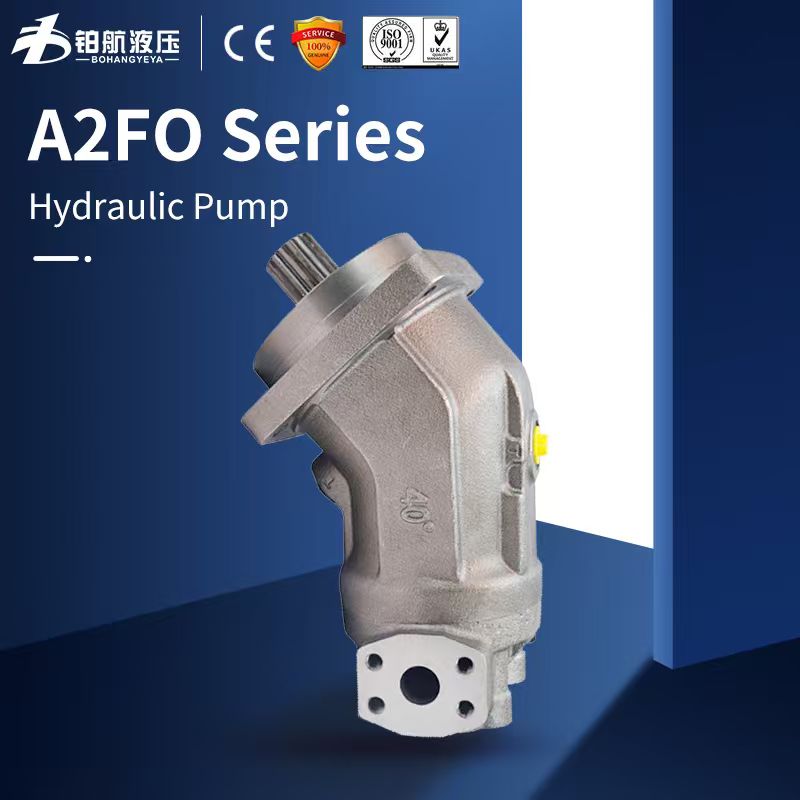
In the realms of modern engineering machinery, industrial manufacturing, and agricultural equipment, the hydraulic pump is undoubtedly the beating "heart" of the entire system. Imagine, for a moment, stripping away hydraulic technology; the modern industrial world as we know it would instantly grind to a halt. Heavy-duty excavators would lose the power to swing their arms; industrial presses capable of exerting thousands of tons of force would be unable to apply any deformation force; and highly automated factory assembly lines would be paralyzed, deprived of their core motive power.
The hydraulic pump is not merely a peripheral component; it is the absolute core of all heavy machinery and precision hydraulic control systems. Yet, for many purchasing agents, engineers, and even equipment operators, the internal workings of a hydraulic pump remain something of a "black box."
This brings us to the central question this article aims to address: What exactly is a hydraulic pump? How does it operate so efficiently to drive such massive machinery? Understanding these fundamentals will not only help you save significant costs in equipment maintenance but will also guide you in making the most sound decisions amidst the complexities of industrial procurement.
What is a Hydraulic Pump?
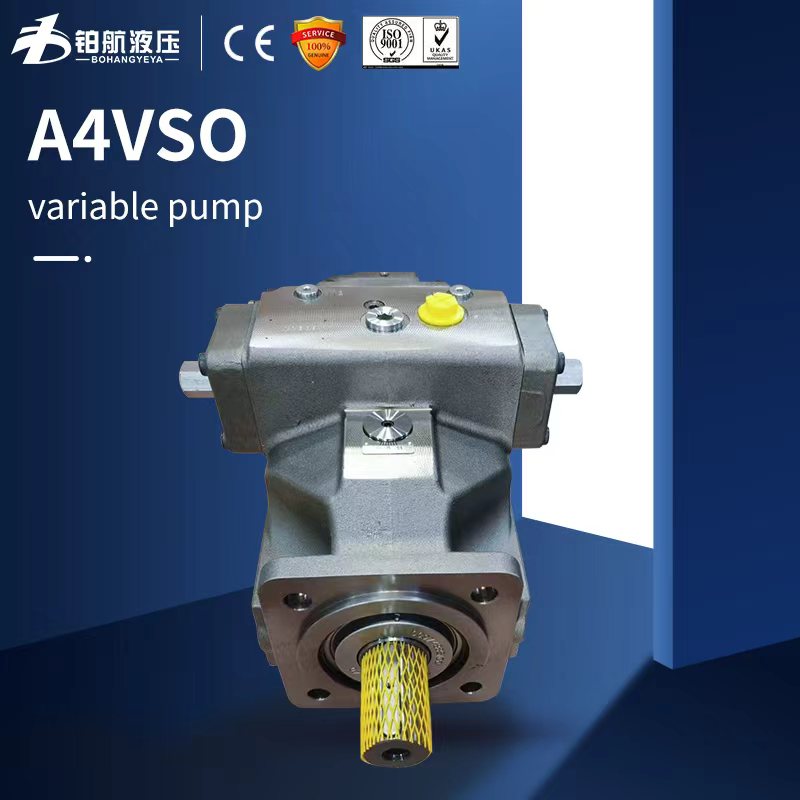
From a rigorous engineering perspective, a hydraulic pump is an energy conversion device. Its primary function is to efficiently convert the mechanical energy output by a prime mover—such as an electric motor or an internal combustion engine—into hydraulic energy within a fluid medium.
When discussing hydraulic pumps, it is essential to clearly identify their two core outputs: generating fluid flow (Flow) and serving as a continuous power source for the entire hydraulic system.
Here lies a key concept—one that is frequently misunderstood within the hydraulic industry yet holds significant value for SEO search queries: The hydraulic pump itself does *not* directly generate pressure.
This is a counter-intuitive, yet absolutely accurate, physical fact. The sole function of a hydraulic pump is to output a specific volume of fluid (displacement). The "pressure" within the system is, in reality, generated by the resistance the fluid encounters as it flows—specifically, the system load (e.g., the heavy object a hydraulic cylinder must lift, or the frictional resistance within the piping).
In summary:
The hydraulic pump is purely a power source that provides flow; the actual magnitude of the system's pressure is determined entirely by the external load.
How a Hydraulic Pump Works
To gain a deep understanding of how a hydraulic pump functions, we must examine the fluid-dynamic processes occurring within its internal mechanisms. Regardless of a pump's external configuration, its fundamental operating principle invariably relies on two core physical processes:
1. The Two Core Processes
Suction Process (Inlet): As the internal mechanical components of the hydraulic pump (such as separating gears or retracting plungers) move, the volume within the pump chamber momentarily expands. In accordance with the principle of displacement, this creates a localized vacuum (a low-pressure zone) at the pump's inlet. Driven by atmospheric pressure, fluid from the hydraulic reservoir is naturally "pushed" or drawn into the pump body.
Discharge Process (Outlet): As the mechanical components continue to rotate or move, the volume within the pump chamber begins to contract rapidly. The hydraulic fluid trapped within the chamber, having nowhere else to go, is forcibly expelled through the pump's outlet port; carrying high kinetic energy, it enters the hydraulic system to ultimately drive actuators such as hydraulic cylinders or motors.
2. The Fundamental Nature: Energy Conversion
The essence of this entire process lies in the conversion of mechanical energy into hydraulic energy. A prime mover provides rotational torque and speed (mechanical energy), while the hydraulic pump converts this input into fluid flow rate and pressure-bearing capacity (hydraulic energy).
3. Key Formulas and Control Logic
In hydraulic system design, there are two inviolable core principles—which also serve as the foundation for the working principles of hydraulic pumps:
Flow Determines Speed: The greater the volume of hydraulic fluid output by the pump, the faster the movement speed of the actuator (e.g., the extension or retraction of a hydraulic cylinder).
Pressure Determines Force: The greater the resistance within the system, the higher the resulting pressure, and consequently, the greater the thrust or torque output by the actuator.
Main Types of Hydraulic Pumps
Based on their internal structure and fluid displacement mechanisms, hydraulic pumps are primarily categorized into three main types. Understanding these classifications is a prerequisite for selecting the appropriate pump for a given application.
1. Gear Hydraulic Pumps
Gear pumps are the most common and structurally basic type of hydraulic pump found in industrial settings. They operate by utilizing two intermeshing gears to displace fluid from the inlet to the outlet.
Characteristics: Extremely simple structure, low manufacturing cost, and relative insensitivity to contamination within the hydraulic fluid.
Application Scenarios: Typically suited for low- or medium-pressure systems, such as simple agricultural machinery or lubrication systems.
2. Vane Hydraulic Pump
Vane pumps rely on vanes—seated within slots in a rotor—being thrown outward by centrifugal force to form sealed chambers against the pump housing, thereby pumping the fluid.
Characteristics: Operates very smoothly, exhibits minimal flow pulsation, and generates extremely low operating noise.
Application Scenarios: Widely used in indoor industrial equipment where low noise and smooth operation are critical requirements, such as machine tools and light-duty presses.
3. Piston Hydraulic Pump
Piston pumps alter volume through the reciprocating motion of pistons within a cylinder block. They represent the "heavy artillery" of hydraulic pump technology.
Characteristics: Capable of withstanding extremely high operating pressures and boasts exceptionally high volumetric efficiency.
Application Scenarios: The absolute first choice for heavy-duty construction machinery, high-pressure water jet equipment, and core heavy-load industrial machinery.
Furthermore, from the perspective of displacement control, hydraulic pumps can be categorized into Fixed Displacement and Variable Displacement types. Variable displacement pumps allow for the automatic adjustment of output flow based on system demand—without altering the motor speed—thereby achieving significant energy-saving effects.
Core Components of a Hydraulic Pump
A high-performance hydraulic pump is the culmination of precision machining and materials science. In the manufacturing process of top-tier hydraulic pumps, the tolerances of every single component are controlled with extreme rigor. The core components primarily include:
Pump Housing: Typically manufactured from high-strength cast iron or special alloys; responsible for withstanding internal high pressures and protecting the internal precision components.
Drive Shaft: Connects the prime mover (motor) to the pump's internal mechanism, transmitting powerful rotational torque.
Pistons / Gears / Vanes (Core Moving Parts): Depending on the specific type of pump, these components are directly responsible for altering the internal volume and propelling the fluid.
Bearings: Support the drive shaft, minimize friction, and withstand both radial and axial loads.
Seals: Prevent internal leakage or external spillage of high-pressure hydraulic fluid; they are critical to maintaining the pump's volumetric efficiency.
The quality of individual components directly determines the equipment's service life. This is precisely why selecting a supplier with proven expertise in hydraulic manufacturing is of paramount importance.
Table 1: Comparative Analysis of Hydraulic Pump Types
| Pump Category | Pressure Rating | Efficiency Profile | Maintenance Cost | Typical Use Cases |
| Gear Pump | Low to Medium | Average | Low | Conveyors, small tractors, lube systems |
| Vane Pump | Medium | Good | Medium | Die casting machines, quiet industrial tools |
| Piston Pump | Extremely High | Excellent | High | Excavators, heavy presses, offshore drilling |
Applications of Hydraulic Pumps
The applications of hydraulic pumps span nearly every modern industrial sector that requires "high torque and precise control."
Construction Machinery: Excavators, loaders, cranes, and bulldozers. Without high-pressure piston pumps, these "steel beasts" would be rendered completely immobile.
Industrial Manufacturing: Stamping presses, injection molding machines, CNC machine tools, and automated metallurgical equipment. Hydraulic pumps provide the stable and immense pressure required for metal forming and plastic injection processes.
Agricultural Equipment: Tractors, combine harvesters, and large-scale irrigation systems. Relying on gear pumps and piston pumps, agricultural machinery is able to perform high-intensity, continuous operations.
Automotive and Aerospace: Power steering systems, anti-lock braking systems (ABS), and aircraft landing gear retraction/extension systems. In these fields, the reliability of hydraulic systems is directly linked to human safety.
Advantages of Hydraulic Pumps
Among the many power transmission solutions available, why do engineers often favor hydraulic systems?
- High Power Density: Compared to electric motors with equivalent power outputs, hydraulic motors and pumps occupy only a fraction of the volume. This constitutes an irreplaceable advantage for mobile machinery where space is at a premium.
- Precision Control: When paired with proportional valves or servo valves, hydraulic systems can achieve micron-level precision in position control and provide stepless speed regulation.
- Suitability for Heavy-Duty Applications: When confronted with extreme loads and impact forces, hydraulic fluid provides excellent cushioning, resulting in exceptional system stability.
Comparative Analysis: Compared to pneumatic systems, hydraulic systems utilize incompressible fluids; consequently, they offer greater rigidity, and their output force increases exponentially. Compared to purely electric drive systems, hydraulic systems do not consume significant electrical energy—nor do they overheat—when required to maintain a high-pressure "locked" state for extended periods.
How to Select a Hydraulic Pump?
Whether replacing a worn-out component or developing a new piece of equipment, mastering the art of hydraulic pump selection is an essential skill for both procurement specialists and engineers. Proper selection is critical not only for the immediate operational performance of the equipment but also for managing long-term ownership costs. When consulting a hydraulic pump selection guide, the following parameters must be rigorously evaluated:
- Operating Pressure: It is essential to understand both the rated pressure required for the system's normal operation and the potential peak pressures that may occur.
- Flow Rate Requirements: Calculate the required flow output—measured in Liters per Minute (LPM) or Gallons per Minute (GPM)—based on the movement speed requirements of the system's actuators.
- Physical Environment of the Application: Consider factors such as temperature fluctuations, dust concentration, and whether an explosion-proof rating is required.
- Energy Efficiency Requirements: Is it necessary to utilize a variable displacement pump to minimize energy consumption?
Customization Needs: In many specialized operating conditions, standard components are insufficient to meet requirements. In such cases, it is necessary to seek out high-quality manufacturers capable of providing custom hydraulic solutions—tailoring the pump to specific flange dimensions, shaft extension types, and specialized port configurations.
Table 2: Key Parameters for Hydraulic Pump Selection
| Selection Parameter | Technical Consideration | Direct Impact on System Performance |
| Displacement / Flow Rate | Required speed of actuators | Dictates how fast hydraulic cylinders extend or motors rotate |
| Operating Pressure | Maximum load resistance | Determines the raw pushing, pulling, or lifting force |
| Control Method | Fixed vs. Variable displacement | Affects overall system energy efficiency and heat generation |
| Fluid Compatibility | Viscosity and chemical makeup | Impacts internal lubrication, seal integrity, and pump lifespan |
FAQ
During routine technical exchanges and procurement consultations, we frequently encounter the following core questions:
1. How does a hydraulic pump generate pressure?
As previously mentioned, a hydraulic pump itself does not generate pressure; its sole function is to output flow. Pressure within the system is established by factors such as pipeline resistance, throttling effects from valves, and the reactive forces generated when actuators (such as hydraulic cylinders) work to overcome external loads.
2. Which type of hydraulic pump is the "best"?
In the engineering world, there is no absolute "best"—only the "most suitable." If the priority is low cost and rugged simplicity, a gear pump is the preferred choice; if low noise levels are a primary requirement, a vane pump is the appropriate selection; however, for operations involving heavy loads and high pressures, a piston pump remains the only reliable option.
3. What is the difference between a hydraulic pump and a hydraulic motor?
These two components represent inverse processes of one another. A hydraulic pump consumes mechanical energy to output high-pressure fluid (fluid power), whereas a hydraulic motor receives high-pressure fluid to output rotational mechanical energy, which is then used to drive equipment such as tracks or drill bits.
4. In which specialized industries can hydraulic pumps be utilized?
Beyond traditional manufacturing and heavy machinery sectors, modern hydraulic pumps are now widely deployed in deep-sea exploration equipment, wind turbine pitch control systems, and even the large-scale mechanical animation systems found in theme parks.
Conclusion
In summary, the hydraulic pump plays the indispensable role of the "heart" within any hydraulic system. Its core function is crystal clear: to provide a stable and reliable flow that drives the operation of the entire mechanical system.
In today's era of highly integrated industrial equipment, the proper selection and maintenance of hydraulic pumps directly determine your equipment's overall operational efficiency, service life, and—ultimately—your enterprise's operating costs. Whether you are seeking high-standard replacement parts or require the design of complex, custom hydraulic systems, partnering with an organization backed by deep manufacturing expertise is the key to success.
If you are currently seeking high-performance hydraulic pumps for your industrial equipment, or require expert selection guidance and customized services, we are dedicated to providing you with the most reliable hydraulic power solutions—ensuring that every operation you undertake is executed with both power and precision.