
Hydraulic systems are behind many of the machines that lift, push, press, steer, rotate, and move heavy loads every day. From excavators and tractors to hydraulic presses, marine equipment, and industrial production lines, these systems make it possible to generate powerful and controlled motion from a relatively compact design.
So, how do hydraulic systems work?
In simple terms, a hydraulic system uses pressurized fluid to transfer power. A hydraulic pump draws oil from a reservoir and pushes it into the circuit. Hydraulic valves then control the direction, pressure, and flow of that oil. Finally, a hydraulic cylinder or hydraulic motor converts the fluid power into linear or rotary movement. Once the work is done, the oil returns to the reservoir, where the cycle begins again.
For many buyers, however, understanding the basic working principle is only the first step. The real challenge is choosing the right hydraulic pump, matching it with the correct valves, avoiding overheating or pressure loss, and making sure the whole system can handle the machine’s working conditions.
What Is a Hydraulic System?
A hydraulic system uses pressurized fluid to transfer power from one point to another. In most industrial and mobile equipment, that fluid is hydraulic oil.
The basic idea is simple:
A motor or engine drives a hydraulic pump. The pump moves hydraulic oil through the system. Hydraulic valves control where the oil goes, how much pressure it can build, and how fast it flows. A hydraulic cylinder or motor converts that fluid power into useful movement. In other words, hydraulic systems turn mechanical input power into controlled force and motion.
A short answer:
A hydraulic system works by using a hydraulic pump to move fluid from a reservoir through valves and hoses to an actuator. The actuator converts the energy of the pressurized fluid into linear or rotary motion, while the fluid returns to the reservoir and circulates again.
Why Hydraulic Systems Are So Widely Used
Hydraulic systems are popular because they can deliver high force from a compact package. A properly designed hydraulic circuit can lift, push, press, rotate, clamp, steer, brake, or position heavy loads with excellent control.
Common advantages include:
- High power density
- Strong output force
- Smooth speed and direction control
- Flexible layout through hoses and pipes
- Good performance in heavy-duty environments
- Reliable operation under shock loads
- Suitable for both mobile and industrial machinery
That is why hydraulics remain important in construction machinery, agricultural equipment, mining machinery, marine systems, metallurgy, material handling, municipal machinery, and industrial production lines.
The Basic Components of a Hydraulic System
A hydraulic system is not just a pump. It is a group of components that must work together. If one component is poorly selected, the whole system can lose efficiency or fail early.
1. Hydraulic Reservoir
The reservoir stores hydraulic oil before it enters the pump. It also helps:
- Release trapped air from the fluid
- Dissipate heat
- Allow contaminants to settle
- Provide enough oil volume for the system
- Support stable pump inlet conditions
A small or poorly designed reservoir can lead to overheating, aeration, foaming, and pump inlet problems.
2. Hydraulic Pump
The hydraulic pump is the power source of the hydraulic circuit. It draws oil from the reservoir and sends it into the system.
A key point many buyers misunderstand:
A hydraulic pump creates flow. System pressure appears when that flow meets resistance from the load, valve setting, actuator, hose, or other circuit components.
This is why choosing a pump by pressure rating alone is risky. Flow rate, displacement, rotation speed, duty cycle, fluid viscosity, mounting style, and control type all matter.
Common hydraulic pump types include:
- Gear pumps
- Vane pumps
- Axial piston pumps
- Bent-axis piston pumps
- Fixed displacement pumps
- Variable displacement pumps
At Bohang Hydraulic, common replacement and engineered pump solutions include axial piston pumps, gear pumps, motors, valves, spare parts, and custom hydraulic solutions for demanding equipment.
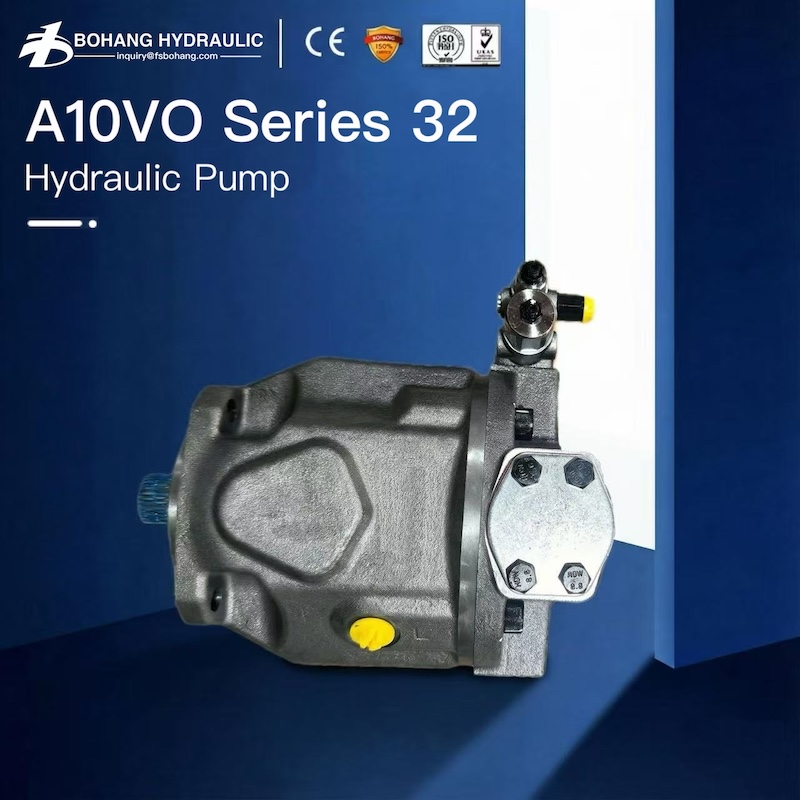
A10VO Series | Variable Displacement Pumps (Open Circuit)
3. Hydraulic Valves
Hydraulic valves control the behavior of the system. They decide where the oil goes, how fast it moves, and how much pressure is allowed.
Common hydraulic valve types include:
- Directional control valves
- Pressure relief valves
- Flow control valves
- Check valves
- Counterbalance valves
- Proportional valves
- Solenoid-operated valves
A good pump with the wrong valve setup can still perform poorly. Valve size, flow capacity, pressure rating, port size, control method, response speed, and center configuration should all match the system.
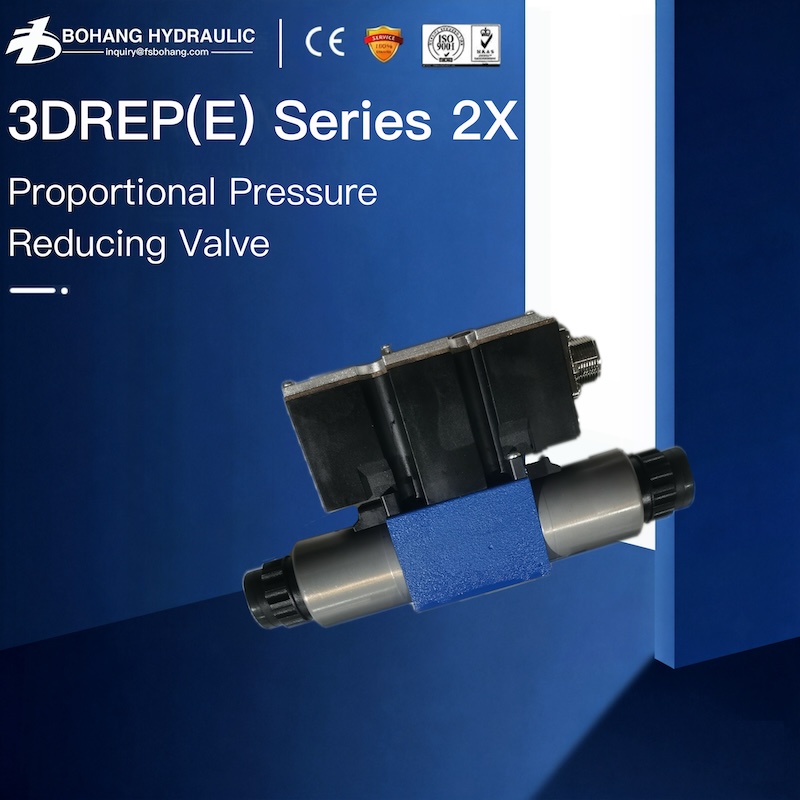
3DREP(E) Series Replacement Proportional Pressure Reducing Valve
4. Hydraulic Actuator
The actuator converts hydraulic energy into mechanical movement.
There are two common types:
- Hydraulic cylinders for linear motion
- Hydraulic motors for rotary motion
A cylinder may extend, retract, lift, press, clamp, or push. A hydraulic motor may rotate a winch, track drive, conveyor, mixer, drill, or wheel drive.
5. Hydraulic Fluid
Hydraulic oil is more than a power transmission medium. It also lubricates components, helps remove heat, protects against corrosion, and carries contaminants to the filter.
Important fluid factors include:
- Viscosity
- Temperature range
- Anti-wear performance
- Oxidation stability
- Water separation ability
- Seal compatibility
- Cleanliness level
Wrong oil can cause slow response, cavitation, internal leakage, excessive wear, seal damage, and overheating.
6. Filters
Filters remove particles from the oil. Clean fluid is critical because hydraulic pumps, valves, and motors often have tight internal clearances.
Contamination is one of the most common causes of hydraulic system wear and failure. Dirt, metal particles, water, degraded oil, and air can damage pumps, stick valves, score surfaces, and reduce efficiency.
7. Hoses, Pipes, and Fittings
Hoses and pipes carry oil between components. They must be sized and rated correctly.
Poor hose or pipe selection can cause:
- Pressure drop
- Heat generation
- Slow actuator speed
- Inlet restriction
- Leakage
- Hose burst risk
- Pump cavitation
A complete hydraulic system should be designed as a matched circuit, not as a collection of separate parts.
How Hydraulic Power Flows Through the System
A hydraulic system works as a controlled oil circuit. The pump moves hydraulic oil, the valves control its direction and pressure, and the actuator turns that fluid power into movement.
The basic flow path is:
Reservoir → Hydraulic Pump → Control Valves → Cylinder or Motor → Return Line → Filter → Reservoir
1. Oil Starts in the Reservoir
The reservoir stores hydraulic oil and helps the oil cool, release air, and settle small contaminants before it enters the pump.
If the oil level is too low, the tank is dirty, or the suction line is restricted, the pump may become noisy, vibrate, or wear too quickly.
2. The Pump Creates Flow
The hydraulic pump draws oil from the reservoir and sends it into the circuit.
A pump does not simply “create pressure.” It creates flow. Pressure builds when that flow meets resistance from the load, actuator, valves, hoses, or other parts of the system.
For buyers, this means pump selection should consider more than pressure. Flow rate, displacement, RPM, oil viscosity, duty cycle, shaft type, mounting, and rotation direction all matter.
3. Valves Control the Oil
Hydraulic valves guide the oil and control how the machine moves.
| Valve Type | Main Function |
|---|---|
| Directional valve | Controls start, stop, extend, retract, forward, and reverse movement |
| Relief valve | Limits maximum pressure and protects the system |
| Flow control valve | Controls actuator speed |
| Check valve | Prevents reverse flow |
| Counterbalance valve | Holds or controls heavy loads |
If the valves are not matched to the pump flow and pressure, the system may overheat, respond slowly, or lose efficiency.
4. The Actuator Produces Motion
The oil then enters a hydraulic cylinder or hydraulic motor.
A hydraulic cylinder creates linear motion for lifting, pushing, pressing, or clamping.
A hydraulic motor creates rotary motion for driving wheels, tracks, winches, conveyors, or drilling equipment.
In simple terms, flow affects speed, while pressure affects force or torque.
5. Oil Returns and the Cycle Repeats
After the actuator does its work, the oil returns through the return line. It may pass through a filter or cooler before going back to the reservoir.
Clean, cool oil helps the pump, valves, seals, cylinders, and motors last longer.
Quick Summary
A hydraulic system works by moving oil through a closed power loop. The pump supplies flow, the valves control the flow, and the cylinder or motor converts it into useful work. Then the oil returns to the reservoir, is filtered or cooled, and circulates again. For pump buyers, this process matters because the right hydraulic pump must match the entire circuit—not just the pressure rating.
Hydraulic Pump Types Compared
Choosing the right hydraulic pump depends on pressure, flow, duty cycle, noise, cost, efficiency, and application.
| Pump Type |
|
Advantages |
|
| Gear Pump |
|
Durable, compact, economical | Less efficient at higher pressures, usually fixed displacement |
| Vane Pump | Industrial and mobile equipment requiring smoother flow | Lower noise, steady output | More sensitive to contamination |
| Axial Piston Pump | High-pressure mobile and industrial systems | High efficiency, strong pressure capability, good control options | Higher cost and stricter cleanliness needs |
| Bent-Axis Piston Pump | Heavy-duty drives and high-performance systems | Excellent efficiency and power density | More complex design |
| Fixed Displacement Pump | Single-function or simple circuits | Reliable and easy to maintain | Flow cannot adjust to demand |
| Variable Displacement Pump | Load-sensing and energy-saving systems | Adjustable flow, better efficiency | More complex and requires correct control matching |
For heavy-duty construction machinery, mining equipment, marine systems, industrial presses, and OEM hydraulic transmission systems, piston pumps are often preferred because they can handle higher pressure and demanding duty cycles.
Open-Circuit and Closed-Circuit Hydraulic Systems
Hydraulic systems are often described as open-circuit or closed-circuit systems.
Open-Circuit Hydraulic System
In an open-circuit system, oil usually flows from the reservoir to the pump, then through valves to the actuator, and back to the reservoir.
Open-circuit systems are common in:
- Industrial machinery
- Agricultural equipment
- Construction attachments
- Simple mobile hydraulic systems
Advantages:
- Easier layout
- Easier cooling and filtration
- Lower system complexity
- Suitable for many standard hydraulic functions
Closed-Circuit Hydraulic System
In a closed-circuit system, oil circulates between the pump and motor with a charge pump and control system supporting the loop.
Closed-circuit systems are common in:
- Hydrostatic drives
- Track drives
- Wheel drives
- Marine propulsion
- Heavy-duty mobile equipment
Advantages:
- Efficient power transmission
- Good control for drive systems
- Compact layout
- Suitable for forward and reverse motion
How to Choose the Right Hydraulic Pump
Choosing the right hydraulic pump starts with one question: what does the machine need the pump to do? A pump for a tractor attachment is not the same as a pump for an excavator, hydraulic press, marine winch, or industrial production line. The right choice depends on pressure, flow, pump type, oil condition, working environment, and installation details.
1. Confirm Pressure and Flow First
Pressure and flow are the two most important starting points.
- Pressure affects force or torque.
- Flow rate affects cylinder or motor speed.
If pressure is too low, the machine may not lift, press, steer, or drive properly. If flow is too low, the machine may move slowly. If flow is too high, the system may overheat, waste energy, or overload valves and hoses.
Before choosing a pump, confirm:
| Key Data | Why It Matters |
|---|---|
| Working pressure | Shows normal operating load |
| Peak pressure | Helps prevent overload |
| Flow rate | Determines actuator speed |
| Displacement | Affects output per revolution |
| Drive speed / RPM | Affects flow, noise, efficiency, and service life |
2. Choose the Pump Type Based on the Application
Different hydraulic pumps are designed for different working conditions.
| Pump Type | Best For | Main Advantage |
| Gear Pump | Simple systems, agricultural equipment, lubrication circuits | Durable and cost-effective |
| Vane Pump | Medium-pressure systems, quieter industrial equipment | Smooth flow and lower noise |
| Piston Pump | Excavators, presses, heavy-duty mobile and industrial equipment | High pressure and high efficiency |
| Fixed Displacement Pump | Systems with stable flow demand | Simple and reliable |
| Variable Displacement Pump | Load-sensing or energy-saving systems | Adjusts flow based on demand |
As a general rule, gear pumps are a good choice for simple and cost-sensitive systems. Piston pumps are better for high-pressure, heavy-duty, or high-efficiency applications.
3. Check the Hydraulic Oil and Working Conditions
Hydraulic oil has a direct effect on pump life. Wrong oil viscosity, high temperature, poor filtration, or contamination can cause cavitation, wear, leakage, and overheating.
Check these points before confirming the pump:
- Hydraulic oil type
- Viscosity range
- Operating temperature
- Filtration level
- Contamination risk
- Seal compatibility
- Continuous or intermittent duty cycle
For harsh environments such as construction sites, mining areas, marine equipment, or agricultural fields, pump durability and oil cleanliness are especially important.
4. Match the Pump with the Whole System
A hydraulic pump should not be selected alone. It must work with the valves, cylinders, motors, hoses, reservoir, and cooling system.
Pay attention to:
- Valve flow capacity
- Relief valve setting
- Hose and pipe size
- Cylinder bore and stroke
- Hydraulic motor displacement
- Reservoir capacity
- Return-line back pressure
- Cooling capacity
Even a good pump can perform poorly if the valve is too small, the suction line is restricted, or the system runs too hot.
5. Verify Installation Details
For replacement pumps, installation details are just as important as performance data.
Before ordering, confirm:
- Mounting flange
- Shaft type and size
- Rotation direction
- Inlet and outlet port position
- Drain port requirement
- Overall dimensions
- Coupling alignment
If you are replacing an old pump, send photos of the nameplate, shaft, ports, and mounting face. This helps avoid choosing a pump that has the right pressure and flow but does not fit the machine.
Why Work with Bohang Hydraulic?
Choosing a hydraulic pump is easier when you work with a supplier that understands both the product and the application. Bohang Hydraulic provides hydraulic pumps, motors, valves, spare parts, and custom hydraulic solutions for construction machinery, mining equipment, marine systems, agricultural machinery, industrial equipment, and other demanding applications. Whether you need a replacement pump, a high-performance piston pump, or a custom solution for OEM equipment, our team can help match the right hydraulic component to your working conditions.
Key advantages of working with Bohang Hydraulic:
- Complete hydraulic product range
Hydraulic pumps, motors, valves, spare parts, and custom solutions are available from one supplier. - Application-focused support
Recommendations are based on machine type, pressure, flow, duty cycle, oil condition, and installation requirements. - Replacement and customization capability
Bohang supports pump and motor replacement options as well as custom/OEM solutions for special working conditions. - Engineering and testing process
Custom projects can follow a clear process from requirement analysis and design to prototype testing, production, and delivery. - Support for demanding industries
Products are used in construction, mining, metallurgy, marine engineering, renewable energy, agriculture, and industrial equipment.
Conclusion
Hydraulic systems work by moving pressurized oil through a controlled circuit. The pump supplies flow, valves manage direction, pressure, and speed, and a cylinder or motor converts that fluid power into useful motion. To keep the system reliable, buyers should match the pump to the required pressure, flow, oil condition, duty cycle, valves, and installation details. The right pump helps reduce heat, noise, pressure loss, premature wear, and equipment downtime.
FAQ
Q1. How do hydraulic systems work?
A: A hydraulic system works by using a pump to move hydraulic oil through valves, hoses, and actuators. The valves control the oil’s direction, pressure, and flow, while a hydraulic cylinder or motor turns that fluid power into lifting, pushing, pressing, steering, or rotary movement.
Q2. Does a hydraulic pump create pressure or flow?
A: A hydraulic pump creates flow. Pressure builds when that flow meets resistance from the load, actuator, valve, hose, or other parts of the hydraulic circuit. This is why pump selection should consider both flow rate and pressure rating.
Q3. How do I choose the right hydraulic pump?
A: Start with the machine application, required pressure, flow rate, pump displacement, drive speed, oil type, duty cycle, mounting flange, shaft type, and rotation direction. The pump should also match the valves, hoses, reservoir, and actuator in the system.
Q4. What causes hydraulic pump failure?
A: Common causes include contaminated oil, cavitation, wrong oil viscosity, overheating, poor inlet conditions, incorrect installation, overpressure, and valve mismatch. If a pump fails repeatedly, the full hydraulic system should be checked, not just the pump.
Q5. What are hydraulic valves used for?
A: Hydraulic valves control where the oil goes, how much pressure is allowed, and how fast the actuator moves. Directional valves control movement, relief valves protect the system, and flow control valves adjust speed.
Q6. What is the difference between a gear pump and a piston pump?
A: A gear pump is simple, durable, and cost-effective, making it suitable for many basic hydraulic systems. A piston pump is usually better for high-pressure, heavy-duty, and high-efficiency applications such as excavators, presses, marine equipment, and industrial machinery.
Q7. When should I replace a hydraulic pump?
A: You may need to replace a hydraulic pump if the system becomes noisy, loses pressure, moves slowly, overheats, leaks, or shows signs of internal wear. Before replacing it, check the oil, filters, suction line, valves, and installation conditions to avoid repeat failure.