

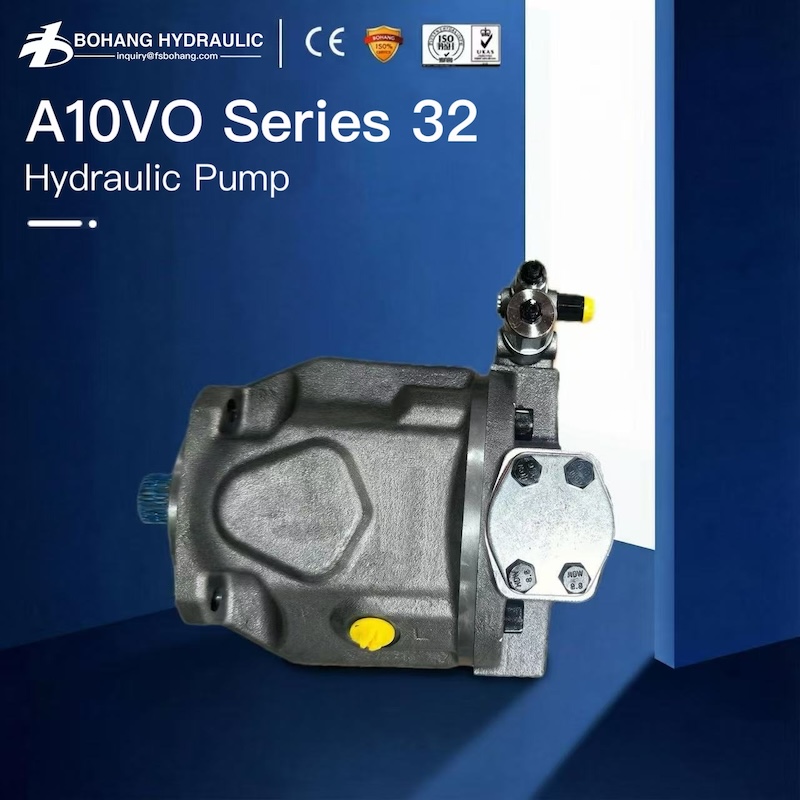
Choosing the right hydraulic pump is not only about matching a model number or comparing prices. Before selecting a brand, size, or quotation, you first need to decide whether your system requires a fixed displacement hydraulic pump or a variable displacement hydraulic pump.
This choice affects system efficiency, oil temperature, control accuracy, maintenance needs, purchase cost, and long-term operating performance.
A fixed displacement pump delivers a constant flow at a given speed, making it suitable for systems with stable flow demand. A variable displacement pump can adjust output according to system requirements, which is better for machines with changing loads, longer working hours, or higher efficiency needs.
What Does a Hydraulic Pump Do?
A hydraulic pump converts mechanical power from an electric motor, diesel engine, or other prime mover into hydraulic energy.
In practical terms, the pump draws hydraulic oil from the tank and pushes it into the hydraulic circuit. The pump creates flow. System pressure is created when that flow meets resistance from a load, valve, cylinder, motor, or actuator.
This point is important because many pump selection mistakes start with a misunderstanding: A hydraulic pump supplies flow. The system load creates pressure. Flow affects actuator speed. Pressure affects output force or torque. When choosing a hydraulic pump, both must be considered together.
What Is Pump Displacement?
Pump displacement is the theoretical volume of hydraulic oil a pump moves in one full revolution of its drive shaft. It is usually measured in cc/rev, cm³/rev, or in³/rev.
In practical terms, displacement determines how much flow a pump can produce at a given speed. A larger displacement pump delivers more oil per revolution, while a smaller displacement pump delivers less.
The basic relationship is:
Flow = Displacement × Pump Speed × Volumetric Efficiency
Actual flow may be slightly lower than the theoretical value because of internal leakage, oil viscosity, operating pressure, and pump wear.
For a fixed displacement pump, the displacement stays constant, so flow mainly depends on pump speed. For a variable displacement pump, the displacement can be adjusted during operation to increase or reduce flow according to system demand.
When selecting a pump, displacement should match the required flow and actuator speed. A pump that is too small may not provide enough movement speed, while a pump that is too large can create excess flow, heat, energy loss, and higher load on the motor or engine.
What Is a Fixed Displacement Hydraulic Pump?
A fixed displacement hydraulic pump moves the same volume of oil during each shaft rotation. At a given input speed, the pump output flow remains nearly constant.
If the system needs less flow than the pump produces, the extra oil must be redirected through valves, returned to the tank, or controlled by other circuit components. This makes fixed displacement pumps simple and reliable, but not always the most energy-efficient option for variable-load systems.
Common Types of Fixed Displacement Pumps
Fixed displacement designs include:
- Gear pumps
- Fixed vane pumps
- Fixed axial piston pumps
- Fixed bent-axis piston pumps
- Gerotor pumps
Gear pumps are common in simple and cost-sensitive systems. Fixed piston pumps are often used where higher pressure and stronger durability are required.
Advantages of Fixed Displacement Pumps
Fixed displacement pumps are widely used because they are practical, strong, and easy to understand.
Key advantages include:
- Simple structure
- Lower initial purchase cost
- Easier maintenance
- Good reliability in stable working conditions
- Fast replacement for many standard systems
- Suitable for continuous flow applications
- Lower technical requirements for troubleshooting
For many machines, a fixed displacement pump is the most economical choice. If the hydraulic system needs a steady flow and does not require advanced control, there is usually no reason to make the system more complicated than necessary.
Limitations of Fixed Displacement Pumps
The main limitation is that the pump keeps delivering flow even when the system does not need all of it.
When extra flow is forced through a relief valve or bypass circuit, energy is converted into heat. This may cause:
- Higher oil temperature
- Lower system efficiency
- More cooling demand
- Faster oil degradation
- Extra wear on seals and components
- Unnecessary fuel or electricity consumption
In a simple machine with short operating hours, this may not be a major problem. In equipment that runs all day under changing loads, wasted flow can become expensive.
Best Applications for Fixed Displacement Pumps
Fixed displacement hydraulic pumps are suitable for systems with stable and predictable flow demand.
Typical applications include:
- Agricultural machinery
- Lubrication systems
- Material handling equipment
- Machine tools
- Simple hydraulic presses
- Conveyors
- Hydraulic power units
- Municipal machinery
- Replacement systems where original pump displacement is fixed
A fixed displacement pump is often the right choice when the system is simple, the budget is limited, and the flow requirement does not change much during operation.
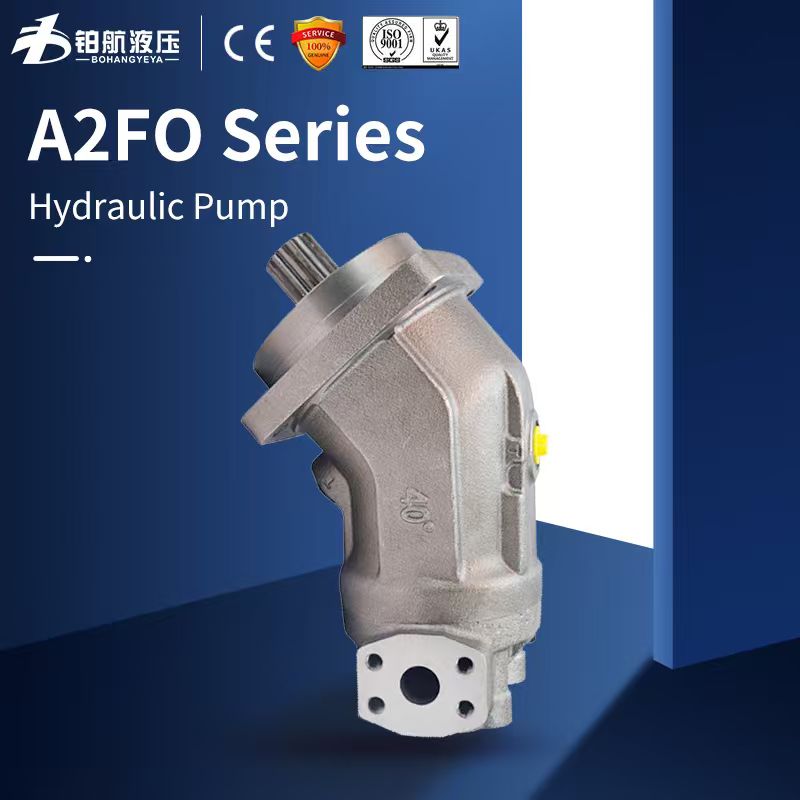
Fixed Displacement Axial Piston Pump
What Is a Variable Displacement Hydraulic Pump?
A variable displacement hydraulic pump can change the amount of oil it delivers per rotation. Instead of producing constant flow all the time, it adjusts output according to system demand.
Most high-pressure variable displacement pumps are piston pumps. In many axial piston designs, displacement is changed by adjusting the angle of the swash plate. A larger angle creates a longer piston stroke and more flow. A smaller angle reduces stroke and flow. At or near zero displacement, the pump can greatly reduce output while still rotating.
Common Types of Variable Displacement Pumps
Variable displacement pump designs include:
- Variable axial piston pumps
- Variable bent-axis piston pumps
- Variable vane pumps
- Load-sensing piston pumps
- Pressure-compensated piston pumps
- Electro-proportional controlled pumps
Variable axial piston pumps are especially common in mobile machinery, industrial equipment, and high-pressure hydraulic systems.
Advantages of Variable Displacement Pumps
The biggest advantage is that the pump can match system demand more closely.
Key benefits include:
- Better energy efficiency under changing loads
- Lower heat generation
- More precise flow and pressure control
- Suitable for complex hydraulic circuits
- Better performance in high-duty-cycle equipment
- Reduced need to dump excess flow
- Improved operator control in mobile machinery
- Better support for automation and proportional control
For equipment that works under changing load, speed, or pressure conditions, a variable displacement pump can improve both performance and long-term operating cost.
Limitations of Variable Displacement Pumps
Variable displacement pumps are more advanced, but they are not always the best choice.
Common limitations include:
- Higher initial cost
- More complex internal structure
- Higher sensitivity to oil contamination
- More demanding maintenance
- More difficult troubleshooting
- More careful system design required
- Higher cost for spare parts and repair
A variable pump must be selected, installed, and maintained properly. Poor filtration, incorrect oil viscosity, wrong compensator settings, or bad inlet conditions can reduce pump life.
Best Applications for Variable Displacement Pumps
Variable displacement pumps are best for systems where flow or pressure demand changes frequently.
Typical applications include:
- Excavators
- Loaders
- Cranes
- Concrete machinery
- Mining equipment
- Injection molding machines
- Hydraulic presses
- Marine systems
- Industrial automation
- Closed-loop hydrostatic drives
- Load-sensing mobile hydraulic systems
- High-efficiency hydraulic power units
If the machine works long hours, changes load often, or requires accurate control, a variable displacement pump is often worth the higher initial investment.
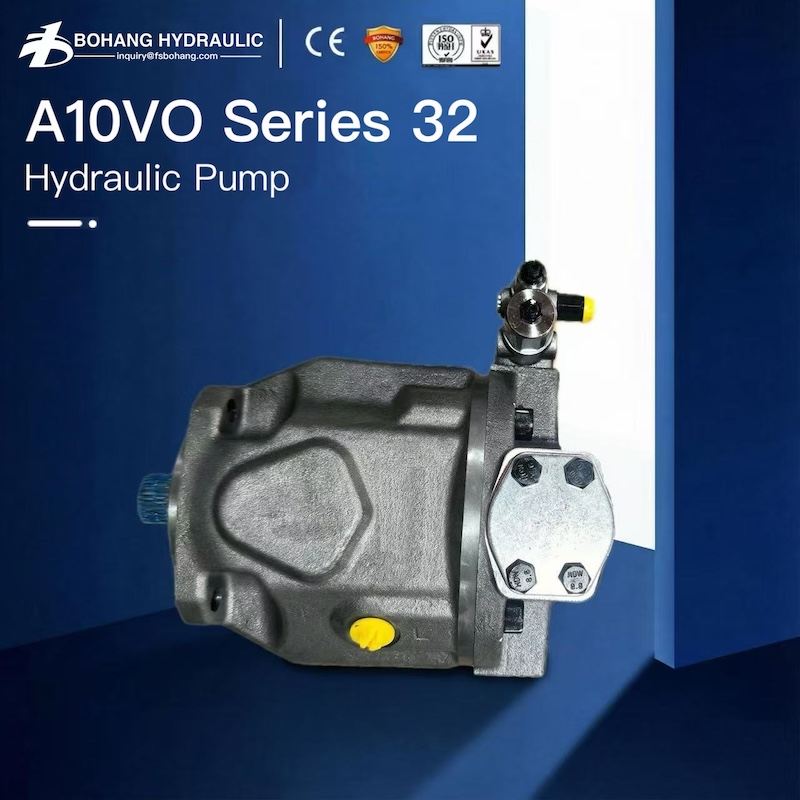
Fixed vs. Variable Displacement Hydraulic Pumps: Main Differences
| Factor | Fixed Displacement Pump | Variable Displacement Pump |
|---|---|---|
| Flow output | Constant at a given speed | Adjustable according to demand |
| Structure | Simpler | More complex |
| Initial cost | Lower | Higher |
| Efficiency | Good for steady-flow systems | Better for variable-load systems |
| Heat generation | Can be higher when excess flow is dumped | Usually lower under part-load conditions |
| Control accuracy | Limited | Higher |
| Maintenance | Easier | Requires cleaner oil and better diagnostics |
| Best use | Simple, stable hydraulic circuits | Complex, high-efficiency, variable-load systems |
| Common designs | Gear, vane, fixed piston | Variable piston, variable vane |
| Typical buyer | Cost-sensitive replacement or simple OEM system | OEM, mobile machinery, industrial automation, heavy-duty user |
Which Pump Is More Efficient?
A variable displacement pump is usually more efficient in systems with changing flow demand because it can reduce output when full flow is not required.
However, this does not mean variable pumps are always more efficient in every situation.
If a machine needs a constant flow all the time, a fixed displacement pump can be efficient, simple, and cost-effective. In this case, paying more for a variable pump may not bring enough return.
The real question is not “Which pump is better?” but:
How does your hydraulic system actually work during a full operating cycle?
For example:
- A conveyor that runs at constant speed may work well with a fixed displacement pump.
- An excavator with constantly changing boom, arm, bucket, swing, and travel loads usually benefits from a variable displacement pump.
- A hydraulic press may need high flow during fast approach but lower flow during pressure holding, making variable displacement control attractive.
- A simple agricultural attachment may not need advanced pump control.
Efficiency depends on the duty cycle.
How to Choose Between Fixed and Variable Displacement Pumps
The best pump choice depends on how your hydraulic system works in real operating conditions. Instead of choosing only by price or pump type, start with the system’s flow demand, load changes, working hours, control requirements, and maintenance conditions.
Below are the key points to check before selecting a fixed or variable displacement hydraulic pump.
1. Check Whether the Flow Demand Is Constant or Variable
Flow demand is the first factor to consider. If your machine needs a steady flow most of the time, a fixed displacement pump is usually a practical and cost-effective choice. It delivers a constant amount of oil at a given speed and works well in simple circuits.
Typical examples include:
- Lubrication systems
- Simple lifting systems
- Conveyors
- Basic hydraulic power units
- Some agricultural attachments
If your machine often needs different flow rates during operation, a variable displacement pump is usually a better option. It can reduce or increase output according to system demand, which helps improve efficiency and control.
Typical examples include:
- Excavators
- Loaders
- Hydraulic presses
- Injection molding machines
- Marine hydraulic systems
- Load-sensing mobile machinery
A simple rule is: stable flow demand favors fixed displacement; changing flow demand favors variable displacement.
2. Consider How Often the Load Changes
A fixed displacement pump can work well when the load is predictable. However, if the machine frequently switches between light load, heavy load, idle, and peak pressure conditions, a fixed pump may send more oil than the system actually needs. That extra flow often returns to the tank through valves, which can create heat and waste energy.
A variable displacement pump is better suited for changing loads because it can reduce displacement when full flow is not required. This is especially useful in equipment with multiple hydraulic functions, such as boom lifting, steering, clamping, pressing, or travel drive.
For machines with frequent load changes, choosing a variable displacement pump can help reduce:
- Unnecessary flow loss
- Oil temperature rise
- Engine or motor load
- Fuel or electricity consumption
- Wear caused by excessive heat
3. Look at Daily Working Hours
Working time has a direct impact on pump selection. If the machine runs only occasionally or for short periods, the lower purchase cost of a fixed displacement pump may be more important than energy savings. If the machine runs for many hours every day, a variable displacement pump may offer better long-term value. Even if the initial cost is higher, it can reduce wasted power and heat during part-load operation.
| Working Condition | Better Choice | Reason |
|---|---|---|
| Short operating time, simple movement | Fixed displacement pump | Lower cost and easy maintenance |
| Long working hours, changing load | Variable displacement pump | Better efficiency and lower heat |
| Constant flow all day | Fixed displacement pump | Simple and reliable |
| Frequent idle or partial-load operation | Variable displacement pump | Reduces unnecessary output |
4. Check Whether Heat Is Already a Problem
Oil temperature is a useful warning sign.
If your hydraulic system often runs hot, the pump may be producing more flow than the circuit needs. In fixed displacement systems, unused flow is commonly forced through relief valves or bypass circuits, which converts energy into heat.
In this case, simply replacing the old pump with a larger fixed pump may make the problem worse.
A variable displacement pump may help if the system needs lower flow during part of the operating cycle. However, the full circuit should still be checked, including:
- Relief valve setting
- Pump size
- Oil viscosity
- Tank capacity
- Cooler performance
- Hose and pipe size
- Valve pressure drop
- Inlet line condition
If overheating is caused by contamination, cavitation, wrong oil viscosity, or poor cooling, changing pump type alone will not solve the problem.
5. Match the Pump to the Control Requirement
Some systems only need basic movement: extend, retract, lift, lower, or rotate. These systems usually do not require advanced pump control, so a fixed displacement pump may be enough.
Other systems need more precise control of speed, pressure, power, or load response. In these cases, a variable displacement pump is often a better choice.
Choose a variable displacement pump when the system requires:
- Pressure compensation
- Load sensing
- Power limiting
- Smooth speed control
- Multiple actuator control
- Electro-proportional control
- Better response under changing load
This is common in construction machinery, industrial presses, mobile equipment, and automated hydraulic systems.
6. Evaluate Maintenance Conditions
Fixed displacement pumps are usually easier to maintain. Their structure is simpler, and they are more forgiving in basic hydraulic systems.
Variable displacement pumps have tighter internal tolerances and more control components. They usually require cleaner oil, better filtration, and more careful troubleshooting.
Before choosing a variable pump, make sure the system can support it with:
- Proper filtration
- Clean hydraulic oil
- Correct oil viscosity
- Stable inlet conditions
- Trained maintenance staff
- Correct pressure and control settings
If the equipment operates in a dirty environment and maintenance is limited, a fixed displacement pump may be the safer and more economical option.
7. Do Not Choose by Pump Price Alone
A fixed displacement pump usually has a lower purchase price. A variable displacement pump usually costs more because it has more precision parts and control functions.
However, the real cost should include more than the pump price.
Before making a decision, compare:
- Purchase cost
- Energy or fuel cost
- Cooling cost
- Maintenance cost
- Downtime cost
- Oil life
- Spare parts cost
- Expected service life
For simple machines, a fixed displacement pump may deliver the best value. For high-duty-cycle machines, a variable displacement pump may reduce long-term operating costs.
Maintenance Tips for Longer Pump Life
Whether you use a fixed or variable displacement hydraulic pump, maintenance has a major effect on service life.
For Fixed Displacement Pumps
- Keep inlet lines properly sized
- Avoid long-term relief valve operation
- Check oil temperature regularly
- Use the correct oil viscosity
- Inspect seals and bearings
- Listen for abnormal noise
- Prevent cavitation and aeration
- Replace filters on schedule
For Variable Displacement Pumps
- Maintain higher oil cleanliness
- Check compensator settings
- Inspect control pressure
- Monitor case drain flow
- Avoid incorrect swash plate control adjustment
- Use proper filtration
- Confirm inlet conditions
- Keep oil temperature within the recommended range
A hydraulic pump should not be treated as an isolated part. It is part of a complete hydraulic system. Good inlet design, clean oil, correct valves, proper cooling, and accurate settings all matter.
Bohang Hydraulic Pump Solutions
Bohang Hydraulic supplies fixed and variable displacement hydraulic pumps for mobile and industrial applications, including axial piston pumps, gear pumps, hydraulic motors, spare parts, and customized hydraulic solutions.
For replacement projects, the pump must match more than pressure and displacement. Shaft type, mounting flange, port configuration, rotation direction, circuit type, and control method should also be confirmed.
Our team can help select suitable hydraulic pump replacements for construction machinery, agricultural equipment, material handling machines, marine systems, and industrial hydraulic equipment.
Not sure which pump type you need? Send us your pump model, photos, and application details, and we will help recommend a suitable solution.
Conclusion
Fixed and variable displacement hydraulic pumps are used for different hydraulic system requirements. A fixed displacement pump provides constant flow and is suitable for stable, cost-sensitive applications. A variable displacement pump adjusts output based on system demand, offering better efficiency, lower heat generation, and improved control for machines with changing loads, long working hours, or higher performance needs.
FAQ
Q1. Should I choose a fixed or variable displacement hydraulic pump?
A: Choose a fixed displacement pump if your system needs steady flow, simple movement, and lower purchase cost. Choose a variable displacement pump if your machine has changing loads, long working hours, high oil temperature, or requires better flow and pressure control.
Q2. Why does my hydraulic system overheat after replacing the pump?
A: Overheating is often caused by excess flow, incorrect pump displacement, wrong relief valve settings, poor oil viscosity, contamination, or insufficient cooling. If a fixed displacement pump produces more flow than the system needs, the extra oil may return through valves and create heat.
Q3. Is a variable displacement pump always better than a fixed displacement pump?
A: No. A variable displacement pump is better for variable-load and high-efficiency systems, but it costs more and requires cleaner oil and better maintenance. For simple systems with constant flow demand, a fixed displacement pump is often more economical and reliable.
Q4. Can I replace a fixed displacement pump with a variable displacement pump?
A: It depends on the hydraulic circuit. You must check the pump displacement, pressure rating, shaft, flange, port size, rotation direction, circuit type, control method, and valve configuration. Direct replacement without checking the full system may cause poor performance or pump failure.