
Axial piston motors are used when a machine needs substantial torque from a compact drive, efficient operation at medium or high pressure, and controlled speed. Typical duties include excavator travel and swing, crane winches, road machinery, agricultural equipment, industrial conveyors, injection molding machines, marine deck machinery and drilling equipment.
The machine name alone is not enough for selection. Starting torque, speed range, duty cycle, shock loads, circuit type, cooling, oil cleanliness and load holding all affect the result.
Where Are Axial Piston Motors Used?
An axial piston motor converts hydraulic flow and pressure into rotary speed and torque. Its power density and control options suit limited installation space and changing operating conditions.
| Machine or system | Driven function | Main demand | Common starting point |
|---|---|---|---|
| Excavator and loader | Track, swing or auxiliary drive | Starting torque, shock resistance, speed range | Variable for travel, fixed or variable for swing |
| Crane and aerial lift | Winch, slewing or boom | Controlled motion, braking, load holding | Motor with separate brake and load control valve |
| Road equipment | Roller, paver or grader travel | Low speed traction and transport speed | Variable bent axis motor |
| Tractor and harvester | Propel, header, fan or auger | Compact size and speed adjustment | Fixed for steady duty, variable for changing load |
| Factory machinery | Conveyor, mixer, molding screw or press | Repeatable speed and long duty cycles | Selected from the actual load profile |
| Marine equipment | Winch, steering or deck machinery | Sealing, corrosion protection and approvals | Application specific motor and valve package |
| Drill and crusher | Rotary head, feeder or travel | Torque, vibration and dirty conditions | Heavy duty fixed or variable motor |
Drill and crusher Rotary head, feeder or travel Torque, vibration and dirty conditions Heavy duty fixed or variable motor
Mobile and Construction Applications
Excavator Travel and Swing
A crawler excavator needs high tractive effort at low speed, then a higher speed when it relocates. A variable displacement motor can increase displacement for more track torque and reduce it for travel speed.
A swing drive has a different duty. The upper structure carries inertia, so smooth acceleration and deceleration matter. Anti shock valves, make up oil, a correctly sized brake and proper case drainage are part of the solution. Maximum pressure alone does not describe these requirements.
Cranes, Winches and Aerial Lifts
A hydraulic motor can raise a load, but it should not be treated as the device that safely holds it. Winch and boom circuits normally require a mechanical brake and a suitable counterbalance or overcenter valve. Check brake release pressure, lowering stability, minimum inlet pressure and overrunning loads.
For frequent lifting, compare starting efficiency and low speed behavior, not only rated speed. A motor that performs well at normal speed may move unevenly during inching.
Road and Agricultural Machinery
Road rollers, pavers and graders use hydrostatic drives to balance traction with vehicle speed. Agricultural machines use piston motors for propel drives, headers, augers, seeders, sprayers and cooling fans.
A fixed motor suits a stable operating point. A variable motor helps when one actuator must cover a broader torque and speed range.
For a fan that runs for long periods, confirm continuous pressure and speed at the expected oil temperature, not just peak values.
Industrial, Marine and Specialist Applications
In factories, axial piston motors drive conveyors, mixers, molding screws and other rotating loads. Injection molding needs controlled screw rotation and repeatability. Material handling may prioritize continuous duty and predictable speed. Repeated pressure peaks in forming equipment should be included in the duty profile before motor life is assessed.
Marine winches and steering systems add salt, humidity and limited maintenance access. Drilling rigs and crushers add shock, dust and vibration.
Shaft sealing, surface protection, case pressure and filtration can be as important as displacement. Any required marine approval must be confirmed for the exact configuration, not inferred from a product family.
Fixed or Variable Displacement?
Decision point Fixed displacement Variable displacement
Speed and torque Change mainly with flow and pressure Can change with displacement
Complexity Lower Higher
Typical fit Fan, conveyor, mixer and steady auxiliary drive Travel, winch or process with a broad range
Commissioning Usually simpler Requires control and response checks
Buying focus Displacement and pressure rating Control type, displacement range and default position
A fixed motor is not always the lower cost choice if the circuit wastes energy across throttling valves to control speed. A variable motor adds controls and commissioning, but can provide a wider operating range.
Compare the full duty cycle and system losses rather than component price alone.
A plug in configuration can shorten a gearbox installation. The interface drawing, shaft loads, brake arrangement and allowable case pressure still need review.
How to Select an Axial Piston Motor
Start with the load, then work back to the hydraulic system.
1. Calculate torque: Theoretical torque in newton metres equals pressure in bar multiplied by displacement in cubic centimetres per revolution, divided by 62.83. Actual shaft torque is lower because mechanical efficiency changes with pressure, speed, temperature and wear.
2. Calculate speed and flow: Theoretical speed in revolutions per minute equals flow in litres per minute multiplied by 1,000, divided by displacement. Apply volumetric efficiency and confirm the permitted speed.
3. Separate continuous and peak duty: Record normal pressure, peak pressure and duration, starts per hour, reversals and daily running time. Peak pressure is not a continuous rating.
4. Define circuit and control: State open or closed circuit, charge and return pressure, flushing needs and case drain routing. For a variable motor, specify the control method and required default position.
5. Check installation: Confirm shaft, flange, rotation, gearbox ratio, external shaft loads, fluid, viscosity, temperature, filtration target, corrosion exposure and available space.
Standards, Reliability and Common Mistakes
ISO 4413:2010 gives general rules and safety requirements for hydraulic systems. ISO 4406:2021 defines the code used to report solid particle contamination.
Neither provides one cleanliness target for every motor. The target should come from the selected component, system risk and operating environment.
Common selection mistakes include:
- choosing from rated power without checking breakaway torque
- using peak pressure as a continuous operating point
- omitting a dedicated case drain or allowing excessive case pressure
- expecting the motor to hold a suspended load by itself
- matching dimensions while ignoring control behavior
- requesting a replacement without full nameplate and shaft details
Contamination can damage piston and valve plate interfaces. Commissioning should include flushing, oil sampling, leak and case drain checks, plus confirmation of relief, brake and control settings.
Matching Bohang Motor Families to the Duty
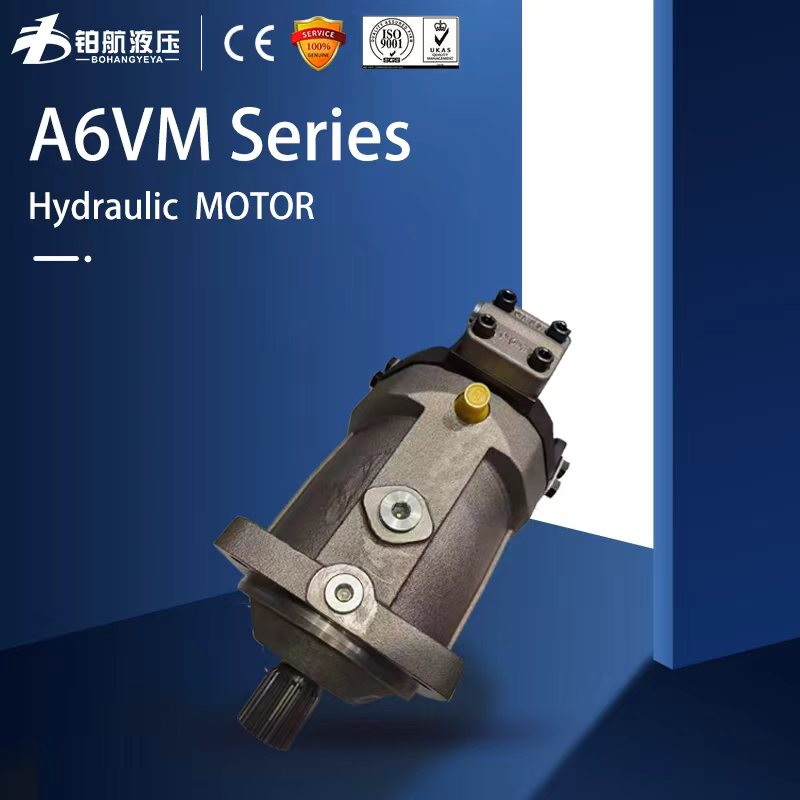
Bohang's published hydraulic motor range includes A2FM and A4FM fixed motors, A6VM variable motors, and A2FE or A6VE plug in motors for gearbox integration.
The range is positioned for construction, road, agricultural, drilling, concrete, lifting and marine machinery.
Use these associations as a shortlist, not final approval. For a replacement or custom request, send:
- complete motor model code
- required displacement
- continuous and peak pressure
- target speed and required torque
- control description
- shaft and flange drawing
- open or closed circuit type
- hydraulic fluid and temperature range
- expected annual quantity
The engineering team can then check the proposed configuration before quotation.
FAQ
Q1. Can an axial piston pump be used as a motor?
A: Some units can work in both modes, but the manufacturer must confirm it. Porting, controls, lubrication, case pressure, rotation and load capability may differ. Appearance does not prove interchangeability.
Q2. Are axial piston motors suitable for low speed operation?
A: They can provide strong torque at low speed, but smoothness and efficiency depend on the design and operating point. For very low speed direct drive duty, also compare a radial piston motor or reduction gearing.
Q3. Which motor is better for an excavator, fixed or variable?
A: Travel drives often benefit from variable displacement because the machine needs traction and travel speed. Swing and auxiliary functions may use either type. The circuit, gearbox and control strategy determine the choice.
Q4. What information speeds up a replacement quotation?
A: Provide nameplate photographs, every model code character, machine model, shaft and flange dimensions, rotation, pressure, speed, control signal and fault symptoms. A complete duty description is more useful than the machine name alone.
Conclusion
Axial piston motors are used in mobile, industrial, agricultural, marine and specialist machinery that needs compact power, high torque and controlled speed. They drive excavator tracks, crane winches, road equipment, harvesters, conveyors, molding screws, drills and deck machinery. Selection should follow the actual duty, not the machine name alone. Compare torque, displacement, speed, pressure, circuit type, controls, case drainage, braking, filtration and mounting. Fixed motors suit stable loads, while variable motors cover wider speed and torque ranges. Accurate operating data helps Bohang match the motor to the complete work cycle.