
Hydraulic valves manage how fluid moves through the system. They control direction, pressure, flow rate, actuator speed, load holding, and system protection. Without the right valves, a hydraulic system may move too fast, lose pressure, overheat, waste energy, or become unsafe to operate.
For equipment owners, engineers, maintenance teams, and buyers, hydraulic valves are not just small components inside a circuit. They directly affect machine performance, safety, efficiency, downtime, and long-term operating cost.
What Is a Hydraulic Valve?
A hydraulic valve is a control component used to regulate hydraulic fluid in a system. It can start, stop, redirect, limit, or adjust fluid movement.
A valve may control:
- Where hydraulic fluid goes
- How much pressure the system reaches
- How fast a cylinder extends or retracts
- Whether fluid can flow backward
- Whether a load stays in position
- How the system responds under changing load conditions
This makes hydraulic valves critical in equipment such as excavators, hydraulic presses, injection molding machines, agricultural machinery, lifting platforms, marine equipment, mining machines, and industrial production lines.
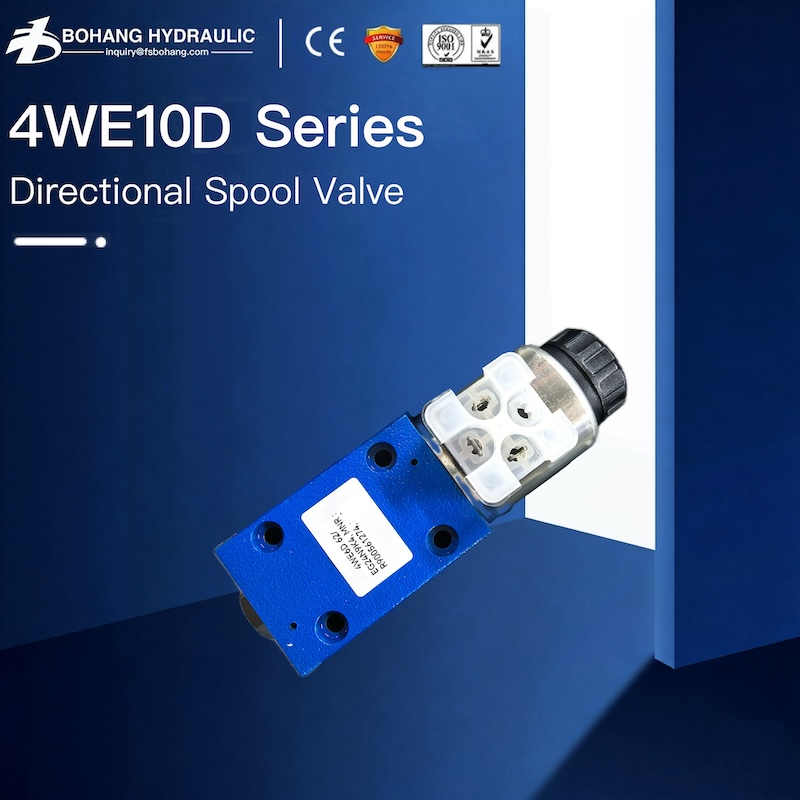
4WE6D Series Replacemnt Directional Spool Valves
Why Hydraulic Valves Are Critical
Hydraulic valves are critical because they control how hydraulic energy is directed, limited, and converted into usable motion. The pump creates flow, but valves determine where that flow goes, how much pressure the system can handle, how fast actuators move, and how safely the machine operates under changing load conditions.
1. They Control Fluid Direction and Machine Movement
In a hydraulic system, fluid must be directed accurately to cylinders, motors, or auxiliary circuits. Directional control valves determine whether an actuator extends, retracts, stops, reverses, or holds position. This makes them essential for machines that require predictable movement and operating sequences.
- Direct fluid to the correct actuator
- Control cylinder extension and retraction
- Support forward, reverse, and neutral positions
- Improve motion accuracy and machine response
- Help prevent incorrect or unstable movement
2. They Keep System Pressure Within Safe Limits
Hydraulic systems often operate under high pressure. When load resistance increases, pressure can rise quickly. Pressure control valves help keep the system within safe operating limits and protect critical components from overload, overheating, and mechanical damage.
- Relief valves limit maximum system pressure
- Pressure reducing valves protect lower-pressure circuits
- Sequence valves control operation order
- Counterbalance valves help control heavy or overrunning loads
- Proper pressure control reduces hose, seal, pump, and actuator damage
3. They Regulate Flow and Actuator Speed
Flow determines how fast hydraulic cylinders and motors move. If flow is not properly controlled, the machine may move too quickly, too slowly, or inconsistently under load. Flow control valves help stabilize movement and improve process repeatability.
- Control cylinder extension and retraction speed
- Stabilize hydraulic motor speed
- Reduce shock during start, stop, or end stroke
- Improve cycle consistency
- Support smoother and more accurate machine operation
4. They Improve Efficiency and Reduce Heat
Valve selection has a direct impact on hydraulic system efficiency. A poorly sized or incorrectly adjusted valve can create pressure drop, internal leakage, unnecessary bypass flow, and heat buildup. These problems waste energy and shorten component life.
- Reduce unnecessary pressure loss
- Minimize wasted bypass flow
- Help control oil temperature
- Lower energy consumption
- Extend the life of pumps, seals, oil, and actuators
5. They Prevent Load Drift and Unsafe Movement
In lifting, pressing, clamping, tilting, or mobile equipment applications, uncontrolled movement can be dangerous. Load-control valves help hold actuators in position and prevent loads from dropping, drifting, or accelerating unexpectedly.
- Counterbalance valves control overrunning loads
- Pilot-operated check valves help hold cylinders in position
- Load-holding valves prevent drift under pressure loss
- Improve safety in lifting and mobile equipment
- Protect operators, machines, and workpieces
6. They Make Troubleshooting More Accurate
Many hydraulic problems appear to be pump or cylinder failures, but the root cause is often valve-related. A sticking spool, worn seat, incorrect relief setting, blocked pilot passage, or contaminated valve can affect pressure, speed, heat, and actuator response.
- Low pressure may come from a leaking or stuck valve
- Slow movement may result from restricted flow
- Jerky motion may indicate spool sticking or unstable control
- Load drift may be caused by internal valve leakage
- Checking valve behavior helps avoid unnecessary pump replacement
Main Types of Hydraulic Valves
Directional Control Valves
Directional control valves determine the path of hydraulic fluid. They are used to start, stop, extend, retract, or reverse actuator movement. A simple directional valve may control a single-acting cylinder, while a more complex spool valve may manage multiple actuator positions.
These valves may be manually operated, solenoid-operated, pilot-operated, hydraulically actuated, or electronically controlled. In mobile machinery and industrial automation, directional control valves are essential because they determine the actual working sequence of the machine.
Pressure Control Valves
Pressure control valves regulate or limit pressure within a hydraulic circuit. This category includes relief valves, reducing valves, sequence valves, counterbalance valves, and unloading valves.
A pressure relief valve is one of the most important protection components in a hydraulic system. It prevents excessive pressure by opening when system pressure reaches the set value. Correct setting is critical. Relief valves should be adjusted according to the machine drawings and verified with proper pressure gauges, not by guesswork.
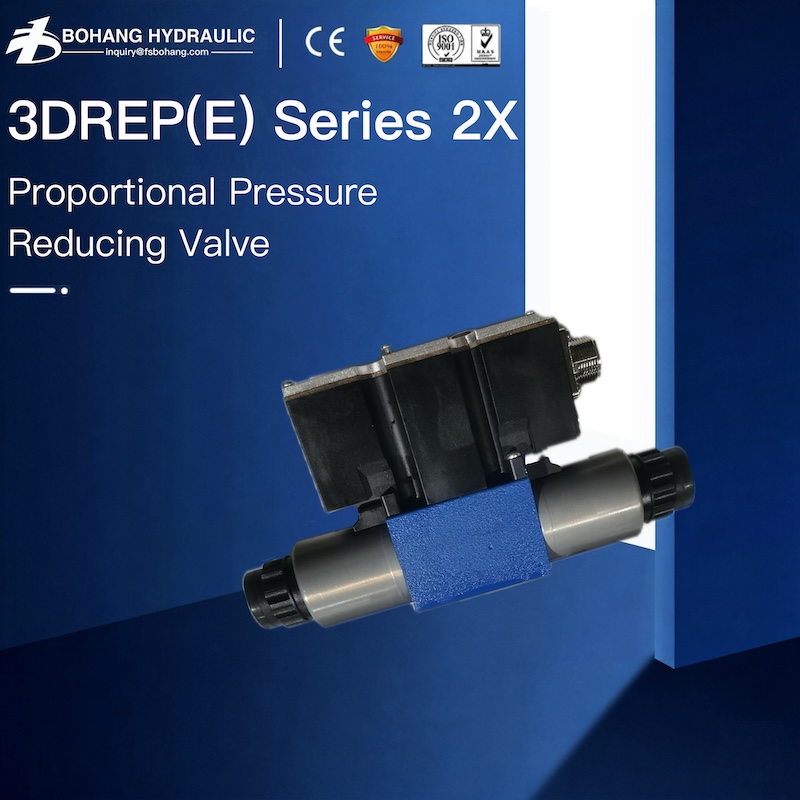
3DREP(E) Series Replacement Proportional Pressure Reducing Valve
Flow Control Valves
Flow control valves regulate the speed of actuators by controlling how much fluid passes through the valve. If a cylinder is moving too quickly or too slowly, the flow control valve is often part of the adjustment.
Basic flow control valves restrict flow manually. More advanced pressure-compensated flow control valves help maintain a more consistent flow even when load pressure changes. This is useful when a machine needs stable speed under variable operating conditions.
Check Valves and Non-Return Valves
Check valves allow fluid to flow in one direction and block reverse flow. Although they are simple, they are extremely important in hydraulic circuits. They can help maintain pressure, prevent backflow, protect pumps, and support load-holding functions.
Pilot-operated check valves provide additional control because they can be opened by pilot pressure when reverse flow is required. These are often used where a cylinder must hold position until the system intentionally releases it.
Proportional and Servo Valves
Proportional and servo valves are used when the system needs more precise control than a simple on/off valve can provide. A proportional valve can adjust flow or pressure according to an electrical input signal. A servo valve provides very high precision and fast response for demanding applications.
These valves are common in systems where smooth motion, repeatable positioning, or controlled acceleration is required, such as test equipment, metal forming machines, aerospace systems, robotics, and advanced industrial machinery.
Common Signs of Hydraulic Valve Problems
A hydraulic valve does not need to fail completely to create problems. Even small issues can affect the entire system.
| Symptom | Possible Valve-Related Cause |
|---|---|
| Slow cylinder movement | Restricted flow, clogged valve, incorrect setting |
| Jerky movement | Spool sticking, air in oil, unstable flow control |
| Low pressure | Relief valve stuck open, internal leakage |
| Excessive heat | Pressure drop, bypass flow, incorrect valve sizing |
| Load drifting | Worn check valve, leaking counterbalance valve |
| Noise or vibration | Valve chatter, cavitation, pressure instability |
| Poor repeatability | Contamination, worn spool, electrical control issue |
| No actuator response | Solenoid failure, blocked passage, wrong valve position |
How to Choose the Right Hydraulic Valve
When selecting a hydraulic valve, the first question should not be “Which valve is cheapest?” The better question is “What does the system need the valve to control?”
A practical valve selection process should review:
- Required function: direction, pressure, flow, load holding, sequence, or safety protection
- Working pressure and peak pressure
- Flow rate and acceptable pressure drop
- Type of actuator being controlled
- Load behavior and speed requirement
- Manual, hydraulic, pneumatic, solenoid, proportional, or servo actuation
- Mounting style, such as inline, subplate, manifold, cartridge, or stack valve
- Hydraulic fluid type and viscosity range
- Seal compatibility
- Contamination control requirements
- Operating temperature
- Service access and replacement availability
For OEMs and equipment buyers, valve quality also affects long-term support. A low-cost valve may reduce initial purchase cost, but if it causes unstable motion, leakage, heat, or frequent replacement, the total cost of ownership becomes higher.
Bohang Hydraulic — An Excellent Supplier of Hydraulic Pumps and Valves
Bohang Hydraulic provides high-efficiency, energy-saving hydraulic solutions for customers who need reliable pumps, motors, valves, and spare parts. The company focuses on Rexroth-standard piston pumps and motors, with products designed for stable performance, seamless interchangeability, and demanding hydraulic transmission applications.
- Supports construction machinery, agriculture machinery, material handling, industrial equipment, municipal machinery, mining, metallurgy, and marine engineering applications
- Focuses on safe, leak-free, and high-performance hydraulic transmission products
- Uses smart production lines, precision engineering, and digital quality control to improve consistency
- Provides heavy-duty testing support for product reliability and performance validation
- Offers technical consulting and system integration support led by experienced hydraulic engineers
- Helps customers reduce procurement cost, maintenance cost, and long-term operating risk
Conclusion
Hydraulic valves are essential control components in any hydraulic system. They regulate fluid direction, pressure, flow, actuator speed, load holding, and system protection. When selected and maintained correctly, they help the system run more safely, smoothly, and efficiently.
For equipment owners, OEMs, and maintenance teams, the right hydraulic valve can reduce overheating, pressure loss, unstable movement, downtime, and long-term repair costs. Instead of choosing only by price, users should consider working pressure, flow demand, actuator type, load condition, oil cleanliness, and application environment.