
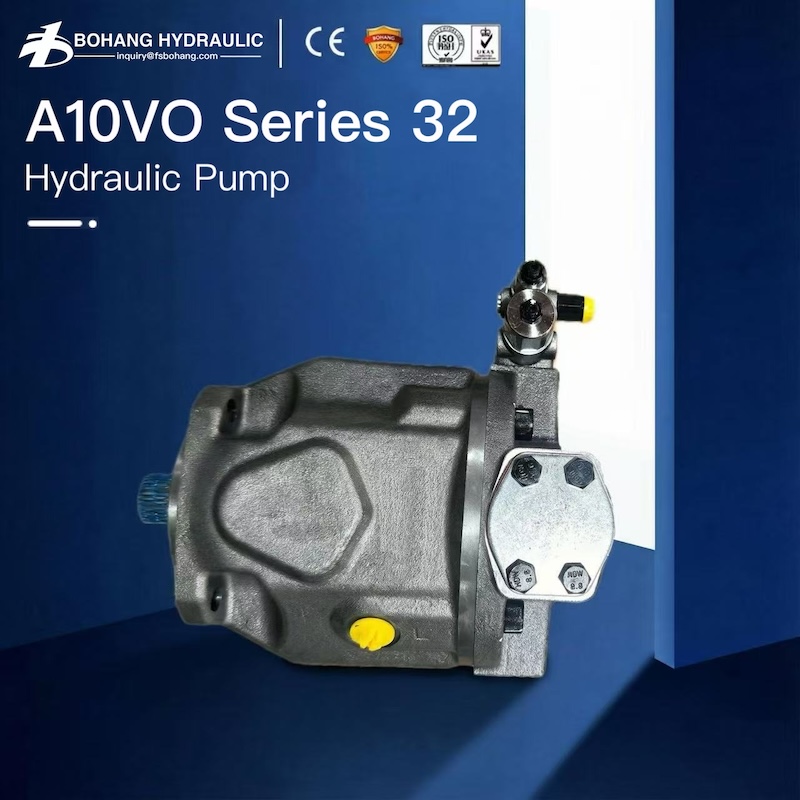
Hydraulic pumps are essential components in fluid power systems. Their main function is to convert mechanical energy into hydraulic flow, allowing oil to circulate and drive cylinders, motors, and other hydraulic components.
A key point often misunderstood is that a pump does not directly generate pressure. It creates flow, while pressure is formed when that flow meets resistance within the system.
In most industrial applications, hydraulic pumps are positive displacement types, delivering a consistent volume of fluid per rotation. Based on their working principles, the most common designs are gear pumps, vane pumps, and piston pumps.
What Is a Hydraulic Pump
A hydraulic pump is a mechanical device used in fluid power systems to move hydraulic oil from a reservoir into a closed circuit. Its primary function is to create flow, which allows energy to be transmitted throughout the system.
One of the most important principles in hydraulics is that a pump does not directly generate pressure. Instead, pressure is formed only when the flowing fluid meets resistance, such as a load, valve restriction, or actuator movement.
In most industrial applications, hydraulic pumps are designed as positive displacement pumps, meaning they deliver a fixed amount of fluid for each rotation or cycle. This consistent output is what makes them suitable for heavy-duty and precision-controlled systems.
Main Types of Hydraulic Pumps Used in Industry
Hydraulic pumps are generally divided into three core types: Gear Pumps, Vane Pumps, Piston Pumps. Each type differs in structure, pressure capability, cost, and suitability for specific working environments.
1. Gear Pumps
Gear pumps are the most widely used hydraulic pump type in industrial and mobile systems due to their simple structure and high reliability.
How Gear Pumps Work
A gear pump uses two meshing gears rotating inside a tightly machined housing. As the gears rotate:
- Fluid enters the inlet side as teeth separate
- Fluid is trapped between gear teeth and housing
- Fluid is carried to the outlet and discharged as teeth mesh again
This design creates a continuous flow with minimal mechanical complexity.
Types of Gear Pumps
- External Gear Pumps: Two identical gears rotating in opposite directions
- Internal Gear Pumps (Gerotor design): One gear rotates inside another, offering smoother and quieter operation
Key Advantages
- Simple structure, easy maintenance
- Strong tolerance to contamination
- Low initial cost
- Reliable in harsh working environments
Limitations
- Fixed displacement (limited flow control)
- Higher noise and pulsation
- Not ideal for very high-pressure systems
Common Applications
- Agricultural machinery
- Forklifts and loaders
- Hydraulic power units (HPU)
- General industrial equipment
From a procurement perspective, gear pumps are usually the “default choice” when budget and durability matter more than precision.
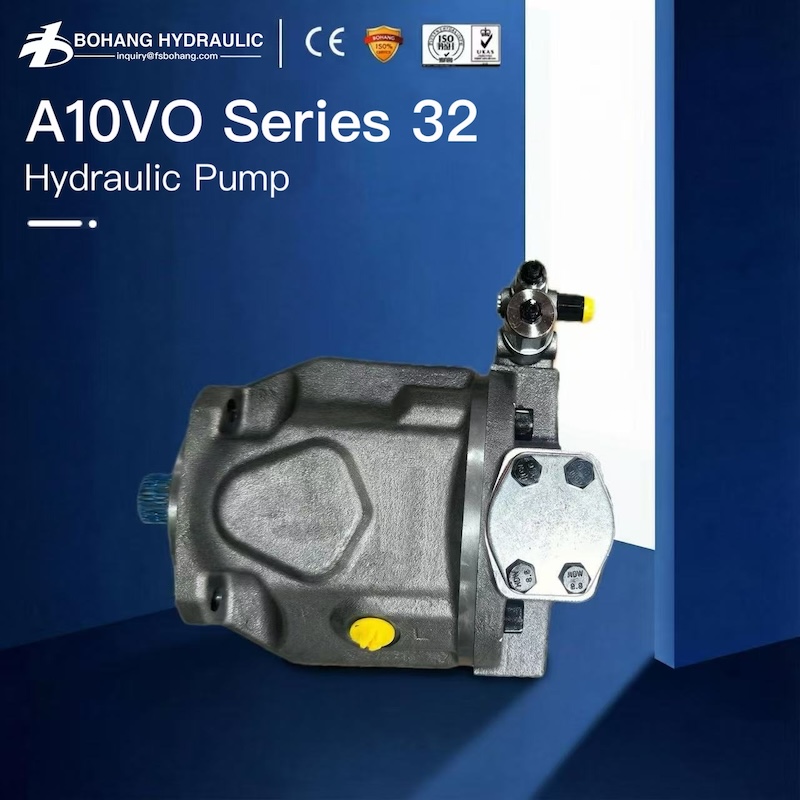
2. Vane Pumps
Vane pumps are designed for applications requiring smoother flow and lower noise compared to gear pumps.
How Vane Pumps Work
A vane pump consists of:
- A rotor inside an eccentric cam ring
- Multiple sliding vanes inside rotor slots
As the rotor spins:
- Vanes extend outward due to centrifugal force
- Chambers expand and contract
- Fluid is drawn in and discharged smoothly
Types of Vane Pumps
- Fixed Displacement Vane Pumps
- Variable Displacement Vane Pumps
Variable designs allow flow adjustment during operation, making them more flexible for control systems.
Key Advantages
- Smooth and stable flow output
- Lower noise levels
- Better efficiency than gear pumps
- Suitable for medium-pressure systems
Limitations
- Sensitive to fluid contamination
- More complex internal structure
- Higher maintenance requirements
Common Applications
- Machine tools
- Injection molding machines
- Automotive power steering
- Material handling systems
Vane pumps are often selected when system stability and operator comfort (noise reduction) are priorities.
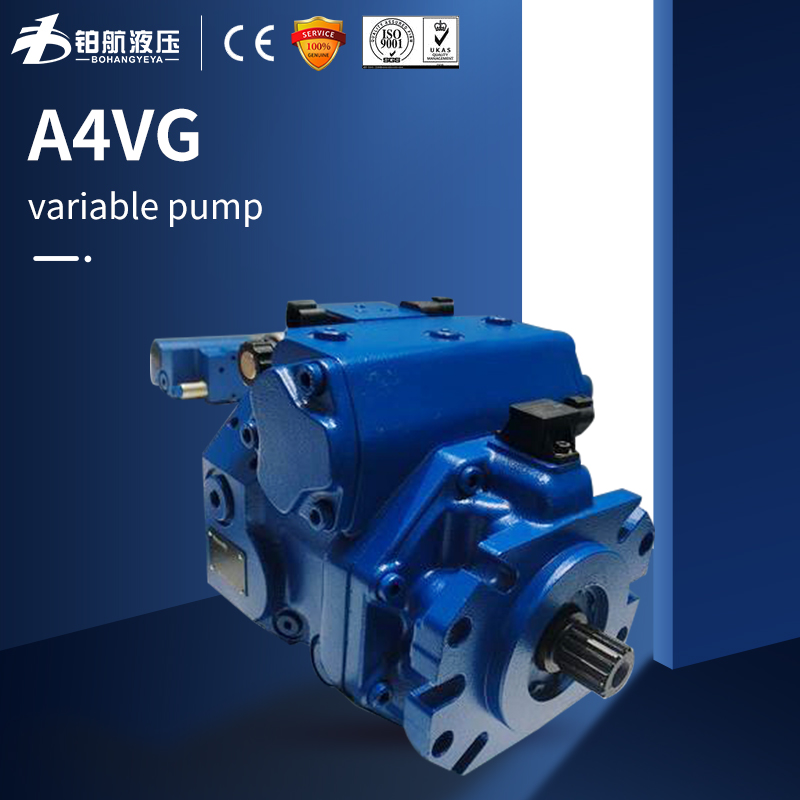
3. Piston Pumps
Piston pumps represent the most advanced category of hydraulic pumps, designed for demanding high-pressure applications.
How Piston Pumps Work
Piston pumps use multiple reciprocating pistons inside a cylinder block:
- Pistons move back and forth as the shaft rotates
- Each stroke draws in and pushes out fluid
- This generates extremely high pressure and efficiency
Types of Piston Pumps
- Axial Piston Pumps: Pistons arranged parallel to the shaft (swash plate or bent-axis design)
- Radial Piston Pumps: Pistons arranged like spokes around a central shaft
Key Advantages
- Extremely high pressure capability
- High volumetric efficiency
- Suitable for continuous heavy-duty operation
- Often variable displacement for flow control
Limitations
- Higher cost
- More complex design
- Requires clean hydraulic oil
- Higher maintenance precision
Common Applications
- Excavators and construction machinery
- Mining equipment
- Injection molding machines
- Aerospace and heavy industrial systems
Gear vs Vane vs Piston Pumps Comparison Table
| Performance Factor | Gear Pumps | Vane Pumps | Piston Pumps |
|---|---|---|---|
| Working Principle | Meshing gears transfer fluid | Sliding vanes in eccentric cam ring | Reciprocating pistons in cylinder block |
| Pressure Range | Low–Medium (≈ up to 250–310 bar) | Medium (≈ 70–320 bar) | High (≈ up to 500 bar or more) |
| Efficiency | Moderate (80–90%) | High (85–95%) | Very High (>90–95%) |
| Flow Smoothness | Low (noticeable pulsation) | High (very stable output) | High (depends on design) |
| Noise Level | High | Low | Medium |
| Contamination Tolerance | High | Medium–Low | Low |
| Maintenance Requirement | Low | Medium | High |
| Cost Level | Low | Medium | High |
| Displacement Type | Fixed | Fixed / Variable | Fixed / Variable |
| Best Use Cases | Basic hydraulics, mobile machinery | Machine tools, power steering systems | Heavy-duty, high-pressure industrial systems |
How to Choose the Right Hydraulic Pump
Choosing a hydraulic pump is less about finding the “best” model and more about matching the pump type to real operating conditions. Across most engineering references and industrial guides, the selection process consistently comes down to a few core variables: pressure requirements, flow demand, fluid cleanliness, duty cycle, and total lifecycle cost. These factors determine whether a gear, vane, or piston pump will perform reliably in a given system.
1. Start with System Pressure Requirements
Pressure is usually the first and most decisive parameter in pump selection. While hydraulic pumps generate flow, the system pressure is determined by load resistance.
- Low to medium pressure systems, gear pumps are often sufficient
- Medium pressure with smoother operation needs , vane pumps are commonly used
- High-pressure or heavy-duty systems , piston pumps are typically required
A common mistake in real applications is undersizing or oversizing based only on peak pressure, without considering continuous working pressure and duty cycles.
2. Define Flow Demand and Load Behavior
Flow rate determines actuator speed and overall system responsiveness.
- Constant flow demand (steady operation) → gear pumps are stable and cost-effective
- Variable or dynamic flow demand → variable displacement vane or piston pumps improve efficiency
- High-cycle industrial systems → piston pumps often perform better due to higher volumetric efficiency
A key insight from engineering practice is that mismatched flow profiles often lead to overheating and energy loss, even when pressure ratings are technically sufficient.
3. Consider Fluid Cleanliness and Operating Environment
Contamination is one of the most common causes of hydraulic pump failure.
- Harsh or dirty environments (construction, agriculture) → gear pumps are more tolerant
- Clean, controlled environments (manufacturing, CNC, injection molding) → vane and piston pumps perform better
- High-precision systems → piston pumps require the strictest filtration control
This factor is often underestimated in early design stages but has a direct impact on service life and maintenance cost.
4. Evaluate Efficiency vs Cost Trade-Off
Different pump types behave differently over their lifecycle:
- Gear pumps: lowest cost, moderate efficiency, simple maintenance
- Vane pumps: balanced efficiency and noise performance
- Piston pumps: highest efficiency, but higher initial cost and system complexity
In many industrial systems, long-term energy savings from higher-efficiency pumps can outweigh the initial investment.
5. Noise, Space, and Installation Constraints
Practical installation factors often influence final selection:
- Noise-sensitive indoor environments → vane pumps are preferred
- Compact mobile equipment → gear pumps are widely used
- High-performance stationary systems → piston pumps dominate despite complexity
6. System-Level Matching Matters More Than Pump Type
A common conclusion across engineering selection guides is that pump performance depends less on the pump itself and more on system matching.
Even a high-quality piston pump can fail prematurely if:
- Filtration is insufficient
- Oil viscosity is incorrect
- Cooling capacity is inadequate
Similarly, a simple gear pump can perform reliably for years if properly matched to system conditions.
Conclusion
Hydraulic pumps convert mechanical energy into fluid flow, while pressure is created by system resistance rather than the pump itself. The main types, gear, vane, and piston pumps, differ in performance and application. Gear pumps suit simple, rugged systems, vane pumps provide smoother and quieter operation, and piston pumps are designed for high-pressure industrial use. Selection depends on pressure needs, flow demand, fluid cleanliness, and operating conditions to ensure efficiency and long service life.
FAQ
Q1. How do I choose the right hydraulic pump size?
A: Pump size is mainly determined by required flow rate (L/min), system pressure, and actuator speed. Always match pump output to continuous system demand rather than peak load.
Q2. What is the difference between gear, vane, and piston pumps?
A: Gear pumps are simple and durable, vane pumps offer quieter and smoother flow, and piston pumps deliver the highest pressure and efficiency for heavy-duty applications.
Q3. Why do hydraulic pumps fail early?
A: The most common causes are contaminated oil, poor filtration, overheating, incorrect viscosity, and operating outside design pressure or flow limits.
Q4. Can I replace a vane pump with a gear pump?
A: It depends on system requirements. A gear pump may work in low-precision systems, but it can increase noise, reduce efficiency, and affect performance in sensitive applications.
Q5. What causes low hydraulic pressure in a system?
A: Low pressure can result from internal leakage, worn pump components, air in the system, clogged filters, or insufficient pump capacity for the load.