
In a hydraulic system, pumps and valves work together but perform different functions. A hydraulic pump supplies oil flow to power the system, while a hydraulic valve controls where the oil goes, how much pressure is allowed, and how fast the actuator moves. Understanding the difference helps buyers and maintenance teams avoid wrong component selection, overheating, pressure loss, unstable movement, and equipment downtime.
What Is a Hydraulic Pump?
A hydraulic pump is a mechanical device that moves hydraulic oil through a system. It is usually driven by an electric motor, diesel engine, or other power source.
The pump draws oil from the hydraulic tank and sends it into the circuit. This flow is then used to move hydraulic cylinders, rotate hydraulic motors, or power industrial machinery.
One important point is that a hydraulic pump does not simply “make pressure” by itself. More accurately, a pump creates flow. Pressure is created when that flow meets resistance from a load, actuator, valve, or restriction in the circuit.
For example, when a cylinder pushes against a heavy load, resistance increases. The pump continues to supply oil, and pressure builds in the system.
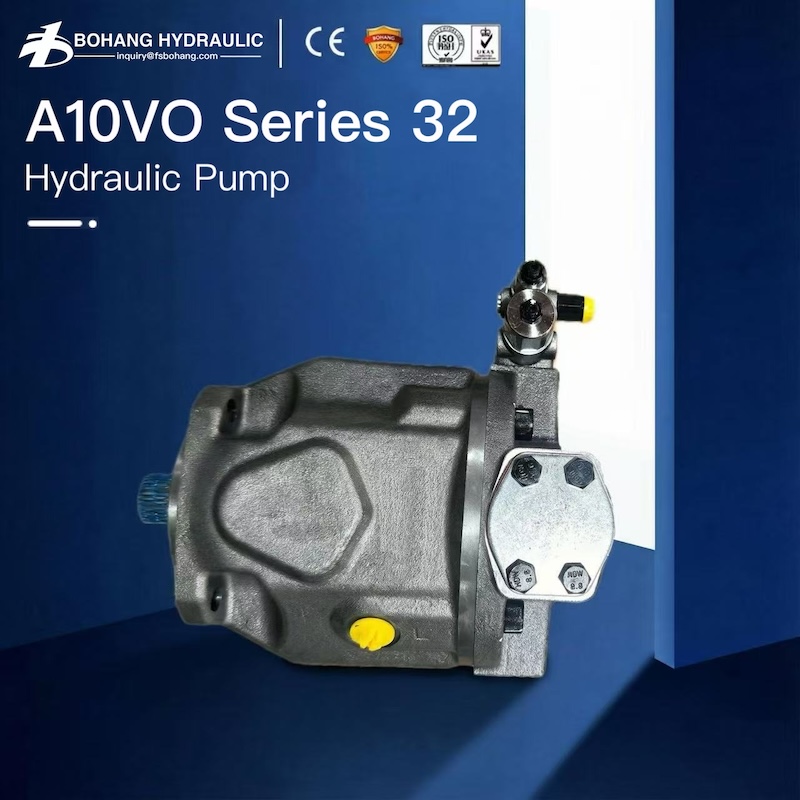
A10VO Series | Variable Displacement Pumps
Common Types of Hydraulic Pumps
Different hydraulic pump types are used depending on pressure, flow demand, efficiency, and application requirements.
| Pump Type | Main Features | Common Applications |
|---|---|---|
| Gear Pump | Simple, reliable, cost-effective | Agricultural machinery, small power units, basic hydraulic systems |
| Vane Pump | Smooth flow, moderate pressure, quieter operation | Machine tools, industrial equipment, hydraulic presses |
| Piston Pump | High pressure, high efficiency, precise performance | Excavators, construction machinery, heavy-duty hydraulic systems |
| Fixed Displacement Pump | Delivers fixed oil volume per revolution | Simple circuits with stable flow demand |
| Variable Displacement Pump | Adjusts output according to system demand | Energy-saving systems, mobile machinery, advanced circuits |
Key Hydraulic Pump Specifications
When selecting a hydraulic pump, buyers usually need to confirm:
- Flow rate: L/min or GPM
- Working pressure: bar, MPa, or PSI
- Displacement
- Rotation speed
- Shaft type
- Mounting style
- Open circuit or closed circuit design
- Oil viscosity range
- Operating temperature
- Duty cycle
- Replacement model or brand compatibility
A pump that is too small may not deliver enough flow or pressure. A pump that is too large may create unnecessary heat, energy loss, and higher operating cost.
What Is a Hydraulic Valve?
A hydraulic valve is a control component that manages hydraulic oil flow inside a hydraulic system. Unlike a pump, it does not create power. It controls the flow produced by the pump so the machine can move safely and accurately.
Hydraulic valves can direct oil, limit pressure, adjust speed, prevent reverse flow, and hold loads in position. They help control the direction, force, speed, and safety of hydraulic equipment.
For example, a directional control valve decides whether a cylinder extends or retracts. A pressure relief valve protects the system from overload, while a flow control valve adjusts movement speed.
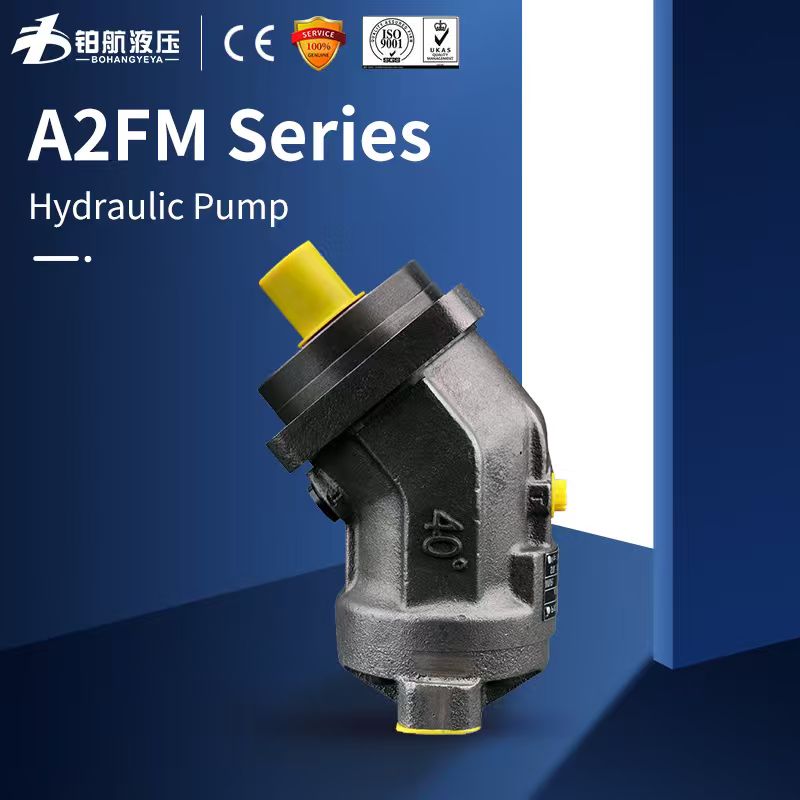
A2FM Series | Fixed Displacement Axial Piston Motor/Pump
Common Types of Hydraulic Valves
Hydraulic valves are selected based on the function they need to perform.
| Valve Type | Main Function | Typical Use |
|---|---|---|
| Directional Control Valve | Controls oil flow direction | Cylinder extension/retraction, motor forward/reverse |
| Pressure Relief Valve | Limits maximum system pressure | Protecting pumps, hoses, cylinders, and circuits |
| Sequence Valve | Controls operation order by pressure | Multi-step hydraulic operations |
| Pressure Reducing Valve | Reduces pressure in part of the system | Protecting lower-pressure circuits |
| Flow Control Valve | Regulates oil flow rate | Controlling cylinder or motor speed |
| Check Valve | Allows one-way oil flow | Preventing reverse flow |
| Counterbalance Valve | Controls overrunning loads | Lifting equipment, cranes, vertical cylinders |
| Proportional Valve | Provides electronic variable control | Automation, precision motion control |
| Cartridge Valve | Installed into a manifold block | Compact, high-flow hydraulic systems |
Main Difference Between Hydraulic Valves and Hydraulic Pumps
The main difference between a hydraulic pump and a hydraulic valve is simple: the pump creates the flow, and the valve controls the flow.
A hydraulic pump is the power-generating component in the system. It takes mechanical energy from a motor or engine and converts it into hydraulic oil flow. Without the pump, oil cannot move through the circuit, and the system has no working power.
A hydraulic valve does not generate power. Its job is to control the oil that has already been pressurized and moved by the pump. The valve decides where the oil goes, how much pressure is allowed, how fast the actuator moves, and when the flow should stop or change direction.
So the difference is not only about component type. It is about power generation vs. power control.
| Comparison Point | Hydraulic Pump | Hydraulic Valve |
|---|---|---|
| Main Role | Supplies hydraulic oil flow | Controls hydraulic oil flow |
| Energy Function | Converts mechanical energy into hydraulic energy | Manages hydraulic energy already created by the pump |
| System Position | Power source | Control component |
| Main Purpose | Make the hydraulic system move | Make the movement safe, accurate, and controllable |
| Typical Effect | Affects the whole system’s power and flow | Affects direction, speed, pressure, or specific machine actions |
| Simple Understanding | Provides the force source | Decides how that force is used |
How Hydraulic Pumps and Valves Work Together
A hydraulic system usually works through a complete circuit.
Here is a simple working process:
- An electric motor or engine drives the hydraulic pump.
- The pump draws oil from the hydraulic tank.
- The pump sends oil into the hydraulic circuit.
- A directional control valve sends oil to the correct actuator.
- A pressure relief valve prevents excessive system pressure.
- A flow control valve adjusts actuator speed.
- The hydraulic oil returns to the tank after completing the work cycle.
For example, in a hydraulic cylinder system, the pump supplies oil flow. The directional valve decides whether the cylinder extends or retracts. The relief valve protects the circuit from overload. The flow control valve adjusts movement speed.
Why Pump and Valve Matching Matters
Hydraulic pumps and valves must match each other in pressure, flow, function, and circuit design. Incorrect matching can cause serious performance and safety problems.
1. Excessive Pressure Drop
If the valve flow capacity is too small for the pump output, oil is forced through a restricted passage. This can cause pressure loss, heat buildup, slow movement, and poor efficiency.
2. System Overheating
Undersized valves, wrong spool types, or poor circuit design can convert hydraulic energy into heat. Overheating may damage seals, reduce oil life, and shorten component service life.
3. Unstable Actuator Movement
If the valve does not match the pump flow or the machine’s working condition, cylinders and motors may move too fast, too slowly, or inconsistently.
4. Safety Risk
A high-pressure pump must be matched with valves that can safely handle the same pressure range. A valve with a lower pressure rating may leak, fail, or create dangerous operating conditions.
5. Poor Energy Efficiency
In modern hydraulic systems, energy efficiency matters. The wrong valve can waste energy even if the pump itself is properly sized.
How to Choose the Right Hydraulic Valve
Choosing the right hydraulic valve is mainly about matching the valve function with the actual hydraulic circuit. Before comparing price or models, first confirm what the valve needs to control: direction, pressure, flow, load holding, or precision movement.
Key Factors to Check Before Buying
1. Valve Function
The first step is to define the valve’s job in the system.
A directional valve, relief valve, flow control valve, and check valve may all look like small hydraulic components, but they solve very different problems. Choosing the wrong valve type can cause unstable movement, overheating, pressure loss, or unsafe load control.
2. Pressure and Flow
Pressure and flow decide whether the valve can handle the real working condition.
Check these specifications before ordering:
- Working pressure
- Maximum pressure
- Peak pressure
- Required flow rate
- Port size
- Oil viscosity
- Operating temperature
If the valve flow capacity is too small, the system may suffer from pressure drop, heat buildup, slow movement, and energy loss.
3. Control Method
The control method should match how the equipment operates.
| Control Method | Suitable Applications |
|---|---|
| Manual control | Simple machines and low-cost systems |
| Solenoid control | Electric control and automatic switching |
| Hydraulic pilot control | High-flow or heavy-duty circuits |
| Mechanical control | Position-based or cam-operated systems |
| Proportional control | Smooth speed, force, or position adjustment |
For simple equipment, a manual or solenoid valve may be enough. For automation, lifting equipment, or precision motion control, proportional or pilot-operated valves are often more suitable.
4. Mounting and Connection
The valve must physically fit the hydraulic system.
Common mounting options include:
- Threaded connection
- Subplate mounting
- Modular mounting
- Cartridge installation
- Manifold block integration
- ISO / CETOP / NG mounting standards
For replacement projects, always check the existing valve model, port size, voltage, mounting pattern, and spool type before ordering.
How to Choose the Right Hydraulic Pump
Choosing the right hydraulic pump depends on how much flow and pressure the system needs. A suitable pump should provide enough power for the equipment without causing unnecessary heat, noise, energy waste, or component wear.
Key Factors to Check Before Buying
1. Required Flow Rate
Flow rate affects actuator speed.
If the pump flow is too low, cylinders and motors may move slowly. If the pump flow is too high, the system may create heat, noise, and energy loss.
Check these points:
- Required actuator speed
- Cylinder size or motor displacement
- Number of actuators working at the same time
- Required system flow rate
- Continuous or intermittent operation
For systems with multiple actuators, pump size should be based on real working demand, not only one single movement.
2. Required Pressure
Pressure affects the force the system can produce.
Before selecting a pump, confirm:
- Normal working pressure
- Maximum system pressure
- Peak pressure
- Load condition
- Relief valve setting
- Safety margin
If the pump pressure capacity is too low, the equipment may not move the load. If the pump is oversized without proper system design, it may increase cost, heat, and energy consumption.
3. Pump and Valve Matching
The pump and valves must be selected together, not separately.
Check these points carefully:
- Pump flow should not exceed the valve’s rated flow capacity
- Pump pressure should match the valve pressure rating
- Valve spool type should suit the pump design
- Relief valve setting should protect the pump and circuit
- Pipe size and port size should support the required flow
- Oil tank capacity should match system demand
If the pump is too large for the valve, the system may overheat. If the valve is not suitable for the pump type, the system may have pressure spikes, unstable movement, or poor efficiency.
Maintenance Tips for Hydraulic Pumps and Valves
Good maintenance helps extend the service life of both pumps and valves.
Hydraulic Pump Maintenance
- Avoid dry running
- Keep suction lines clean and unrestricted
- Use the correct oil viscosity
- Check for cavitation noise
- Monitor case drain flow
- Maintain proper oil level
- Replace filters regularly
- Monitor temperature and vibration
Hydraulic Valve Maintenance
- Keep hydraulic oil clean
- Prevent contamination during installation
- Check spool movement
- Inspect seals and O-rings
- Verify solenoid voltage
- Check pressure settings
- Monitor internal leakage
- Clean or replace filters on schedule
Many hydraulic failures are not caused by component design alone. Contamination, incorrect installation, poor oil condition, and wrong system matching are often the real causes.
Conclusion
Hydraulic pumps and hydraulic valves play different but connected roles in a hydraulic system. The pump provides oil flow and power, while the valve controls direction, pressure, speed, and system safety.
For buyers, the key is to understand both the function and the matching requirements. A pump that is too large, a valve with insufficient flow capacity, or the wrong valve type can all lead to overheating, pressure loss, unstable movement, and equipment downtime.
Before selecting hydraulic components, confirm the system pressure, flow rate, valve function, mounting style, and application conditions. Proper pump and valve matching helps the system run more safely, efficiently, and reliably.
FAQ
Q1. What is the main difference between a hydraulic valve and a hydraulic pump?
A: A hydraulic pump creates oil flow for the hydraulic system. A hydraulic valve controls that flow by directing oil, limiting pressure, adjusting speed, or stopping movement. In simple terms, the pump provides power, and the valve controls how that power is used.
Q2. Do I need a hydraulic pump or a hydraulic valve?
A: If the whole system is weak, slow, noisy, or cannot build pressure, the pump may need to be checked. If only one function fails, one cylinder drifts, or one movement becomes unstable, the problem is more likely related to a valve or control circuit.
Q3. Can a hydraulic system work without valves?
A: Most hydraulic systems need valves. Without valves, the oil flow from the pump cannot be properly directed, controlled, or protected. Valves are needed for direction control, pressure protection, speed adjustment, load holding, and safe operation.
Q4. Why does a hydraulic pump need a relief valve?
A: A relief valve protects the pump and the entire hydraulic circuit from excessive pressure. If system pressure becomes too high, the relief valve opens and allows oil to return to the tank or bypass the circuit, helping prevent pump damage, hose failure, seal damage, and safety risks.