
In the realm of fluid power, the hydraulic pump is often described as the "heart" of the system. While the reservoir stores the medium and the valves direct the energy, the pump is the primary driver that initiates the conversion of mechanical energy into hydraulic power to perform physical work. Understanding the sophisticated mechanics behind these components is essential for engineering systems that require a high mechanical advantage and precise force application.
What Are Hydraulic Pumps?
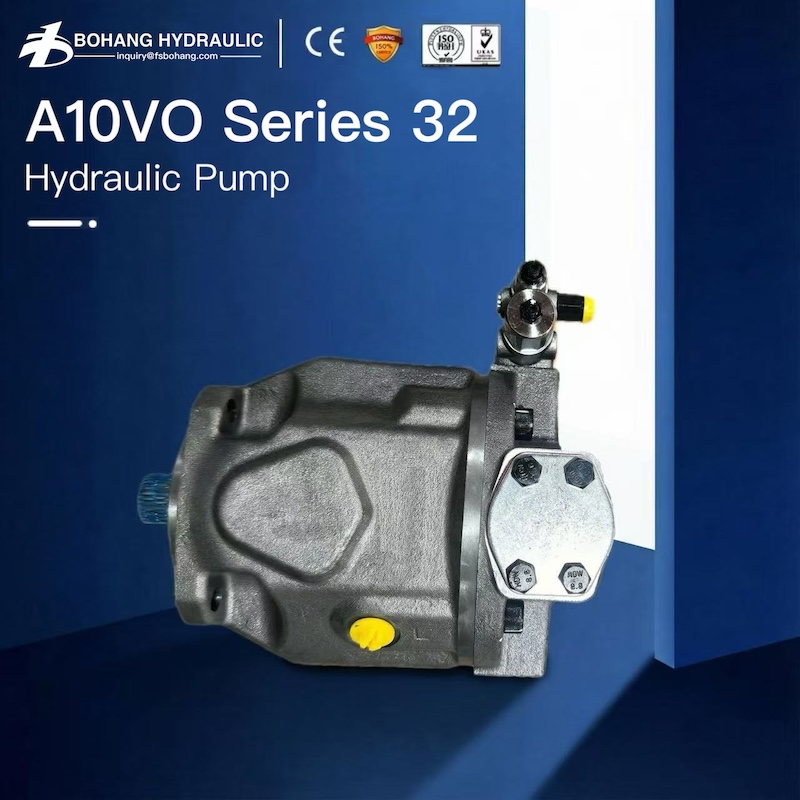
A hydraulic pump is a device that converts mechanical energy into hydraulic energy by creating flow inside a hydraulic circuit. In practical terms, it draws hydraulic fluid from a reservoir and pushes it through the system so the rest of the components can do useful work. The pump supplies flow; pressure appears when that flow meets resistance from the load or the system.
Core function in a hydraulic system
A hydraulic pump is responsible for three basic jobs:
- drawing fluid from the reservoir
- generating flow through the circuit
- enabling the system to build pressure under load
That is why pump performance directly affects actuator speed, output force, response stability, and overall system efficiency. In a basic hydraulic circuit, speed is tied to flow rate, while force depends on pressure and actuator area.
Operating Principles of Hydraulic Pumps
Hydraulic pumps operate by creating a low-pressure region at the inlet, which allows fluid to enter the pump chamber. Internal moving parts then carry, trap, or displace that fluid and force it toward the outlet. From there, the fluid moves into valves, cylinders, or hydraulic motors to perform work.
The basic operating sequence
1. Inlet suction: As the pump's internal chamber expands, pressure at the inlet drops. This allows hydraulic fluid to enter from the reservoir.
2. Fluid transfer: The pump's gears, vanes, or pistons move the trapped fluid through the housing. The internal design determines how efficiently and smoothly that happens.
3. Outlet flow: The fluid is pushed into the hydraulic circuit, where it reaches valves and actuators. System pressure rises only when the fluid encounters resistance.
Types of Hydraulic Pumps
Gear Pumps: The Resilient Workhorse
Gear pumps are a foundational pillar of the industry due to their reliability and simplicity. They utilize interlocking gears (either internal or external) to transport fluid around the casing.
- Performance Advantage: They are exceptionally resilient to fluid contamination and typically operate at pressures between 3,000 and 3,500 PSI.
- Use Case: Often employed for machinery lubrication, material transfer of viscous fluids, and basic hydraulic drive systems.
Vane Pumps: The Precision Solution
Vane pumps consist of a rotor with sliding vanes housed in an eccentric cam ring.
- Performance Advantage: A notable characteristic is their self-compensation for wear; as the vanes wear down, they automatically extend further to maintain a tight seal against the cam ring. They offer quiet operation and a consistent, unvarying flow rate.
- Use Case: Widely used in automotive power steering and industrial CNC machinery.
Piston Pumps: High-Pressure Powerhouses
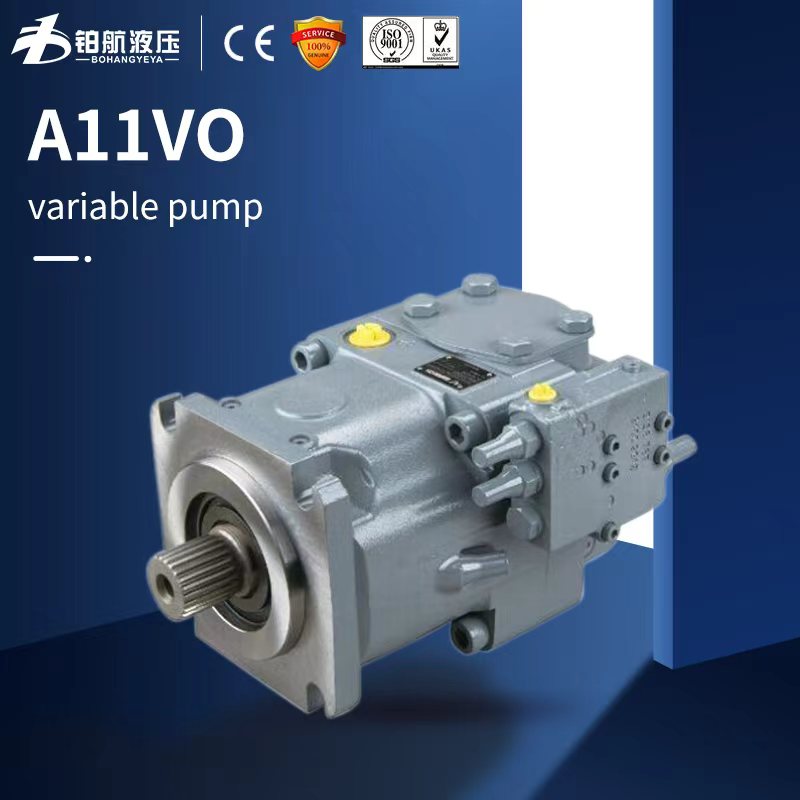
For applications requiring maximum force, piston pumps are the preferred choice. They utilize reciprocating pistons to move fluid and can handle pressures exceeding 6,000 PSI.
- Performance Advantage: They offer the highest power density and are frequently designed for variable displacement, allowing for sophisticated control in high-performance circuits.
- Use Case: Critical for heavy construction equipment, aerospace systems, and high-pressure industrial presses.
Advantages of Hydraulic Pumps
Hydraulic pumps remain essential in modern fluid power because they combine high force output with flexible system design. Compared with many other power transmission methods, hydraulic systems can transmit substantial force through relatively compact components, especially because liquids are practically incompressible.
Key performance advantages
High force transmission: Hydraulic systems can generate large output forces with relatively limited physical input space, which is one reason they remain common in lifting, pressing, bending, and clamping applications.
Efficient energy transfer: Because hydraulic fluid is effectively incompressible, much of the input energy can be transferred with limited waste, making hydraulics an efficient choice for many power-intensive systems.
Wide design flexibility: Hydraulic pumps are available in multiple designs for different operating priorities, including simplicity, smoothness, high pressure, and control adaptability. That gives system designers more flexibility than a one-architecture approach.
Broad equipment compatibility: Hydraulic pumps are used across construction, excavation, automotive, agriculture, manufacturing, and defense-related applications, which shows how adaptable hydraulic power remains across industries.
Application Scenarios for Hydraulic Pumps
The adaptability of hydraulic pumps allows them to serve as the backbone for a diverse range of specialized industrial and mobile sectors:
- Heavy Construction and Mining: In remote locations where electrical power is scarce, pumps driven by combustion engines power the massive force required for excavators, cranes, and bulldozers.
- Industrial Automation and Manufacturing: Stationary applications like injection molding machines, metal extrusion, and die casting utilize the precision of variable displacement pumps to manage complex duty cycles and high-pressure requirements.
- Aerospace and Defense: High-pressure piston pumps are integrated into aircraft hydraulic systems to ensure the reliable operation of flight controls and landing gear under extreme environmental stress.
- Specialized Processing: In the food and beverage or medical industries, peristaltic pumps are used to maintain zero-contamination environments by keeping the fluid entirely contained within flexible tubing.
- Mobile Hydraulics: Automotive systems leverage the compact design of vane and gear pumps for power steering and lift-gate mechanisms, prioritizing durability and consistent performance.
How to Choose the Right Hydraulic Pumps
Choosing the right hydraulic pump is not just about picking a model number. It requires matching pump design to system pressure, flow demand, duty cycle, control requirements, and maintenance expectations. When buyers focus only on price, they often end up with avoidable performance or service-life issues.
Start with the application requirements
Required flow rate: Flow determines actuator speed. If the pump does not provide enough flow, the machine will feel slow or underpowered in actual operation.
Required pressure: Pressure relates to the force the system must generate. Higher-load applications usually require pump designs that can maintain performance under higher pressure.
Duty cycle and operating environment: A pump that works well in intermittent service may not be the best option for continuous-duty industrial use. Contamination level, operating temperature, and maintenance conditions also matter. IQS notes that leaks, heat, and maintenance demands are real hydraulic system considerations, not minor details.
Match the pump type to the job
- Choose a gear pump when simplicity, cost control, and reliable steady flow are top priorities.
- Choose a vane pump when smoother operation and lower noise are important in a medium-pressure environment.
- Choose a piston pump when the application demands higher pressure, stronger efficiency, and better performance in more advanced hydraulic systems.
Why Choose Bohang Hydraulic as Your Partner?
Bohang Hydraulic is dedicated to providing high-efficiency, energy-saving, and sustainable fluid power solutions. We combine Industry 4.0 smart manufacturing with deep engineering expertise to ensure your systems perform at their peak.
- 100% OEM Interchangeability: Our pumps are engineered to Rexroth production standards, serving as seamless, high-quality replacements for Rexroth, Parker, and Vickers.
- Expert-Led Engineering: Led by senior Rexroth domain engineers, we provide end-to-end technical consulting—from initial design integration to final commissioning.
- Rigorous Quality Validation: Every unit is verified on heavy-duty test benches for volumetric efficiency, pressure ratings, and thermal stability to meet or exceed OEM standards.
- Global Compliance & Experience: Since 2008, we have successfully supplied major international OEM projects across the EU, NA, and APAC markets.
- Optimal Total Cost of Ownership (TCO): We significantly reduce your procurement and maintenance costs by delivering OEM-level reliability at superior pricing.
Conclusion
Hydraulic pumps convert mechanical input into hydraulic flow, making force and motion possible across industrial and mobile systems. Gear pumps are valued for simplicity, vane pumps for smoother medium-pressure performance, and piston pumps for higher-pressure, higher-efficiency applications. The right choice depends on flow, pressure, duty cycle, and service conditions. For buyers seeking replacement compatibility and piston-pump expertise, Bohang Hydraulic offers a product range aimed at practical industrial use.
FAQ
Q1. Why is my hydraulic pump making unusual noise?
A: Unusual noise often points to cavitation, air entering the system, contaminated fluid, low fluid level, or internal wear. If the sound gets sharper or louder under load, the pump should be checked quickly to avoid further damage.
Q2. Why does my hydraulic system feel weak or slow?
A: A weak or slow system is usually linked to insufficient flow, internal leakage, worn pump components, pressure loss, clogged filters, or incorrect pump sizing. In many cases, the issue is not just the pump itself, but the pump no longer matching the system’s actual demand.
Q3. How do I know whether I need a gear pump, vane pump, or piston pump?
A: It depends on the application. Gear pumps are usually better for simple and cost-sensitive systems, vane pumps for smoother and quieter medium-pressure operation, and piston pumps for higher-pressure, more demanding, or efficiency-focused systems.
Q4. Why does my hydraulic pump overheat?
A: Overheating is commonly caused by excessive pressure, poor fluid quality, restricted flow, internal leakage, or operating the pump beyond its intended duty cycle. Heat is often an early warning sign that efficiency is dropping somewhere in the system.
Q5. How can I tell if my hydraulic pump is worn out?
A: Common warning signs include rising noise, reduced pressure, slower actuator speed, unstable performance, vibration, fluid leaks, and higher oil temperature. If performance keeps dropping even after routine maintenance, pump wear should be considered.