
Choosing the right hydraulic pump is one of the most important decisions in a hydraulic system. A pump that is too small may make the machine slow, weak, or unable to reach the required pressure. A pump that is too large may waste energy, create heat, overload the motor, and shorten the service life of other hydraulic components.
The correct hydraulic pump size is not decided by pressure alone. You need to match three key factors:
- Flow: how fast the actuator moves
- Pressure: how much force or torque the system can produce
- Power: whether the motor or engine can drive the pump under load
What Does a Hydraulic Pump Actually Do?
A hydraulic pump converts mechanical energy from an electric motor, diesel engine, gasoline engine, or other prime mover into hydraulic energy. It draws hydraulic oil from the reservoir and pushes it into the circuit.
A key point many users misunderstand is this:
A hydraulic pump creates flow. Pressure is created when that flow meets resistance.
For example, if a pump sends oil into an open return line, pressure will be very low. But if the same flow is directed into a hydraulic cylinder lifting a heavy load, pressure will rise because the system is resisting the flow.
That is why pump selection must consider the whole system, including:
- actuator size
- required speed
- load force or torque
- working pressure
- pump speed
- duty cycle
- oil temperature
- suction conditions
- motor or engine power
- required control method
A good hydraulic pump is not simply the one with the highest pressure rating. It is the one that delivers the right flow and pressure efficiently, safely, and reliably for your application.
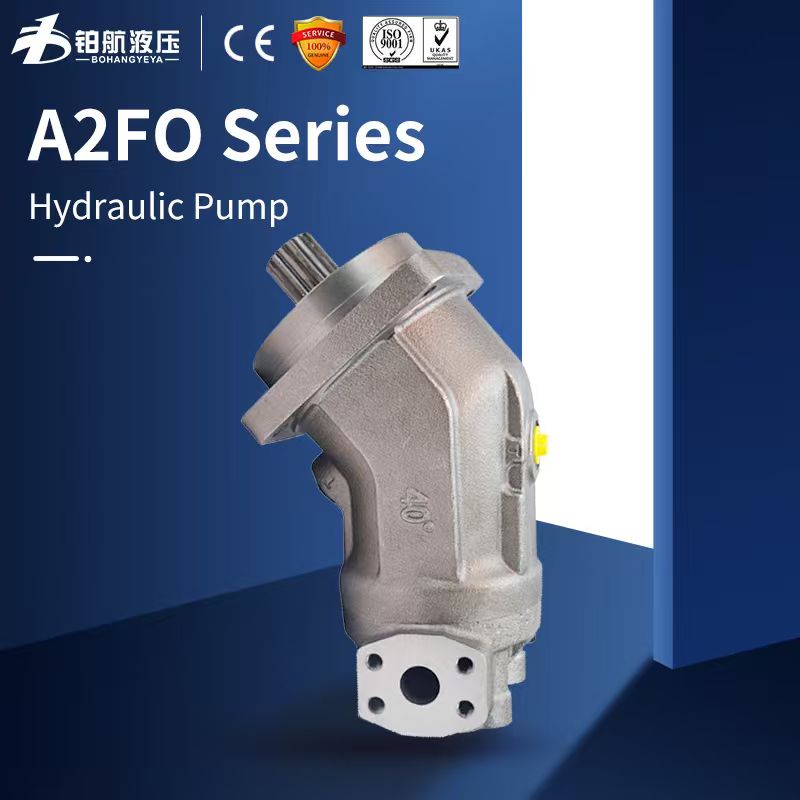
Fixed Displacement Axial Piston Pump
Quick Answer: How Do You Size a Hydraulic Pump?
| Parameter | What It Means | Why It Matters |
|---|---|---|
| Flow rate | How much oil the pump delivers | Controls actuator speed |
| Pressure | The force needed to move the load | Controls force or torque |
| Displacement | Oil volume delivered per pump revolution | Links pump size with speed |
| Power | Energy needed to drive the pump | Determines motor or engine size |
Flow controls speed. Pressure controls force. Power depends on both flow and pressure.
The basic process is:
- Define the application and actuator requirement.
- Calculate the required flow rate.
- Determine the working pressure.
- Calculate pump displacement.
- Check the required motor or engine power.
- Select the right pump type.
- Confirm installation details such as shaft, flange, ports, and rotation direction.
What Does a Hydraulic Pump Do?
A hydraulic pump converts mechanical energy into hydraulic energy. It draws oil from the reservoir and sends it into the hydraulic system.
One important point is often misunderstood:
A hydraulic pump mainly creates flow. Pressure is created when that flow meets resistance.
For example, if oil flows freely back to the tank, the pressure is low. If the same flow is used to lift a heavy load with a hydraulic cylinder, the pressure rises because the system must overcome resistance.
That is why pump selection should never be based on pressure alone. You must look at the complete hydraulic system, including:
- actuator size
- required speed
- load force or torque
- working pressure
- peak pressure
- pump speed
- duty cycle
- oil temperature
- oil viscosity
- system efficiency
- motor or engine power
- installation space
Key Terms You Need to Know Before Sizing a Hydraulic Pump
Before selecting a hydraulic pump, it helps to understand the most important sizing terms.
1. Flow Rate
Flow rate is the amount of hydraulic oil delivered by the pump in a certain time.
Common units:
- L/min
- GPM
Flow determines how fast the hydraulic actuator moves.
For example:
- More flow makes a hydraulic cylinder extend faster.
- More flow makes a hydraulic motor rotate faster.
- Less flow makes the machine slower.
However, too much flow is not always good. Excessive flow can increase heat, noise, pressure loss, and energy consumption.
2. Pressure
Pressure is the force applied by hydraulic oil.
Common units:
- bar
- MPa
- psi
Pressure determines how much force or torque the system can produce.
For example:
- A hydraulic cylinder needs pressure to push or lift a load.
- A hydraulic motor needs pressure to produce torque.
Higher pressure is not automatically better. If the pressure is too high for the system, it can cause leakage, overheating, seal damage, hose failure, and shortened pump life.
3. Pump Displacement
Pump displacement is the amount of oil a pump moves in one revolution.
Common units:
- cc/rev
- cm³/rev
- in³/rev
For the same pump speed, a larger displacement pump produces more flow.
For example, at the same rpm:
- a 20 cc/rev pump produces less flow
- a 40 cc/rev pump produces more flow
Displacement is one of the most important values when choosing a hydraulic pump model.
4. Pump Speed
Pump speed is the rotational speed of the pump shaft.
Common unit:
- rpm
Every hydraulic pump has a recommended speed range. If the pump runs too fast, it may suffer from suction problems, cavitation, noise, and wear. If it runs too slowly, it may not deliver enough flow.
When selecting a pump, always check whether your motor or engine speed matches the pump’s recommended operating speed.
5. Hydraulic Power
Hydraulic power is the power required to generate flow at a certain pressure.
A system with high flow and high pressure needs more power. If the motor or engine is too small, the pump may not reach the required pressure and flow at the same time.
This is why power calculation is essential in hydraulic pump sizing.
Gear Pump, Vane Pump, or Piston Pump: Which Hydraulic Pump Should You Choose?
After calculating the required flow, pressure, displacement, and power, the next important step is choosing the right hydraulic pump type.
The three most common hydraulic pump types are:
- Gear pumps
- Vane pumps
- Piston pumps
Each pump type has a different structure, pressure capability, efficiency level, noise performance, maintenance requirement, and ideal application. There is no single pump that is best for every hydraulic system. The right choice depends on your working pressure, flow demand, duty cycle, control requirement, oil cleanliness, budget, and equipment type.
A simple way to understand the difference is:
Choose a gear pump for simple and cost-effective hydraulic systems. Choose a vane pump for smoother and quieter operation. Choose a piston pump for high-pressure, high-efficiency, or variable-displacement systems.
Hydraulic Pump Type Comparison Table
| Pump Type | Main Advantage | Best For | Pressure Level | Noise Level | Efficiency | Cost | Maintenance |
|---|---|---|---|---|---|---|---|
| Gear Pump | Simple, compact, economical | Basic hydraulic systems, mobile equipment, lifting systems | Low to medium | Medium to high | Medium | Low | Easy |
| Vane Pump | Smooth flow and lower noise | Industrial hydraulic systems, machine tools, presses | Medium | Low | Medium to high | Medium | Moderate |
| Piston Pump | High pressure and high efficiency | Heavy-duty equipment, high-pressure systems, variable-flow systems | Medium to high | Medium | High | High | Higher requirement |
Fixed Displacement vs Variable Displacement Pumps
Another important choice is whether to use a fixed displacement pump or a variable displacement pump.
Fixed Displacement Pump
A fixed displacement pump delivers the same theoretical oil volume for every revolution.
Best for:
- simple hydraulic systems
- constant-speed operation
- predictable flow demand
- cost-sensitive equipment
- standard hydraulic power units
Advantages:
- simple structure
- lower cost
- easier maintenance
- stable output at fixed speed
Limitations:
- less flexible
- excess flow may generate heat
- less efficient when load demand changes frequently
Variable Displacement Pump
A variable displacement pump can adjust output flow by changing displacement.
Best for:
- changing load conditions
- energy-saving hydraulic systems
- heavy-duty mobile equipment
- advanced industrial machinery
- load-sensitive hydraulic systems
- applications requiring better control
Advantages:
- better energy efficiency
- reduced heat generation
- flexible flow control
- suitable for complex hydraulic systems
Limitations:
- higher cost
- more complex structure
- higher maintenance and oil cleanliness requirements
If your system has changing speed demand, long working hours, or high energy cost, a variable displacement pump may provide better long-term value.
Conclusion
Correct hydraulic pump sizing starts with matching flow, pressure, displacement, and power to the actual working conditions. Flow affects actuator speed, pressure affects force or torque, and power determines whether the motor or engine can drive the pump under load. A properly selected gear, vane, or piston pump helps prevent slow operation, overheating, energy loss, motor overload, and premature component failure.
FAQ
Q1. How do I know what size hydraulic pump I need?
A: To size a hydraulic pump, you need to know the required flow rate, working pressure, pump speed, displacement, and available motor or engine power. Flow controls actuator speed, while pressure controls force or torque. After calculating flow and pressure, you can calculate pump displacement and required power.
Q2. Does a hydraulic pump create pressure or flow?
A: A hydraulic pump mainly creates flow. Pressure is created when that flow meets resistance in the hydraulic system, such as a loaded cylinder, hydraulic motor, valve, hose, or other restriction. This is why low pressure does not always mean the pump is damaged.
Q3. What happens if a hydraulic pump is too small?
A: If the pump is too small, the machine may move slowly, fail to reach the required cycle time, or struggle under load. The system may also operate inefficiently because the pump is working near its limit for too long.
Q4. What happens if a hydraulic pump is too large?
A: An oversized pump can create excessive flow, high oil temperature, wasted energy, higher noise, faster actuator movement, and motor overload. Bigger is not always better. The pump should match the actual flow, pressure, and power requirements.