
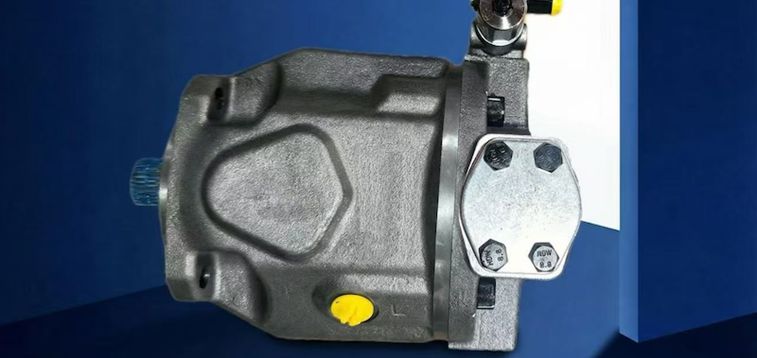
A well-maintained hydraulic pump commonly delivers about 10,000 to 20,000 operating hours, but that range is a planning benchmark—not a promise. A gear pump on dusty mobile equipment may wear out earlier, while a correctly sized piston pump in a clean, temperature-controlled industrial system can exceed 20,000 hours.
The hour meter is only the starting point. Design, pressure, speed, duty cycle, fluid cleanliness, temperature and maintenance determine the result.
Hydraulic Pump Life Expectancy by Type
The following ranges are useful for budgeting inspections and replacement, provided the pump is correctly selected and operated within its continuous ratings.
| Pump type | Typical planning range | Where it is commonly used | What usually limits life |
|---|---|---|---|
| Gear pump | 5,000–15,000 hours | Agricultural machinery, mobile equipment, simple power units | Increasing clearance between gears and housing, bush or bearing wear |
| Vane pump | 10,000–18,000 hours | Machine tools, presses and low-noise industrial systems | Vane, cam-ring and cartridge wear |
| Axial piston pump | 10,000–20,000+ hours | Excavators, closed-loop drives and industrial high-pressure systems | Valve-plate, slipper, bearing and control wear |
| Radial piston pump | Often 20,000+ hours in controlled service | High-pressure stationary systems | Bearing, seal and fatigue life |
These figures do not replace model-specific data. For example, Bohang's A10VO replacement series is specified at 280 bar nominal and 350 bar peak, while the A4VSO series is listed at 350 bar nominal and 400 bar peak. Peak pressure is a short-duration limit, not a continuous target.
Why the Same Pump Can Last 1,440 or 20,000 Hours
A published piston-pump engineering calculation illustrates why a single lifespan claim can be misleading. Its example pump was rated for 10,000 hours at 2,000 rpm and 3,000 psi. Under the calculation’s assumptions, operation at 3,000 rpm and 5,000 psi reduced expected bearing-based life to about 1,440 hours. At 1,000 rpm and 2,000 psi, the calculated value increased to 67,500 hours.
Every pump will not follow those numbers, but the lesson is universal: ask, "How many hours at what pressure, speed, temperature and duty cycle?"
Pressure, Speed and Loaded Duty Cycle
Running near maximum continuous pressure increases internal load. Higher speed adds wear cycles and makes inlet conditions more demanding. Pressure spikes may not appear in an average-pressure reading.
A pump running eight hours does not necessarily consume eight full-load hours. Record total runtime and loaded time, then use the manufacturer's curves rather than a universal multiplier.
Fluid Cleanliness
Clearances inside a modern piston pump are small enough for particles invisible to the eye to damage the valve plate, cylinder block and control surfaces. ISO 4406:2021 provides the coding method used to report solid-particle contamination. It does not prescribe one cleanliness target for every hydraulic system.
The target comes from component data. Official manuals for several axial piston series require at least ISO 20/18/15, while some applications require cleaner fluid. New oil should be filtered and verified. After a destructive failure, clean the reservoir, lines and affected components so remaining metal does not damage the replacement.
Temperature, Viscosity and Inlet Conditions
Oil that is too hot loses viscosity and film strength. Oil that is too cold may not reach the inlet fast enough, especially at high speed. Both conditions can increase wear. Use the pump manufacturer's permitted viscosity and temperature range rather than relying on oil grade alone.
Cavitation, aeration and restricted inlet flow are different problems but can produce similar noise. Check oil level, inlet hose size, sharp bends, strainers, air leaks and reservoir design before condemning the pump.
Installation and Case Drain
Misalignment, a worn coupling and side load on the shaft can shorten bearing life. On piston pumps, a restricted or incorrectly routed case drain can raise housing pressure and damage the shaft seal. Never cap a case-drain line for testing.
When replacing a unit, confirm the full model code, displacement, rotation, flange, shaft, ports, controls and case-pressure limit. A pump that physically bolts into place is not necessarily hydraulically compatible.
What Service Life Should You Expect in Your Application?
Stationary industrial equipment: Stable temperatures and cleaner surroundings support longer life, but a three-shift machine may accumulate 6,000 hours per year.
Excavators and construction machinery: Shock, dust, vibration and temperature swings often place pumps near the lower end of the range. Compare output and case drain with a baseline.
Agricultural and seasonal equipment: Low hours do not prevent condensation, storage corrosion, seal ageing or contaminated breathers.
Mining and forestry equipment: Heavy contamination, impact loading and long duty cycles justify shorter inspection intervals and condition-based monitoring.
Signs That a Hydraulic Pump Is Wearing Out
Watch for trends rather than waiting for one dramatic symptom:
- slower cylinder or motor movement under the same load;
- reduced flow or difficulty maintaining pressure;
- increasing case-drain flow at the same pressure, speed and oil temperature;
- rising operating temperature or energy consumption;
- new whining, knocking or vibration;
- metal particles in the filter or increasing wear metals in oil analysis;
- repeated shaft-seal leakage.
Noise, heat or low pressure does not automatically prove pump failure. A stuck valve, restricted inlet, incorrect fluid, overloaded actuator or relief valve flowing continuously can produce similar symptoms.
A controlled flow-and-pressure test establishes output. A case-drain test can reveal increasing internal leakage, but compare it with the product limit or a repeatable baseline. Oil analysis, filter inspection, temperature and vibration trends add evidence.
A Practical Maintenance Plan
Avoid applying a generic "100/250/1,000-hour" schedule to every machine. Filter capacity, environment, fluid and OEM requirements vary. Combine routine checks with component-specific intervals:
- Each shift or operating day: Check oil level, visible leakage, unusual noise, temperature changes and pressure readings.
- At scheduled machine services: Inspect filter indicators, breathers, inlet hoses, couplings and cooler condition. Take oil samples at a repeatable point and operating condition.
- After abnormal heat, cavitation or contamination: Investigate immediately rather than waiting for the next service.
- After pump replacement: Verify cleanliness, fill and prime the housing where required, confirm rotation and start at low load. Reinspect the filter and operating data after commissioning.
- At a planned life milestone: Review flow, case drain, oil analysis and downtime risk. An industrial maintenance guide uses 10,000 hours as an example service interval for piston pumps, while also stating that operating conditions and OEM data must determine the actual schedule.
Repair, Rebuild or Replace?
| Option | Usually makes sense when | Main caution |
|---|---|---|
| Repair | Damage is limited to seals or an identifiable service part | A new seal will not correct bearing or rotating-group wear |
| Rebuild | Housing and major hard parts remain within specification | Require dimensional inspection and a documented performance test |
| Replace | Damage is severe, failure repeats, parts are obsolete or downtime is costly | Identify and remove the original failure cause first |
Do not routinely run a pump until it fails completely. A destructive failure can send metal through valves, motors and cylinders, turning a pump replacement into a system repair.
What to Ask a Hydraulic Pump Manufacturer
A dependable hydraulic pump manufacturer should help verify more than a family name or displacement. Before ordering, provide the machine model, full pump code, nameplate and installation photos, continuous and peak pressure, drive speed, rotation, fluid, application, duty cycle and failure symptoms.
Bohang supplies piston, vane and gear pump solutions for mobile machinery and industrial systems, including A10VO, A2FO, A4VSO, A4VG and other replacement series. Available support includes model identification, mechanical and hydraulic compatibility review, pressure and flow testing, replacement parts and custom solutions. This reduces the risk of ordering a unit that fits the flange but not the circuit.
FAQ
Q1. Is 10,000 hours a lot for a hydraulic pump?
A: It is a useful inspection milestone, not an automatic end-of-life point. A clean, moderately loaded industrial piston pump may have substantial life remaining, while a heavily loaded mobile pump may already show meaningful wear. Test condition, maintenance history and performance trends matter more than the hour total alone.
Q2. Can a hydraulic pump last 20 years?
A: Yes, in a low-use application, but years can be misleading. A seasonal machine may take decades to accumulate 10,000 hours, while a three-shift plant can reach that figure in less than two years. Age-related seal and corrosion problems must also be considered.
Q3. What is the best way to extend pump life?
A: Select the correct pump for the continuous duty point, keep fluid within the model's cleanliness and viscosity requirements, prevent cavitation, maintain alignment, control heat and pressure spikes, and monitor performance trends before a small problem becomes a destructive failure.
Conclusion
Most users can use 10,000–20,000 hours as an initial hydraulic pump planning range, but the useful answer is always conditional. Match the pump to the application, verify continuous—not just peak—ratings, control fluid cleanliness and compare test results over time.
If your pump is losing performance or approaching a planned inspection milestone, send Bohang the full model code, operating conditions and clear photos. The technical team can help assess replacement compatibility and recommend a suitable hydraulic pump or repair-parts solution.