
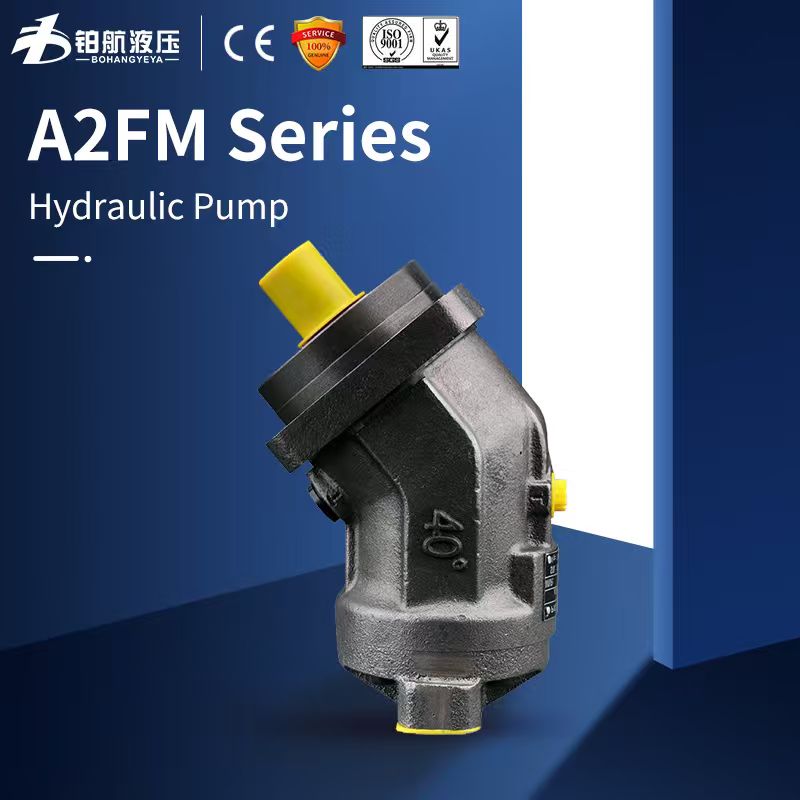
Hydraulic systems are everywhere in modern industry. They power excavators on construction sites, keep injection molding machines running in factories, and provide the lifting force behind forklifts, presses, and agricultural equipment. At the center of these systems is one critical component: the hydraulic pump.
Understanding how a hydraulic pump works is important for anyone involved in equipment selection, maintenance, manufacturing, or industrial operations. A pump does much more than move fluid from one place to another. It creates the flow that allows hydraulic energy to be transmitted throughout a system, making heavy-duty motion, pressure, and force possible.
Definition of Hydraulic Pump
A hydraulic pump is a mechanical device that converts mechanical energy into hydraulic energy by moving hydraulic fluid through a system. In simple terms, it creates flow. That flow is what allows hydraulic cylinders, motors, and actuators to do useful work.
A hydraulic pump does not directly create pressure on its own. Instead, it generates fluid flow. Pressure builds when that flow meets resistance in the hydraulic circuit. For example, when fluid is forced through a valve, into a cylinder, or against a load, the system pressure rises.
This distinction matters because pump selection is not only about pressure ratings. It is also about flow requirements, efficiency, system design, operating conditions, and the type of motion needed.
A hydraulic pump typically works together with several other components in a complete hydraulic system, including:
- a prime mover, such as an electric motor or internal combustion engine
- a hydraulic reservoir
- suction and pressure lines
- control valves
- actuators such as cylinders or hydraulic motors
- filters and cooling elements
Without the pump, the system cannot circulate fluid or transfer usable power.
How Does a Hydraulic Pump Work?
1. Inlet Pressure Differential and Fluid Admission
Pump operation begins at the inlet side. As rotating or reciprocating internal elements move, the volume of the inlet chamber increases. This creates a local pressure drop below reservoir pressure, allowing hydraulic fluid to enter the pump through the suction line.
For stable inlet filling, the suction conditions must be properly controlled. If inlet pressure is too low, or if the suction line is restricted, the pump may suffer from poor chamber filling, cavitation, noise, and accelerated wear.
2. Chamber Expansion and Volumetric Filling
Once the inlet side opens, the pump’s internal chambers expand and fill with hydraulic fluid. The amount of fluid admitted during this stage depends on pump displacement, rotational speed, inlet conditions, and fluid viscosity.
In practical operation, the theoretical chamber volume is not always filled completely. Any shortfall in filling reduces volumetric efficiency and directly affects the actual output flow of the pump.
3. Fluid Entrapment and Positive Displacement Transfer
After the fluid enters the chamber, it is trapped between internal pumping elements such as gears, vanes, or pistons and the pump housing. The trapped fluid is then mechanically transported from the low-pressure inlet zone toward the outlet side.
This is the core of positive displacement pump operation. Rather than relying on centrifugal force, the pump physically carries a defined fluid volume through the housing. That is why positive displacement pumps are suitable for hydraulic systems requiring predictable flow under load.
4. Chamber Contraction and Outlet Discharge
As the internal components continue to rotate or reciprocate, the outlet-side chamber volume decreases. The trapped fluid is compressed geometrically by the reduction in available space and is forced into the discharge port and pressure line.
At this point, the pump is no longer simply moving oil internally. It is delivering usable hydraulic flow into the circuit, where that flow can be directed by valves to cylinders, hydraulic motors, or other actuators.
5. Load-Induced Pressure Development in the Circuit
Pressure is generated only when the delivered flow encounters resistance. If the actuator is moving freely under low load, system pressure remains relatively low. As resistance increases, the pressure required to maintain flow also rises.
This is why it is more accurate to say that a hydraulic pump creates flow, while the hydraulic system develops pressure in response to load. The pump must therefore be selected to meet both the required flow rate and the maximum pressure expected under operating conditions.
Main Elements That Influence Pump Operation
Several factors influence how a hydraulic pump performs in real use:
Displacement
Displacement refers to the amount of fluid a pump moves per revolution or cycle. Larger displacement generally means higher flow.
Speed
Pump speed affects output flow. If the displacement remains constant, higher speed increases flow rate.
Volumetric efficiency
Not all of the theoretical fluid volume reaches the outlet. Internal leakage reduces actual output flow.
Mechanical efficiency
Friction and internal losses reduce the overall efficiency of the pump.
System resistance
Pressure depends on the resistance created by the hydraulic load and system components.
A well-designed hydraulic system balances all of these factors so the pump can deliver stable performance without excessive wear or wasted energy.
Types of Hydraulic Pumps
Hydraulic pumps are generally grouped into three main categories: gear pumps, vane pumps, and piston pumps. Each type has its own working method, advantages, and best-fit applications.
1. Gear Pumps
Gear pumps use rotating gears to carry hydraulic fluid from the inlet to the outlet. They are one of the most widely used pump types because they are simple, durable, and cost-effective.
Main Advantages
- Simple structure
- Lower purchase cost
- Easy maintenance
- Good reliability in general-duty systems
- Compact design
Main Limitations
- Lower precision than some advanced pump types
- Can be noisier during operation
- Efficiency may be lower in demanding systems
- Less suitable for highly variable performance control
Typical Uses
Gear pumps are often used in agricultural machines, forklifts, compact power units, and general industrial equipment.
2. Vane Pumps
Vane pumps use a rotor with sliding vanes that move in and out of slots. These vanes trap and transfer fluid as the rotor turns inside the housing.
Main Advantages
- Smooth and stable flow
- Lower noise than many gear pumps
- Good efficiency in medium-pressure applications
- Better flow consistency in certain industrial systems
Main Limitations
- More sensitive to oil contamination
- Internal vane wear can increase if maintenance is poor
- Not always the best choice for extremely high-pressure work
Typical Uses
Vane pumps are commonly used in machine tools, industrial hydraulic units, and systems where lower noise and smoother flow are preferred.
3. Piston Pumps
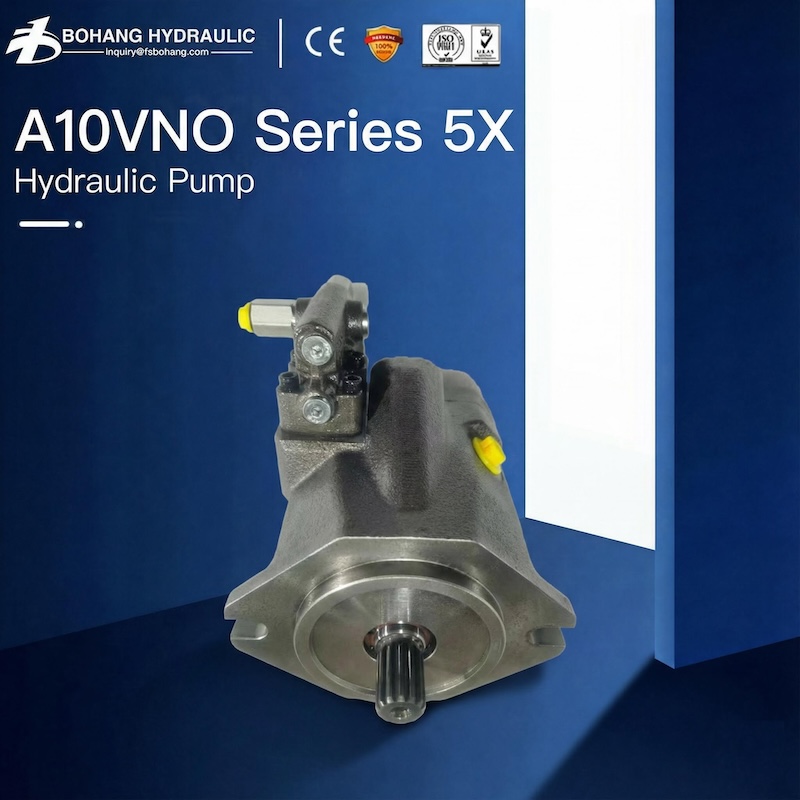
Piston pumps use pistons moving inside cylinders to displace hydraulic fluid. These pumps are known for high efficiency, strong pressure performance, and advanced control capability.
Main Advantages
- High pressure capability
- Better efficiency
- Suitable for demanding continuous-duty systems
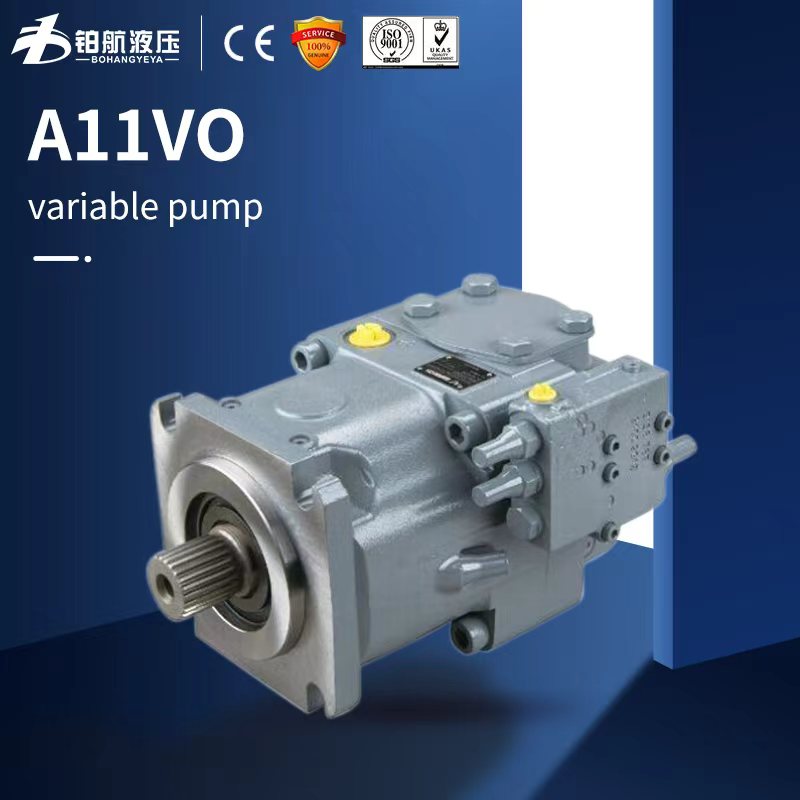
- Available in variable displacement designs
- Strong performance in advanced hydraulic circuits
Main Limitations
- Higher initial cost
- More complex structure
- Greater sensitivity to fluid cleanliness
- Maintenance and repair can be more specialized
Typical Uses
Piston pumps are often found in construction equipment, injection molding machines, die casting systems, hydraulic presses, and heavy-duty industrial machinery.
Factors Affecting the Service Life of Hydraulic Pumps
The service life of a hydraulic pump depends not only on design quality, but also on the conditions in which it operates. In many cases, premature failure is caused by system issues rather than the pump itself.
1. Fluid Cleanliness
Contaminated hydraulic oil is one of the biggest reasons pumps wear out early. Dirt, metal particles, and water can damage internal surfaces, reduce efficiency, and increase leakage.
2. Oil Quality and Viscosity
Hydraulic fluid must provide both power transmission and lubrication. If the viscosity is too low, wear increases. If it is too high, suction problems and energy loss can occur.
3. Operating Temperature
Excessive heat reduces oil quality, damages seals, lowers lubrication performance, and accelerates internal wear. Temperature control plays a major role in pump life.
4. Pressure Level and Shock Loads
Operating beyond the designed pressure range places extra stress on internal components. Sudden pressure spikes can be even more damaging than steady load.
5. Cavitation and Aeration
Poor suction conditions can cause cavitation, while air entering the fluid causes aeration. Both can reduce lubrication, increase noise, and damage internal parts.
6. Installation Quality
Improper alignment, vibration, incorrect piping, or poor mounting can shorten pump life even if the pump itself is high quality.
7. Maintenance Practices
Late filter changes, ignored leaks, poor oil management, and lack of inspection are common reasons hydraulic pumps fail sooner than expected.
How to Choose the Right Hydraulic Pump
Choosing the right hydraulic pump requires more than matching a pressure rating. A suitable pump must align with the actual operating profile of the system, including flow demand, working pressure, duty cycle, control method, fluid conditions, and long-term efficiency targets. In practice, pump selection should be treated as a system-level decision rather than a simple component choice.
1. Define Flow and Pressure Requirements
The first step is to determine the required flow rate and operating pressure under real working conditions.
Flow rate affects actuator speed and cycle time, while pressure determines the system’s ability to overcome load. These two parameters must be considered together. It is also important to distinguish between continuous operating conditions and short-term peak demand, especially in machines with changing load profiles.
2. Match Pump Type to the Application
Pump type should be selected according to system function and performance requirements.
- Gear pumps are typically used in simple, robust, and cost-sensitive systems.
- Vane pumps are suitable for applications requiring smoother flow and lower noise.
- Piston pumps are preferred for high-pressure, high-efficiency, or variable-demand systems.
The correct pump type depends on how the hydraulic circuit operates, not just on catalog specifications.
3. Evaluate Fixed vs. Variable Displacement
A fixed-displacement pump delivers a constant volume per revolution and is commonly used in systems with stable flow demand.
A variable-displacement pump adjusts output according to system requirements, making it more suitable for applications with fluctuating load, improved energy efficiency targets, or more advanced control strategies. In many high-duty systems, variable displacement helps reduce throttling losses and excess heat generation.
4. Review Efficiency and Thermal Performance
Pump efficiency directly affects energy consumption, oil temperature, and overall system stability.
A less efficient pump increases internal losses, which leads to higher heat generation and greater cooling demand. In continuous-duty equipment, this has a direct effect on operating cost and long-term reliability. For that reason, efficiency should be evaluated as part of lifecycle performance, not only initial purchase cost.
5. Check Inlet Conditions and Fluid Compatibility
Pump reliability depends heavily on inlet performance and fluid condition.
Poor suction conditions can reduce chamber filling and increase the risk of cavitation. Fluid viscosity, lubrication quality, and seal compatibility must also match the pump design and operating temperature range. Even a correctly sized pump may underperform if inlet conditions or fluid properties are not properly controlled.
6. Consider Duty Cycle and Control Strategy
Pump selection should reflect how the machine actually runs.
Systems with continuous operation, repeated peak loads, or frequent pressure variation place different demands on the pump than intermittent-use equipment. The selected pump should also fit the control architecture of the system, such as fixed-flow, pressure-compensated, or load-sensing operation.
7. Assess Maintenance Needs and Lifecycle Cost
A pump should be evaluated not only by purchase price, but also by its long-term service value.
This includes filtration requirements, contamination sensitivity, serviceability, spare parts availability, and expected operating life. In many cases, the lowest-cost pump is not the most economical choice over the full life of the machine.
Why Choose Bohang Hydraulic as Your Hydraulic Pump Partner?
Bohang Hydraulic focuses on high-efficiency hydraulic solutions and manufactures piston pumps and motors for applications in construction, mining, metallurgy, marine engineering, and renewable energy. The company presents itself as a long-term hydraulic technology partner with an emphasis on quality control, R&D, and dependable supply capability.
What makes Bohang worth considering
- Broad hydraulic pump range
Bohang offers axial piston variable pumps, fixed pumps, and gear pumps for open- and closed-circuit systems. - Built for replacement and interchangeability
The company states that its hydraulic pumps are developed as replacement solutions for brands such as Rexroth, Parker, and Vickers, with each unit tested for interchangeability. - High-pressure capability with practical mounting options
Product listings show broad displacement ranges, high nominal and peak pressure ratings on multiple series, plus common ISO/SAE flange and port configurations. - Value beyond the pump itself
Bohang also highlights project experience since 2008, technical support, and a focus on helping customers reduce downtime and total cost of ownership.
For buyers looking for a hydraulic pump supplier that combines replacement compatibility, solid pressure performance, and practical application support, Bohang Hydraulic is positioned as a reliable option to evaluate.
Conclusion
A hydraulic pump works by generating flow through positive displacement and delivering that flow into a hydraulic circuit. Pressure is not created directly by the pump; it develops when the system resists the pump’s output. Once that principle is clear, it becomes much easier to understand why pump choice, inlet design, fluid condition, and maintenance quality all matter so much in real equipment.
For engineers, buyers, and maintenance teams, the most effective approach is to look at hydraulic pumps in context. The right pump is not simply the one with the highest rating or the lowest price. It is the one that matches the application, supports the control strategy, runs efficiently over the duty cycle, and can maintain reliable performance over time.
FAQ
Q1. What is the main job of a hydraulic pump?
Its main job is to generate flow and move hydraulic fluid into the circuit so the system can transmit power and perform work.
Q2. Does a hydraulic pump create pressure?
Not directly. Parker’s service literature states that a pump produces flow, not pressure; pressure rises when the system resists that flow.
Q3. When is a variable-displacement pump a better choice?
It is often a better choice when load demand changes over the cycle and the system needs better efficiency, lower heat generation, or more flexible output control.
Q4. What should buyers focus on when selecting a hydraulic pump supplier?
Beyond pressure and flow ratings, buyers should look at product range, interchangeability, technical support, quality control, mounting compatibility, and long-term supply reliability.