
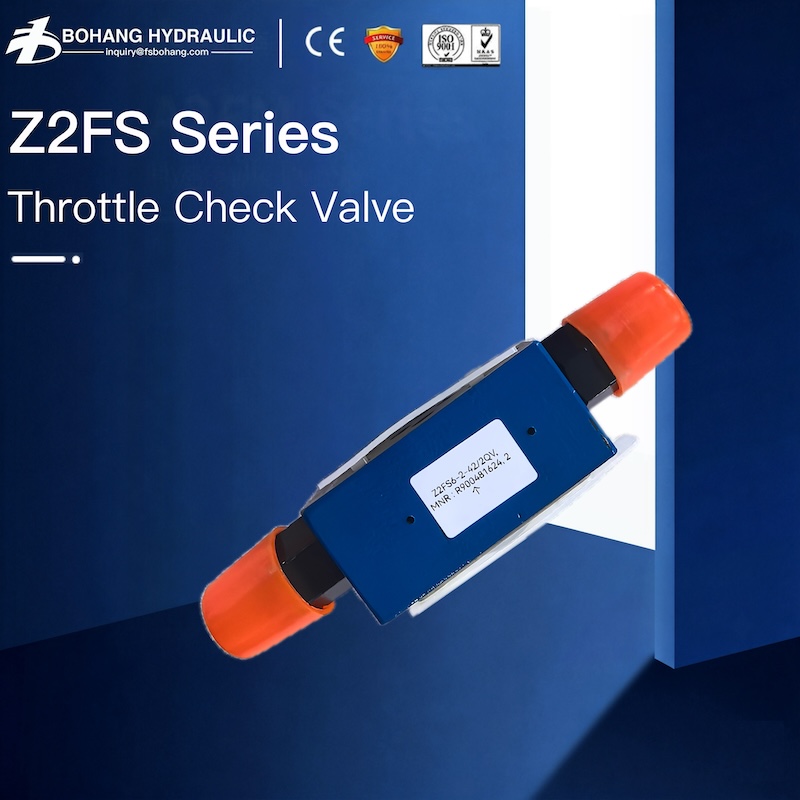
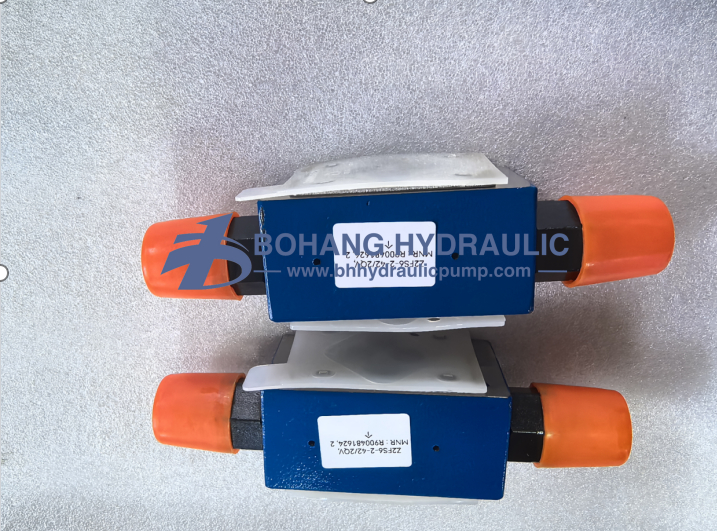
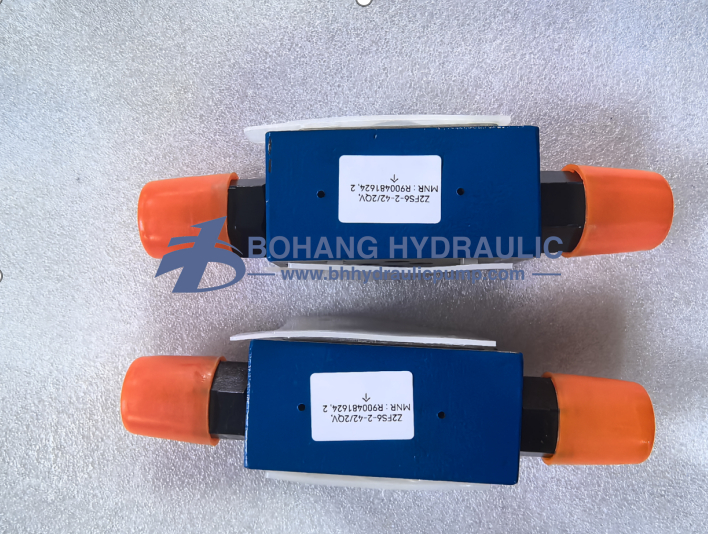
Z2FS Series Replacement Throttle Check Valve offers one-way flow control for mobile and industrial hydraulic systems. Supporting up to 315 bar and 160 L/min, it regulates actuator speed while allowing reverse flow, helping solve jerky motion, uncontrolled descent, long cycles and throttling heat. Its ISO 4401 sandwich-plate design simplifies installation between directional valves and subplates, improving overall system stability and service.
1. Meter-In or Meter-Out Selection: Match supply or discharge throttling to resisting, overrunning or load-assisted movements.
2. Independent A/B Port Adjustment: Control one or both actuator ports for customized cylinder or motor response.
3. Main or Pilot Flow Regulation: Limit actuator flow or fine-tune pilot circuits in multi-stage hydraulic systems.
4. Lockable Adjustment Options: Use rotary knobs or graduated spindles to maintain repeatable flow settings.
5. Fluid and Seal Compatibility: NBR and FKM options support different hydraulic fluids, temperatures and operating conditions.
FAQ
Q1: What does a hydraulic throttle check valve do?
A: It restricts oil flow in one direction to control actuator speed and allows free flow in the opposite direction. It is commonly used with hydraulic cylinders, motors, presses, machine tools and mobile equipment.
Q2: Why does my hydraulic cylinder move too fast or too slowly after installing a Z2FS valve?
A: Check the valve orientation, throttle opening, actual flow rate and pressure drop. If oil bypasses the throttling passage, the actuator may move too quickly. If the opening is too small or the valve is undersized, movement may become slow and the valve may generate excess heat.
Q3: Should I choose meter-in or meter-out control?
A: Meter-in control is generally suitable for stable, resisting loads. Meter-out control is usually better for overrunning or load-assisted movements because it restricts outlet flow and improves motion stability. Vertical loads may also require a counterbalance valve.
Q4: Does a throttle check valve reduce total hydraulic system pressure?
A: No. It creates a local pressure drop through the throttling passage. Overall system pressure is determined by the pump, load and pressure-control valve. Excessive throttling can reduce actuator pressure and convert hydraulic energy into heat.
Q5: Why does my hydraulic system overheat after adding a throttle check valve?
A: Common causes include excessive throttling, incorrect flow direction, an undersized valve, high pressure drop, restricted return flow or unsuitable oil viscosity. Measure pressure before and after the valve and verify the actual flow rate.