
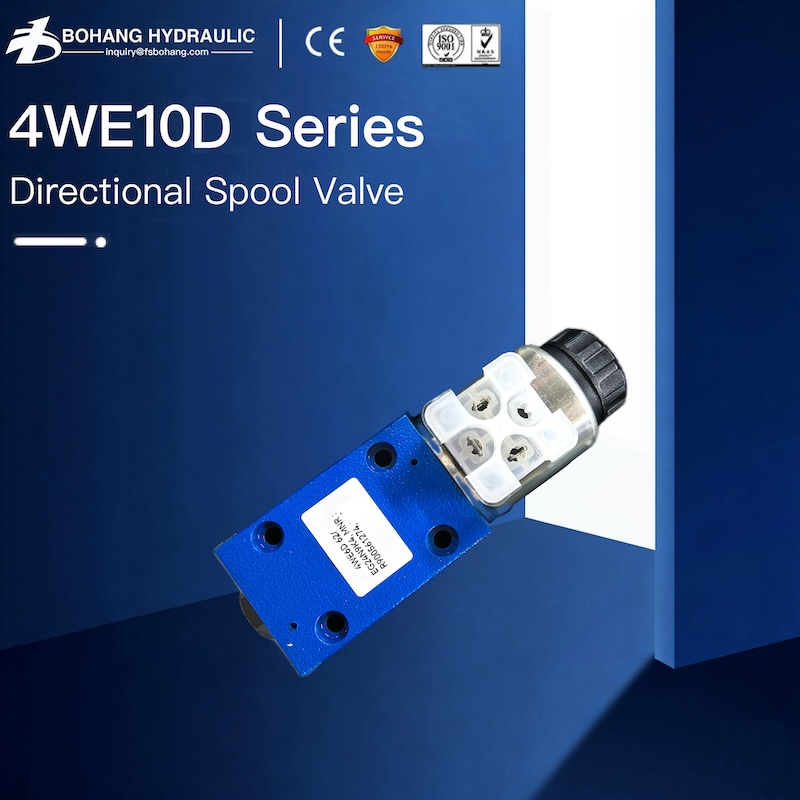
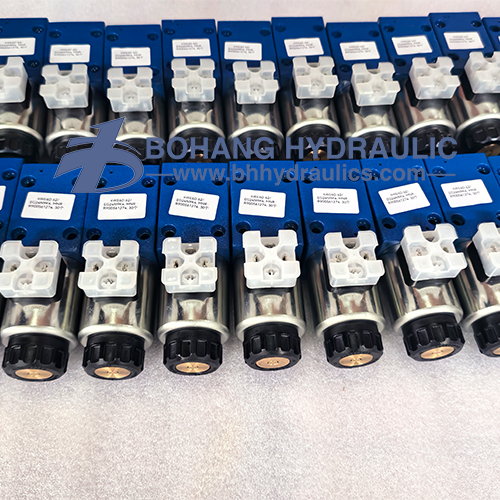
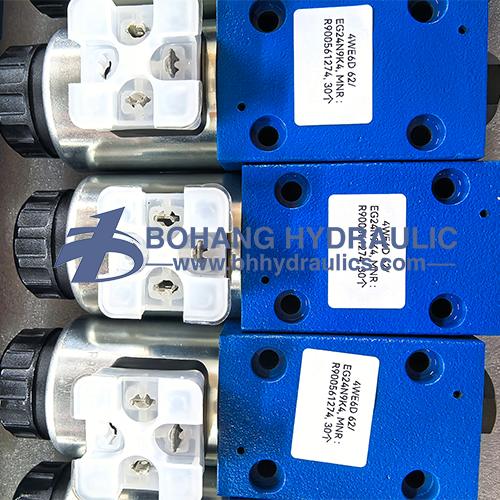
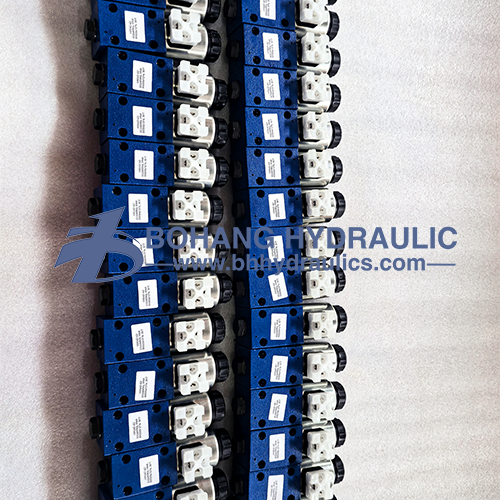
4WE6D Series replacement directional spool valve controls flow for cylinder and motor movement, with 4/3, 4/2, and 3/2 configurations, up to 420 bar and 150 L/min. An ISO 4401 interface, high-power solenoid and spool monitoring option suit excavators, cranes, presses, injection molding and mobile equipment, helping address slow actuation, unintended movement, retrofit delays and service interruptions during long shifts with demanding systems.
1. Rotatable Solenoid: Rotate the solenoid by 90 degrees to better suit restricted installation spaces and cable routing requirements.
2. PWM Connector Option: Supports faster switching and can help reduce solenoid energy consumption during repeated operation.
3. Manual Override Option: Makes commissioning, functional testing and temporary manual checks more convenient.
4. Individual Electrical Connection: Allows separate wiring for each solenoid, supporting clearer control cabinet layouts and easier maintenance.
5. Multiple Approval Options: CE conformity, UL 429 recognition and optional CSA approval support different market and project requirements.
FAQ
Q1: What does a 4WE6D directional spool valve do?
A: It directs hydraulic oil between the pump, tank and actuator ports, allowing a cylinder or motor to start, stop and change direction. It is commonly used in mobile machinery, presses, injection molding machines and industrial hydraulic systems.
Q2: How do I choose between 4/3, 4/2 and 3/2 configurations?
A: A 4/3 valve provides three spool positions and is useful when a defined center position is required. A 4/2 valve provides two switching positions for simpler directional control. A 3/2 valve is suitable for circuits that need three ports and two operating positions. Always confirm the circuit symbol and center condition before ordering.
Q3: Why does the hydraulic cylinder move in the wrong direction?
A: Check the P, T, A and B port connections, the selected spool symbol and the energized solenoid. Incorrect A and B connections or an unsuitable spool configuration can reverse actuator movement.
Q4: Why does the valve fail to shift or respond slowly?
A: Inspect the power supply, coil, connector, control signal and solenoid wiring. Also check hydraulic pressure, oil cleanliness and possible spool contamination. A clogged or sticking spool can prevent normal switching.
Q5: Can this valve operate at 420 bar and 150 L/min at the same time?
A: The page lists a maximum operating pressure of 420 bar and maximum flow of 150 L/min. These are model limits, not necessarily simultaneous operating values for every spool version. Confirm the selected symbol, port pressure, tank pressure, hydraulic fluid and working conditions before use.
Q6: Will this valve fit my existing manifold?
A: The valve uses the ISO 4401-05-04-0-05 and NFPA D05 mounting pattern. Buyers should still verify the manifold dimensions, port arrangement, spool symbol, seal material, coil voltage and electrical connector before replacement.
Q7: Why is oil leaking from the tank port?
A: Check whether tank pressure is within the specified limit and whether the circuit requires a separate leakage oil connection. For some spool symbols, port T must be used as a leakage oil connection when operating pressure exceeds the permitted tank pressure. Refer to the model datasheet before installation