
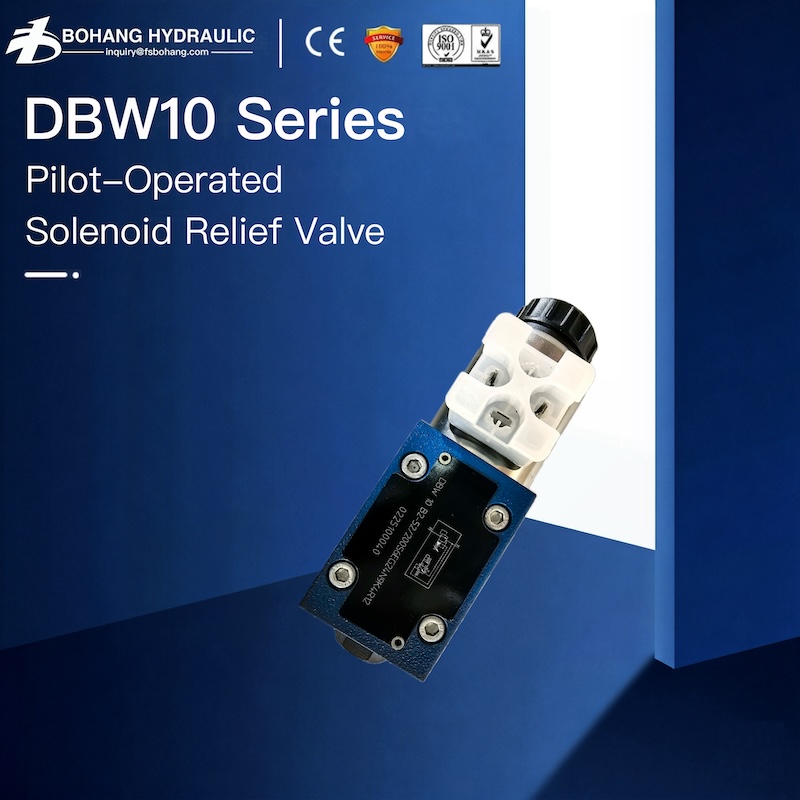
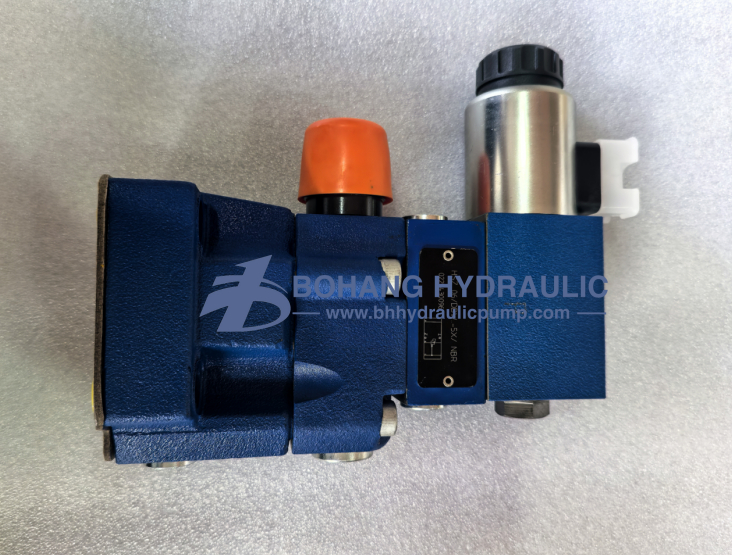
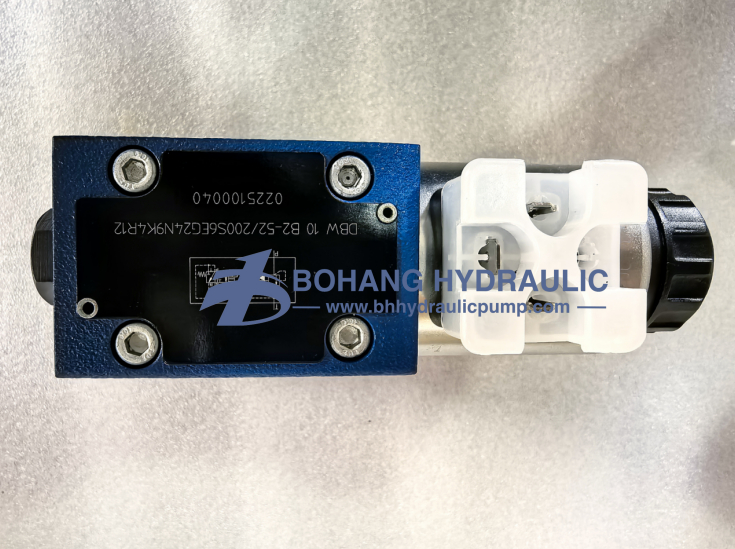
DBW10 Series Pilot-Operated Solenoid Relief Valve provides pressure limitation and remote unloading for power units, construction machinery and industrial equipment. Supporting up to 350 bar and 250 L/min, it helps prevent overpressure damage, pump overload, oil overheating and downtime. Its ISO 6264 subplate design and integrated directional control simplify upgrades, while selectable pressure stages safeguard critical hydraulic circuits.
1. Five Pressure Settings: Select 50, 100, 200, 315 or 350 bar according to the system's protection requirements.
2. Dual Connection Options: Choose subplate mounting or threaded connection for different hydraulic layouts.
3. Multiple Adjustment Styles: Configure a rotary knob, protected hex adjustment, lockable knob or graduated adjustment element.
4. Switching Shock Damping: Add optional damping to reduce pressure impact during unloading transitions.
5. International Compliance: CE and UKCA conformity with UR-marked solenoid components supports global machine integration.
FAQ
Q1: What is a DBW10 pilot-operated solenoid relief valve used for?
A: It limits the operating pressure of a hydraulic system and allows pressure to be unloaded remotely through an electrically controlled directional valve. It is commonly used in power units, construction equipment, presses and industrial hydraulic machinery.
Q2: Why can't my hydraulic system reach the set pressure?
A: Check the pressure adjustment, gauge location, pump condition, pilot orifice, valve seat, spring and hydraulic oil cleanliness. Contamination, internal leakage, spring fatigue, a low setting or pump wear can prevent the system from reaching pressure.
Q3: Why is the system pressure higher than the relief valve setting?
A: Possible causes include a blocked pilot or drain passage, a sticking pilot stage, incorrect adjustment, excessive return-line pressure or an electrical signal that does not operate the unloading valve correctly. Verify the pressure at the valve inlet with a calibrated gauge.
Q4: Why does the DBW10 valve chatter or make unusual noise?
A: Chattering may be caused by air in the hydraulic oil, pump pulsation, restricted pilot passages, excessive tank-line back pressure or a setting too close to normal operating pressure. Inspect the pilot circuit, return line, oil condition and pressure margin.
Q5: Why does the hydraulic oil overheat around the relief valve?
A: Continuous relief flow, internal leakage, an incorrect pressure setting, excessive flow or an undersized valve can convert hydraulic energy into heat. Check whether the valve is bypassing continuously and verify the actual flow and pressure conditions.
 ▶ Port P, X