
Hydraulic Motor
 Hydraulic Motor

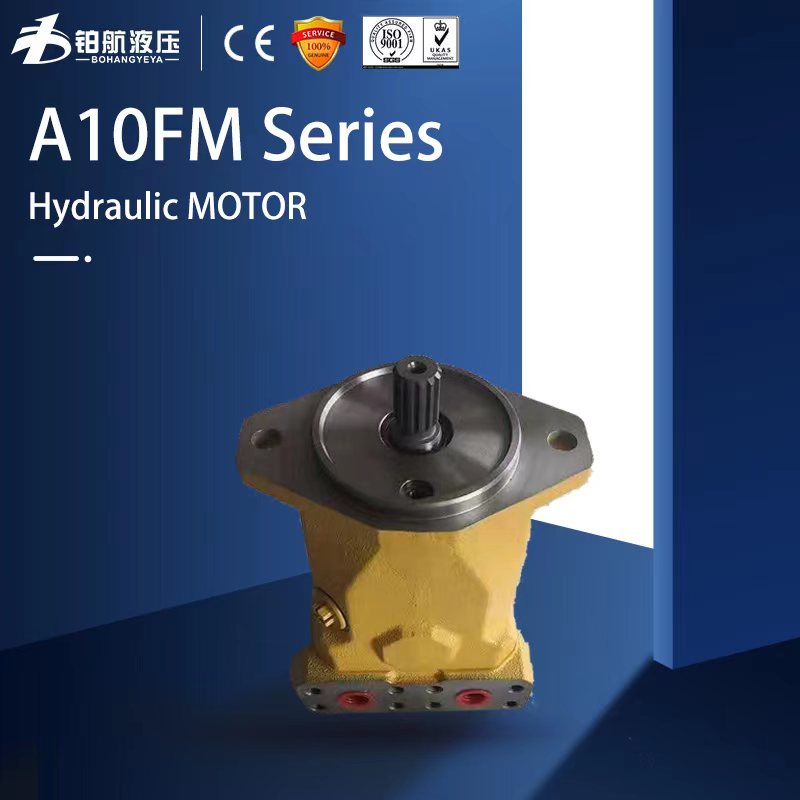
A10FM Series 52 Replacement Axial Piston Fixed Motor

Features:
▶ Fixed displacement motor in axial piston swashplate design 
for hydrostatic drives in open and closed circuit operation
▶ The output speed is proportional to the inlet flow
▶ The output torque increases with the pressure differential 
between the high and low pressure sides
▶ For use in mobile and industrial applications
▶ Long service life
▶ High permissible output speeds
▶ Well proven A10-rotary group technology
▶ High power to weight ratio – compact design
▶ Plug-in version for space saving installation
▶ Low noise level
▶ Mechanical and hydraulic connections also acc. to SAE 
standards 
▶ Speed sensor optional
▶ Integrated anti cavitation valve optional, i.e. for fan drives

A10FM Series 52 replacement axial piston fixed motor is a dependable drive solution for mobile and industrial hydraulic systems. Designed for applications requiring stable rotary power, it converts hydraulic flow and pressure into consistent speed and torque. This hydraulic piston motor is well suited for equipment repairs, system upgrades and OEM replacement projects where efficient operation, proven compatibility and long-term reliability are essential. 
 

1. Open and Closed Circuit Compatibility: Suitable for a wide range of mobile and industrial hydrostatic drive systems.

2. Reliable High-Pressure Performance: Rated for 280 bar nominal pressure and up to 350 bar maximum pressure.

3. Compact, Space-Saving Installation: High power-to-weight ratio with an optional plug-in version for restricted installation spaces.

4. Low Noise and Long Service Life: Proven rotary group technology supports reliable performance under demanding operating conditions.

5. Flexible Connection Options: Mechanical and hydraulic connections are available according to SAE standards.
 

FAQ
Q1. Does an axial piston fixed motor need a case drain line?

Most axial piston fixed motors require a separate case drain line to return internal leakage oil to the reservoir. The drain line should have low resistance, and the highest available drain port is normally used so the motor housing remains full of oil. Excessive case pressure can damage seals and cause external leakage, so always follow the pressure limit in the motor datasheet.


Q2. What hydraulic oil should be used in an axial piston motor?

Use a hydraulic fluid approved for the motor and suitable for the system’s operating temperature. The correct viscosity should be maintained at the motor’s actual working temperature, not selected only from the ambient temperature. Oil that is too thin can increase internal leakage, while oil that is too thick may cause poor lubrication and high case pressure during cold starts.


Q3. How clean should the hydraulic oil be?

Clean oil is essential because the piston, cylinder block and valve plate operate with very small internal clearances. Many hydrostatic piston systems specify an oil cleanliness level around ISO 4406 22/18/13 or better, although the exact requirement should come from the motor manufacturer. Replace contaminated oil and filters, and flush hoses and valves before installing a new hydraulic piston motor.


Q4. What should be done before starting a new hydraulic piston motor?

Fill the motor housing with clean, filtered hydraulic oil through the uppermost case drain port and remove trapped air before startup. Begin at low speed and light load, then check for leakage, abnormal sound, unstable rotation and excessive case pressure. Starting the motor with an empty housing can leave the rotary group and bearings without adequate lubrication.


Q5. What does excessive case drain flow mean?

Case drain flow normally increases as system pressure and oil temperature rise. However, a noticeable increase under the same operating conditions may indicate internal leakage or wear in the rotating group. Before replacing the motor, check the oil viscosity, operating temperature, drain-line restriction and case pressure, as these conditions can also affect the measured drain flow.


Q6. When is an anti-cavitation valve needed on a hydraulic motor?

An anti-cavitation valve is recommended when the load can continue driving the motor after the main oil supply is reduced or stopped. This commonly occurs in fan drives and other high-inertia applications. The valve supplies make-up oil to the low-pressure side, reducing the risk of cavitation during deceleration. The axial piston fixed motor on this product page is available with an integrated anti-cavitation valve option.
Size 18 23 28 37 45 58 63
Displacement Vg cm³ 18 23.5 28.5 36.7 44.5 58 63.1
geometric, per revolution
Nominal pressure pnom bar 280 280 280 280 280 280 280
Maximum pressure pmax bar 350 350 350 350 350 350 350
Maximum speed 1) nnom rpm 4200 4900 4700 4200 4000 3600 3400
Inlet flow at nnom qV l/min 76 115 134 154 178 209 215
Power at nnom and pnom P kW 35.3 53.6 62.5 71.8 83.1 97.4 100.1
Starting torque at nnom and pnom M0 Nm 67.5 75 105 125 170 205 230
Torque at pnom M Nm 80 105 127 163 198 258 281
Rotary stiffness Drive shaft R c kNm/rad 14.835 28.478 28.478 46.859 46.859 80.59 80.59
Drive shaft W c kNm/rad       38.489 38.489 60.907 60.907
Drive shaft C c kNm/rad 18.662 30.017 30.017 46.546 46.546 87.667 87.667
Moment of inertia for rotary group JTW kg·m² 0.00093 0.0017 0.0017 0.0033 0.0033 0.0056 0.0056
Maximum angular acceleration ɑ rad/s² 6800 5500 5500 4000 4000 3300 3300
Case volume V l 0.15 0.6 0.6 0.7 0.7 0.8 0.8
Weight (approx.) m kg 6.5 12 12 17 17 22 22
  Machine Hydraulci Pump/Motor
Construction Machinery
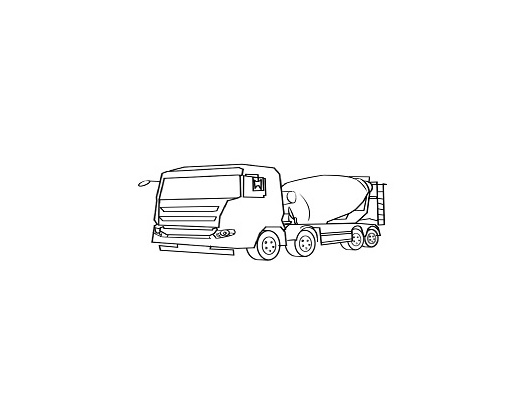
Concrete mixer AA2FM A4VTG EATON 5423        
Concrete transport pump A2FO A4VG A11V        
Wet spraying machine A11V A2FM A10V        
Road roller A6VE A6VM  A4VTG P2VC      
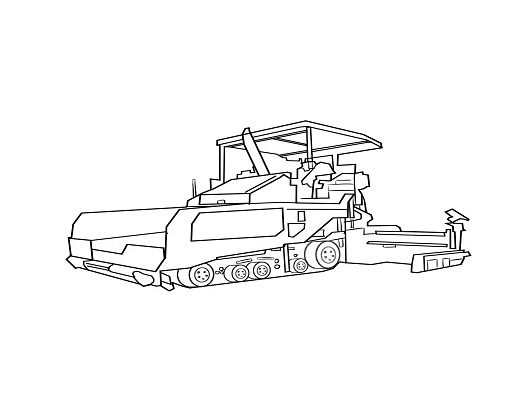
Paver A6VE A6VM  P2VC P4VC      
Grader A6VM  P2VC          
Asphalt spreader P1V(A)O A2FM          
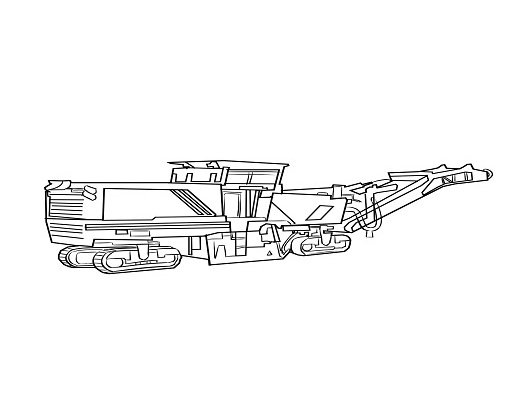
Milling machine P1V(A)O A2FE A2FM        
Crawler excavator P3VO            
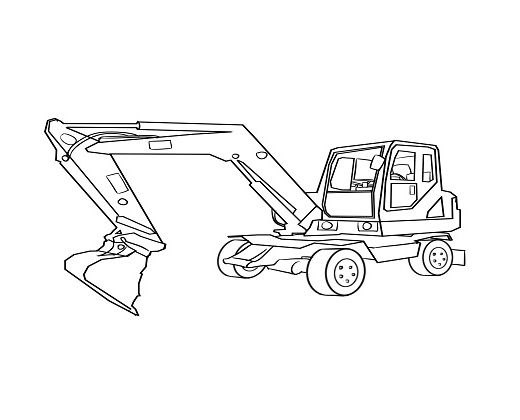
Wheel excavator A6V A6VM  P3VO        
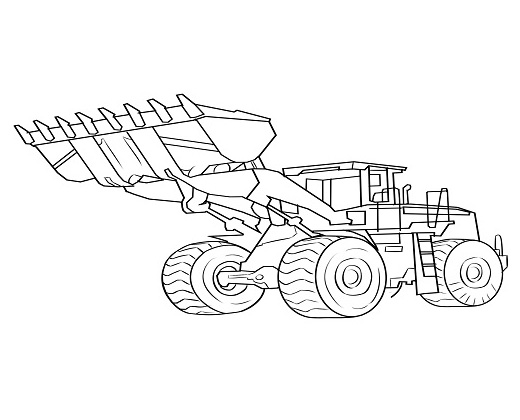
Loader M3VE A6VM  P2VC A10VSO A2FM    
Bulldozer A6VM  P2VC          
Material Handling Machinery
Crane A2FE A6V A6VM P2VC P1V(A)O A10VSO A2FM
Forklift              
Drilling Rig A2FE A6VE A6VM P1V(A)O A10VSO A2FM  
Heading Machine A2FE P1V(A)O          
Mining Truck A10VSO            
Agricultural Machinery
Tractor A6VE P2VC P4VC A10VSO      
 Rice Transplanter              
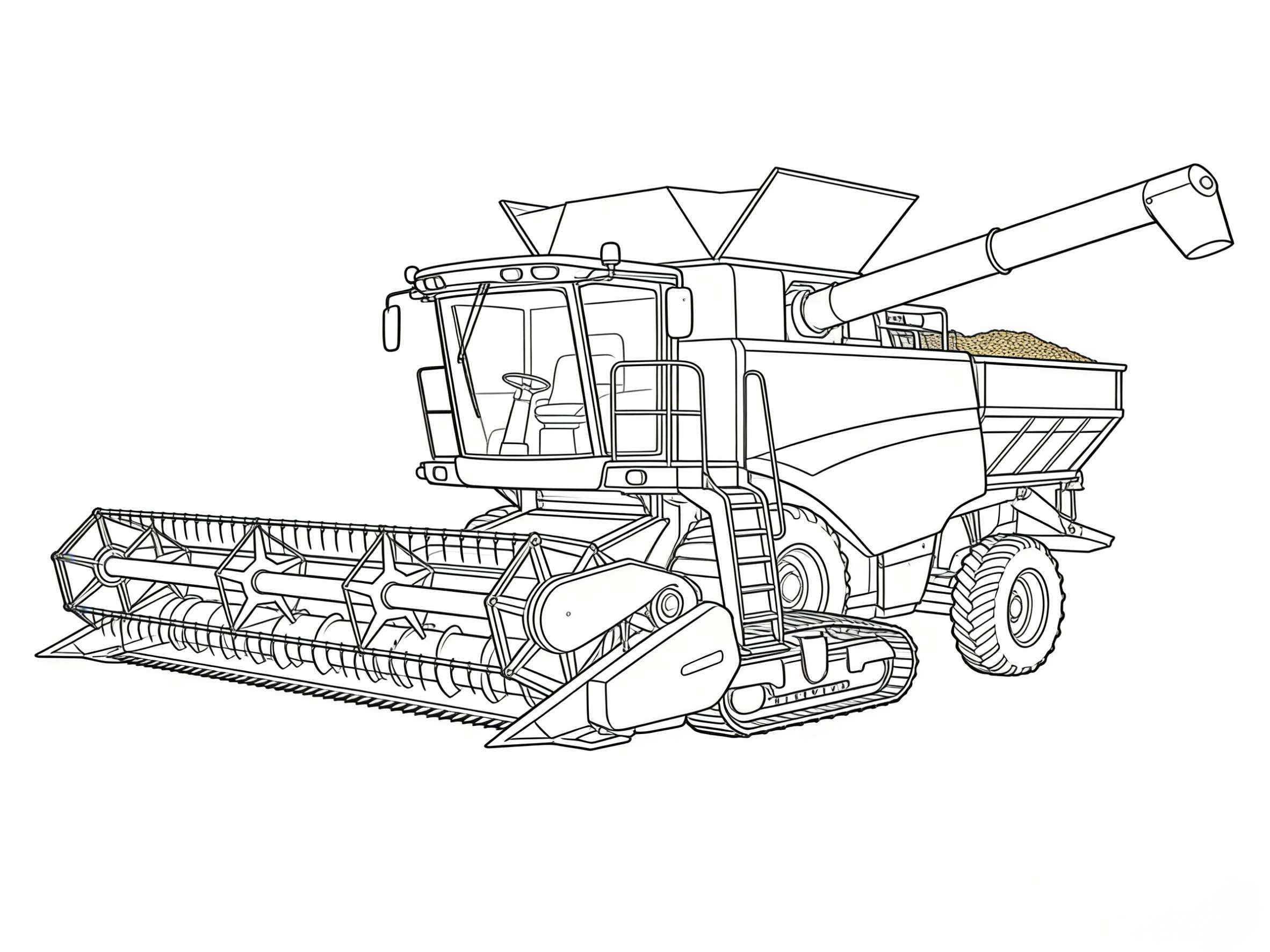
Combine Harvester A6VE A4VTG P2VC        
Pesticide machine A6VE A4VTG P2VC A10VSO      
Rice harvester A6VE A4VTG P2VC P4VC      
Sugar Cane Harvester A6VE P2VC P4VC A10VSO A2FM    
Municipal Machinery
Airport Equipment A6VM P2VC P1V(A)C A10VSO A2FE A2FM  
Firfighting Truck A7VO P1V(A)C A10VSO        
Snow Sweeper P2VC A10VSO          
Aerial work platform P4VC A10VSO          
Electric Power A2FE A6VE P2VC P4VC      
Environmental Sanitation Vehicle              
Anti Dust Vehicle              
Oil And Gas Equipment
Liquid Nitrogen Pump Truck P1V(A)O            
Fracturing Truck A6VM P2VC A2FO A2FM      
Fracturing Blender Truck A6VM P2VC A10VSO A2FM      
Coil Tubing A10VSO A2FE          
Pipelayer A2FE A6VM P1V(A)O        
Industrial Application
Injection molding machine              
Shoe-making machine A10VSO            
Metal forming machinery A7V            
CNC machine tool PV A10VSO          
Metallurgy and die-casting E-A4VG             
Flow Machine
Reach Stacker P3VO            
Heavy Forlift A6VM A4VTG A10VSO        
Tire Crane A6VM            
Maritime Port
Ship A6VE A6VM P1V(A)O A10VSO A2FE A2FM  
Offshore platform A6VE A6VM P1V(A)O A10VSO A2FE A2FM  
Wind power P1V(A)O            
Dredging vessels P1V(A)O            
Others              
Marine Crane A 11VLO A2FM FMF  A4VG A6VM