
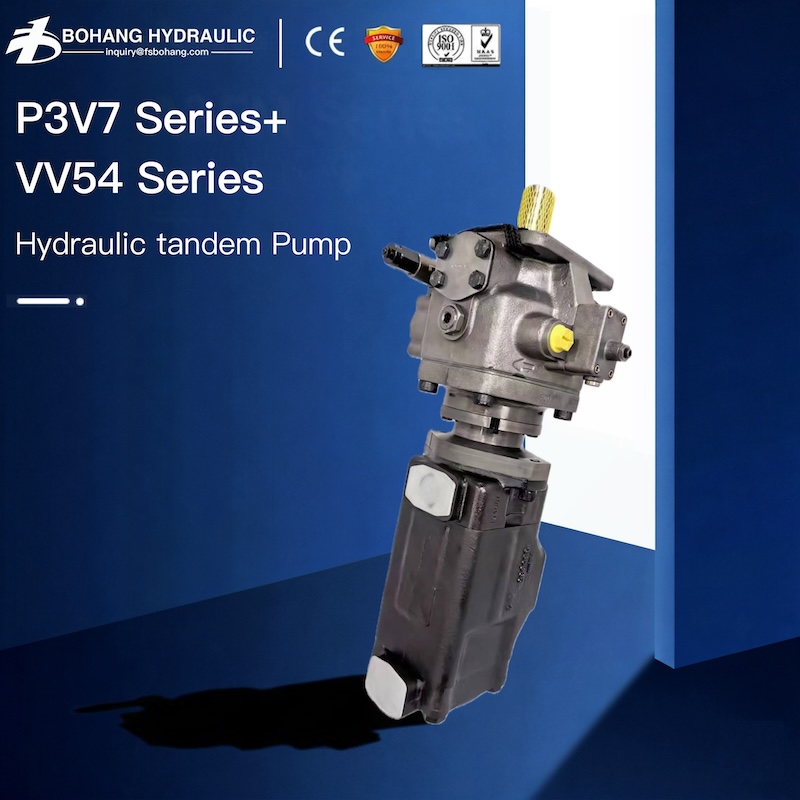
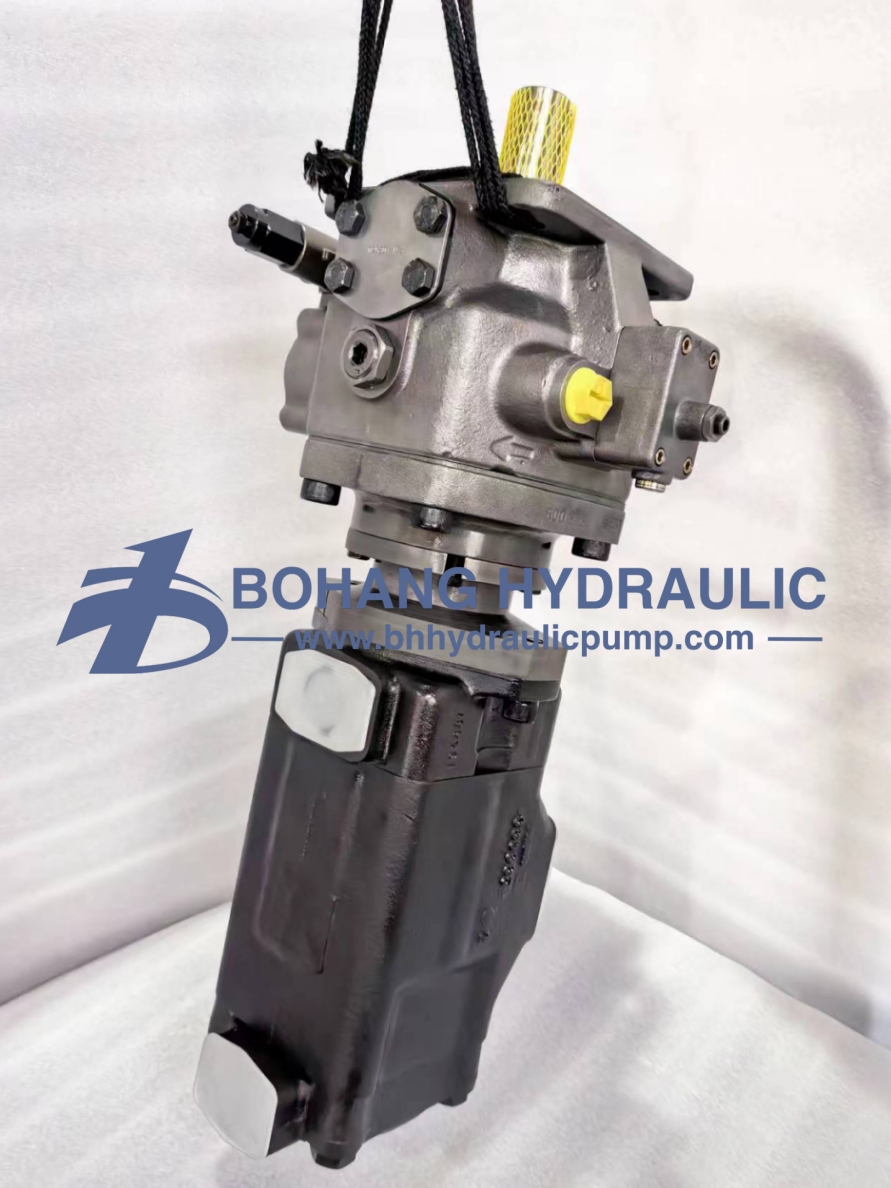
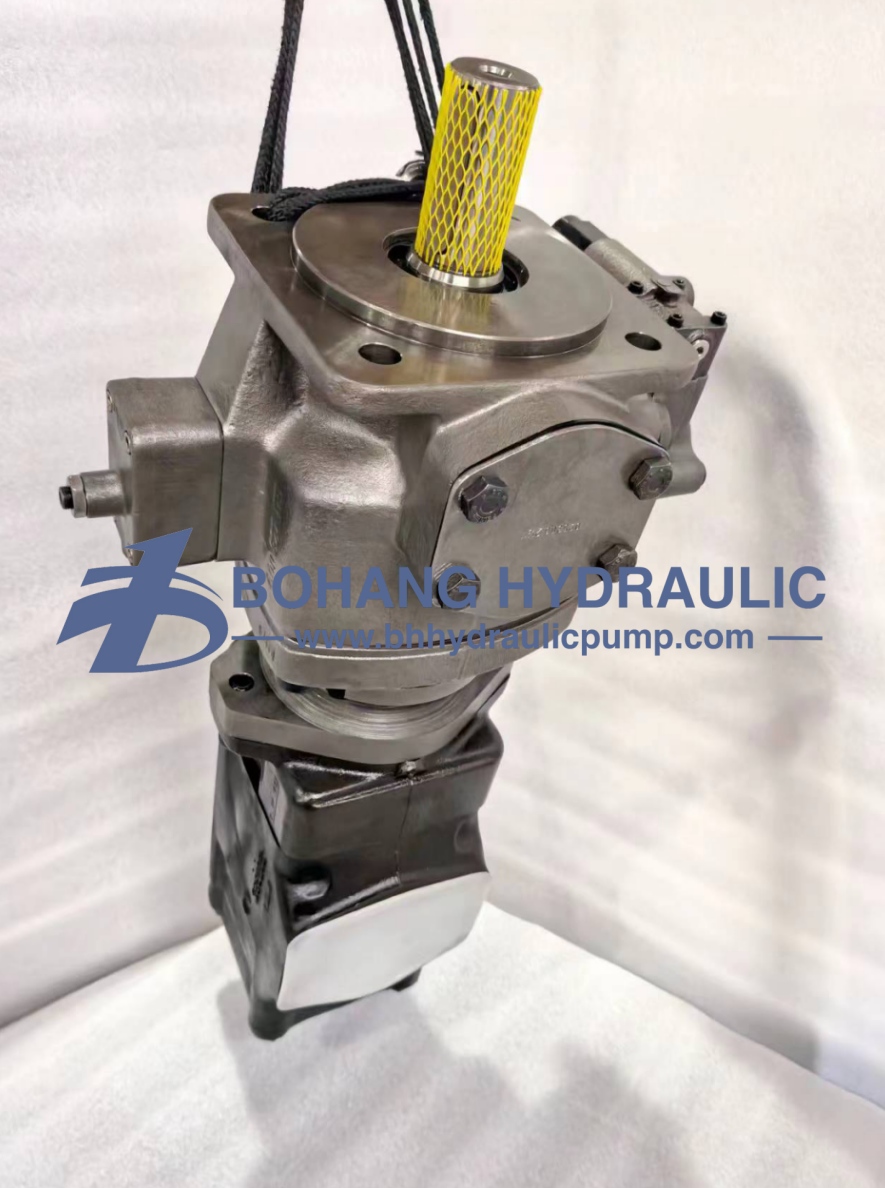
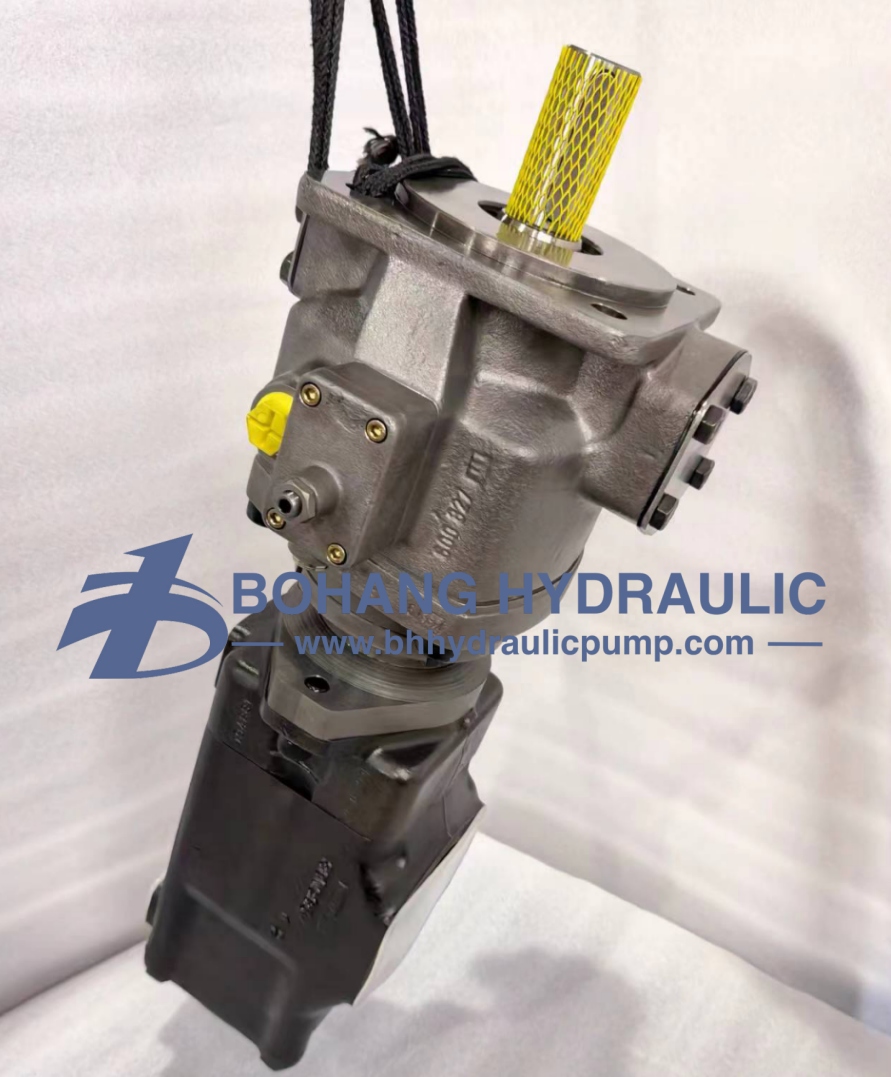
PV3V+VV45 High-pressure Double Pump is built for hydraulic systems that need dependable flow and high working pressure in a compact body. Available in 82 and 102 cm³/rev, it supports up to 210 bar continuous pressure with a standard 170 bar relief valve setting. The standard 2-hole mounting flange according to ISO 3019-1 helps simplify installation and replacement, while the splined shaft (ANSI B92.1) is designed to carry the combined torque of both pump stages.
1. High-pressure performance: Rated for up to 210 bar continuous pressure, with a standard 170 bar relief valve setting for system protection.
2. Two displacement options: Available in 82 cm³/rev and 102 cm³/rev to match different flow requirements at 1000 rpm.
3. Stable working speed range: Operates from 500 to 2000 rpm, supporting a wide range of hydraulic drive layouts.
4. Compact double pump layout: Supplies high flow from a space-saving assembly, helping simplify hydraulic system design.
5. Application fit: Suitable for PTO-driven hydraulic packs, bulk material lifting bodies, harvest equipment, port handling machines, drilling rigs, industrial mobile platforms and oilfield service units.
FAQ
Q1. Is the PV3V+VV45 High-pressure double pump suitable for PTO-driven hydraulic systems?
A: Yes. The hydraulic double pump can be used in PTO-driven hydraulic systems where reliable flow, strong pressure performance and compact installation are required. Before ordering, it is recommended to confirm the rotation direction, mounting flange, shaft type, port size and working speed with the system requirements.
Q2. What mounting flange does this pump use?
A: The pump uses a standard 2-hole mounting flange according to ISO 3019-1. This helps make installation and replacement easier when the equipment is designed for the same mounting standard.
Q3. What type of drive shaft is used on the PV3V+VV45 pump?
A: The PV3V+VV45 High-pressure Double Pump uses a splined shaft according to ANSI B92.1. This shaft design is suitable for handling the combined torque of both pump stages, which is important in high-load hydraulic applications.