
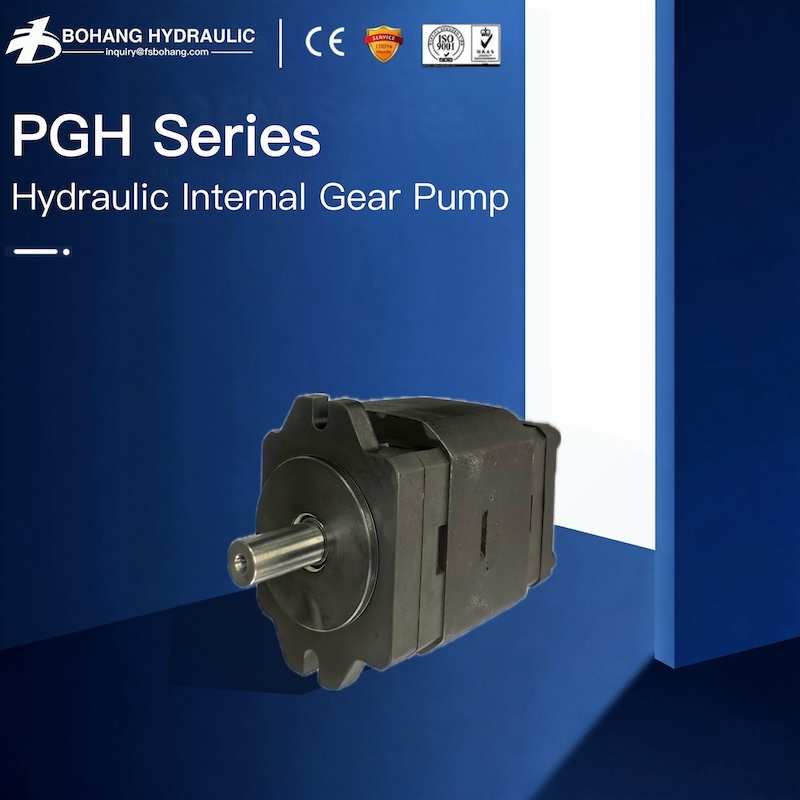
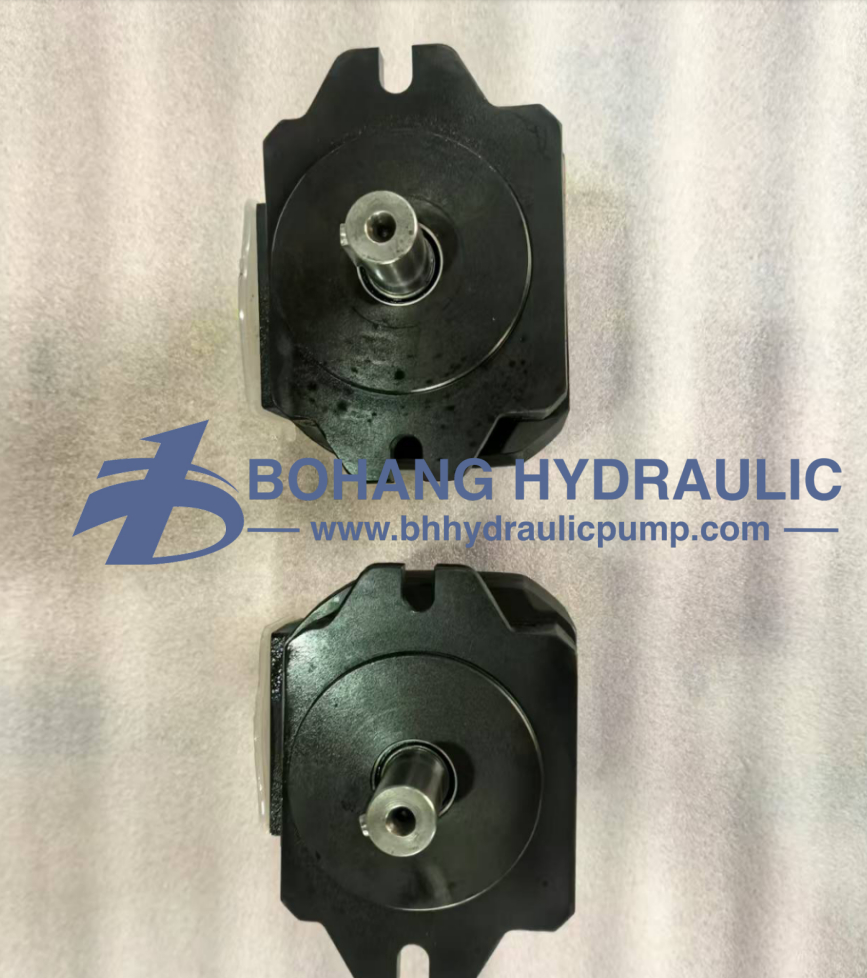
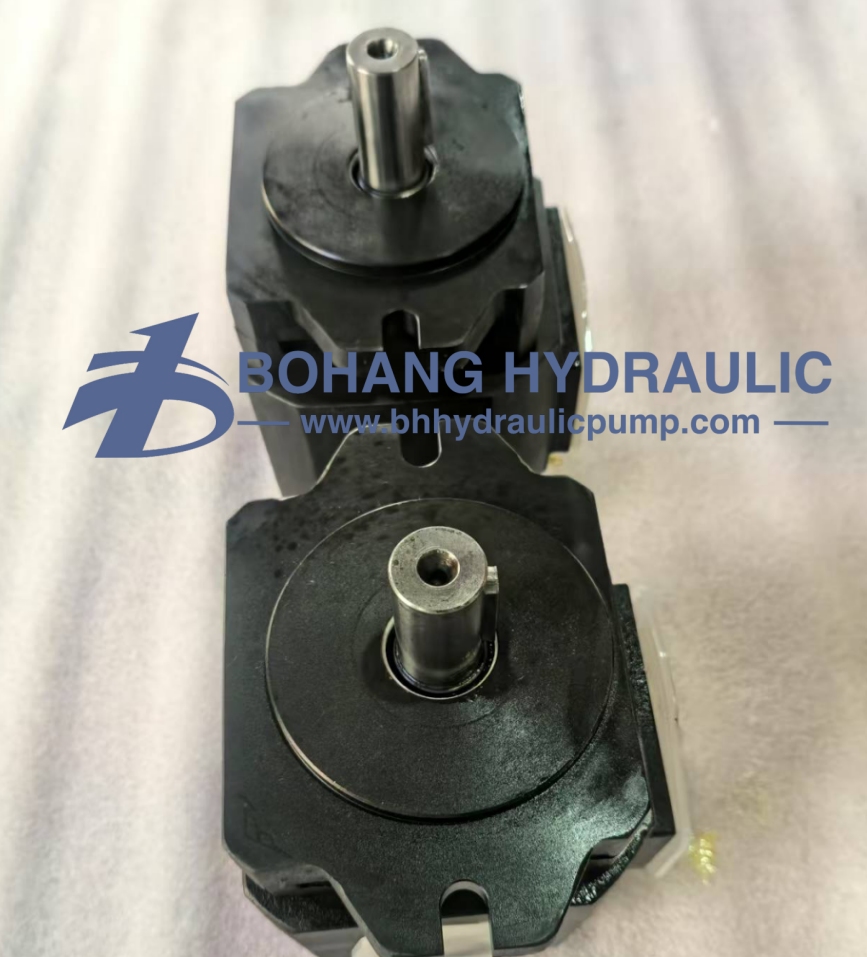
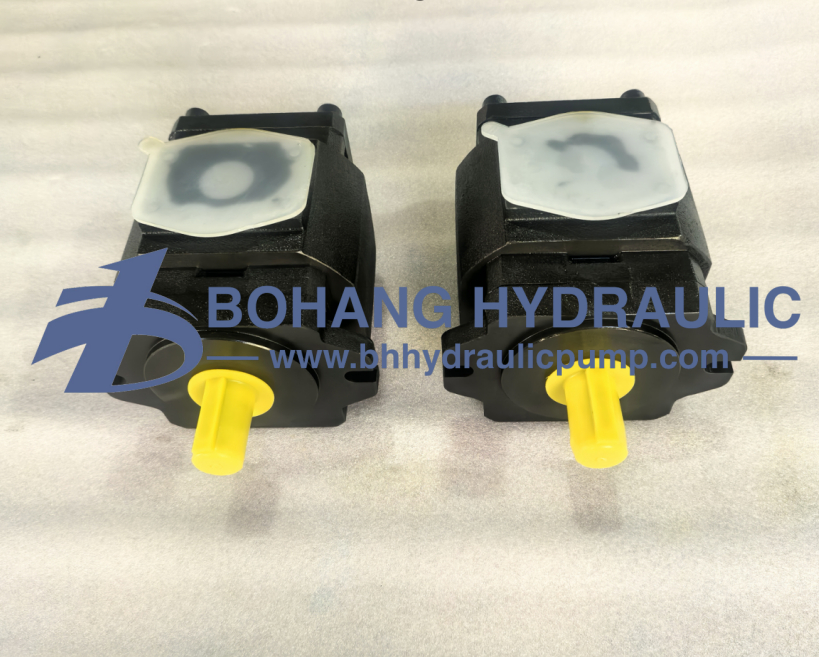
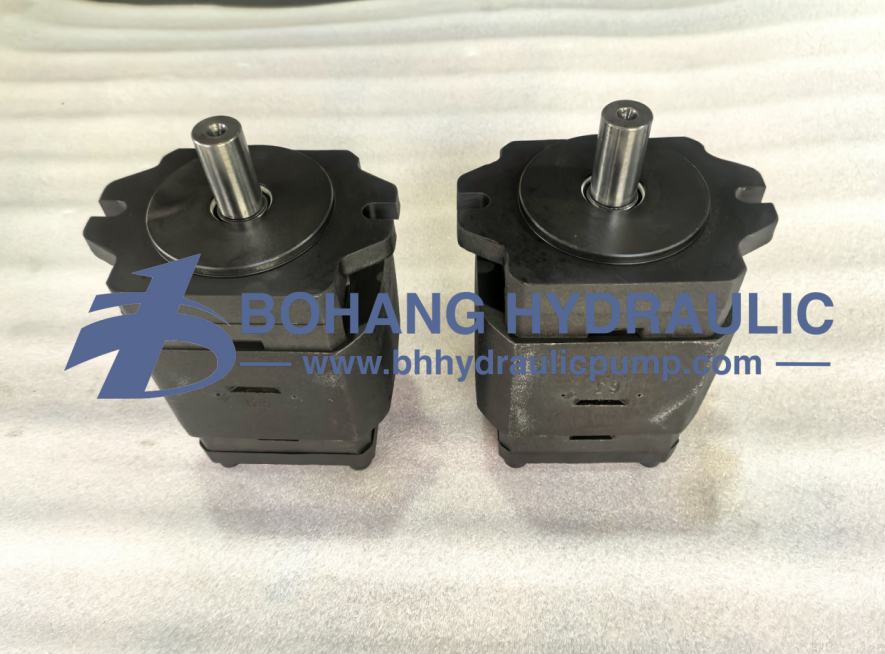
PGH Series High Pressure Internal Gear Pumps are built for hydraulic systems that require stable pressure, low noise and consistent oil delivery. The gap compensated internal gear design helps reduce internal leakage and maintain high volumetric efficiency under changing load, low speed operation and varying oil viscosity. With low flow pulsation and compact flange mounting, the PGH Series is well suited for hydraulic power units, press equipment, plastic processing machines, die casting systems, test benches and lubrication circuits where smooth pressure output and long term reliability are important.
1. Stable high pressure performance: Gap compensated internal gear structure helps maintain steady flow and pressure for demanding hydraulic circuits.
2. Good efficiency at low speed: Designed to support stable output when the system requires pressure holding, variable speed control or low speed operation.
3. Flexible installation: Available with SAE 2 hole flange or 4 hole flange connections to match common hydraulic system layouts.
FAQ
Q1. Why choose a gap compensated internal gear pump?
A: Gap compensation helps reduce internal leakage inside the pump. This is useful when the system works under changing load, low speed or different oil viscosity conditions. For users, it means better volumetric efficiency, steadier flow and more reliable pressure holding over time.
Q2. Can the PGH Series work well at low speed?
A: Yes. One of the main advantages of the PGH internal gear pump is stable efficiency at low rotational speed. The gap compensated structure helps maintain oil delivery when the pump is running at lower speed, which is useful for pressure holding, controlled movement and systems with variable speed drives.
Q3. How do I choose the right PGH internal gear pump model?
A: Start with the system pressure, required flow rate, shaft direction, mounting flange, hydraulic fluid and working temperature. Oil viscosity and cleanliness should also be checked carefully. If the pump is replacing an existing unit, the model code, flange type, shaft size and port position should be matched before purchase.
Q4. Why does a hydraulic gear pump become noisy after installation?
A: Noise is often related to suction problems, air in the oil, wrong rotation direction, blocked filters, poor oil viscosity or misalignment. For the PGH Series, the direction of rotation must be confirmed before installation because the pump is not designed for reversing operation. Checking suction line size, oil level and filter condition can usually solve many noise problems.